
Last updated September 22, 2026
Free on-site gate assessment - hinges, posts, and your LiftMaster or Nice gate operator checked before anything is quoted
The assessment is free and the quote is the invoice.
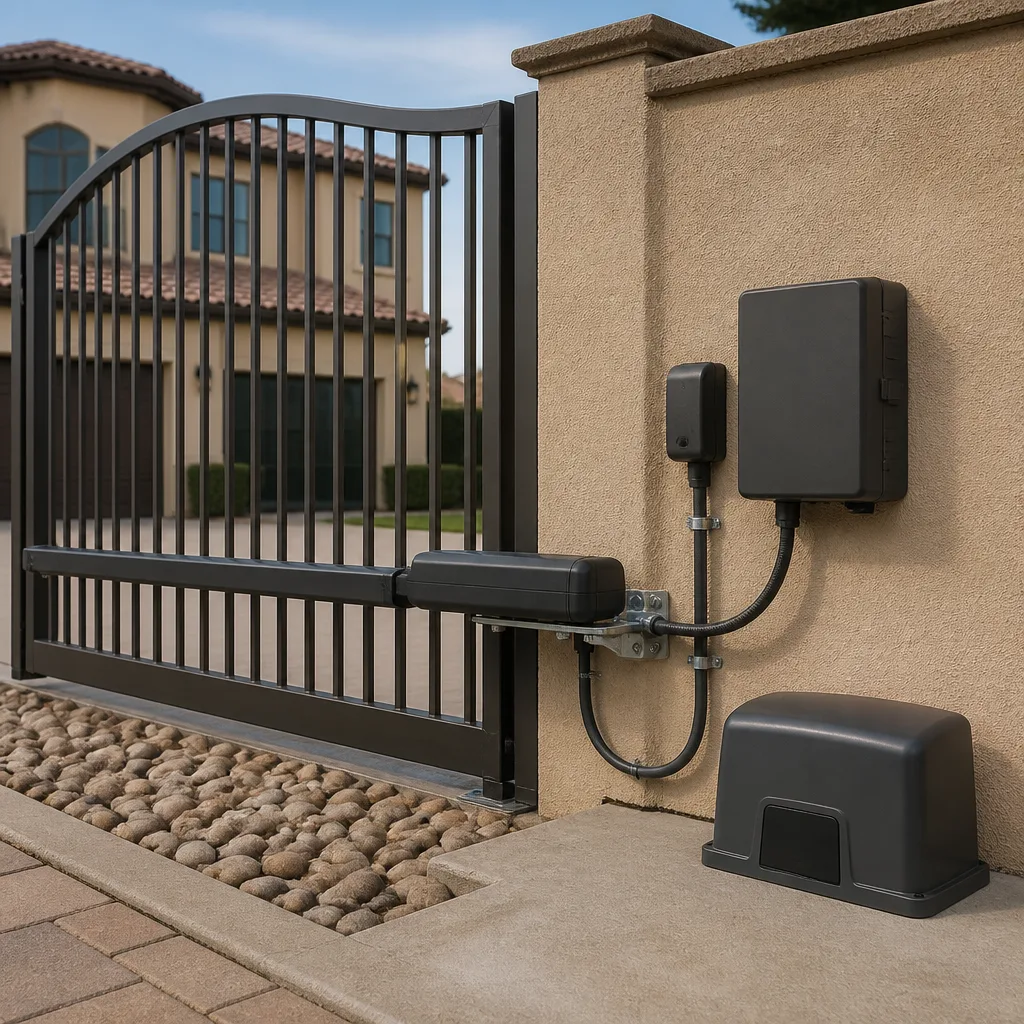
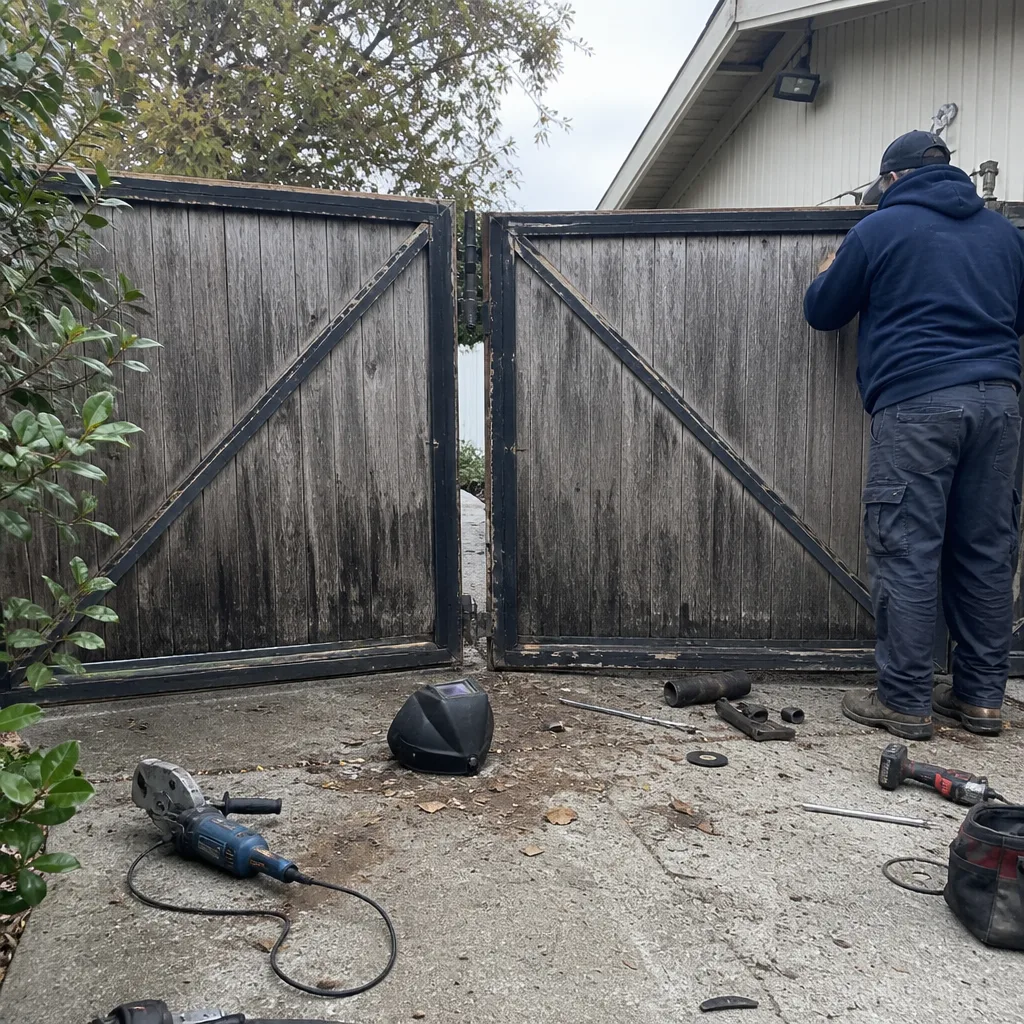 Before
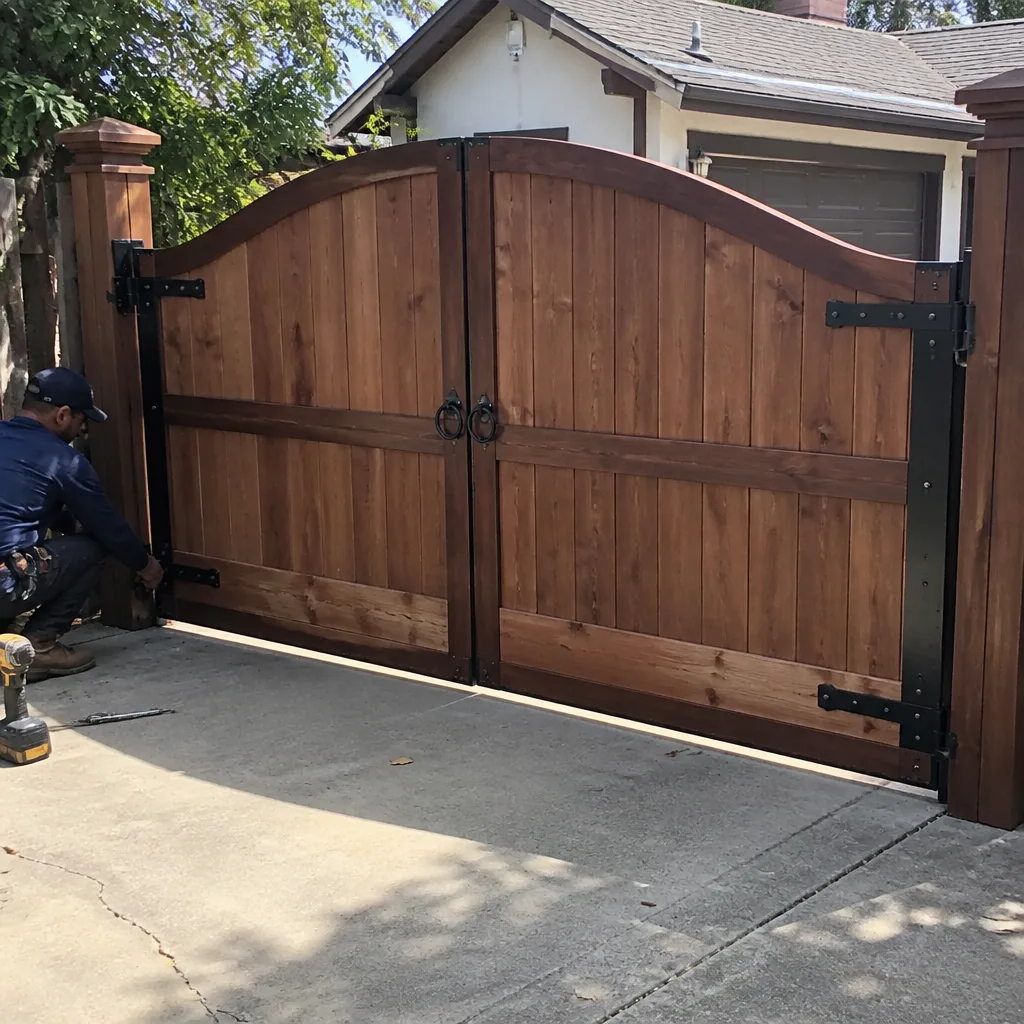 After
After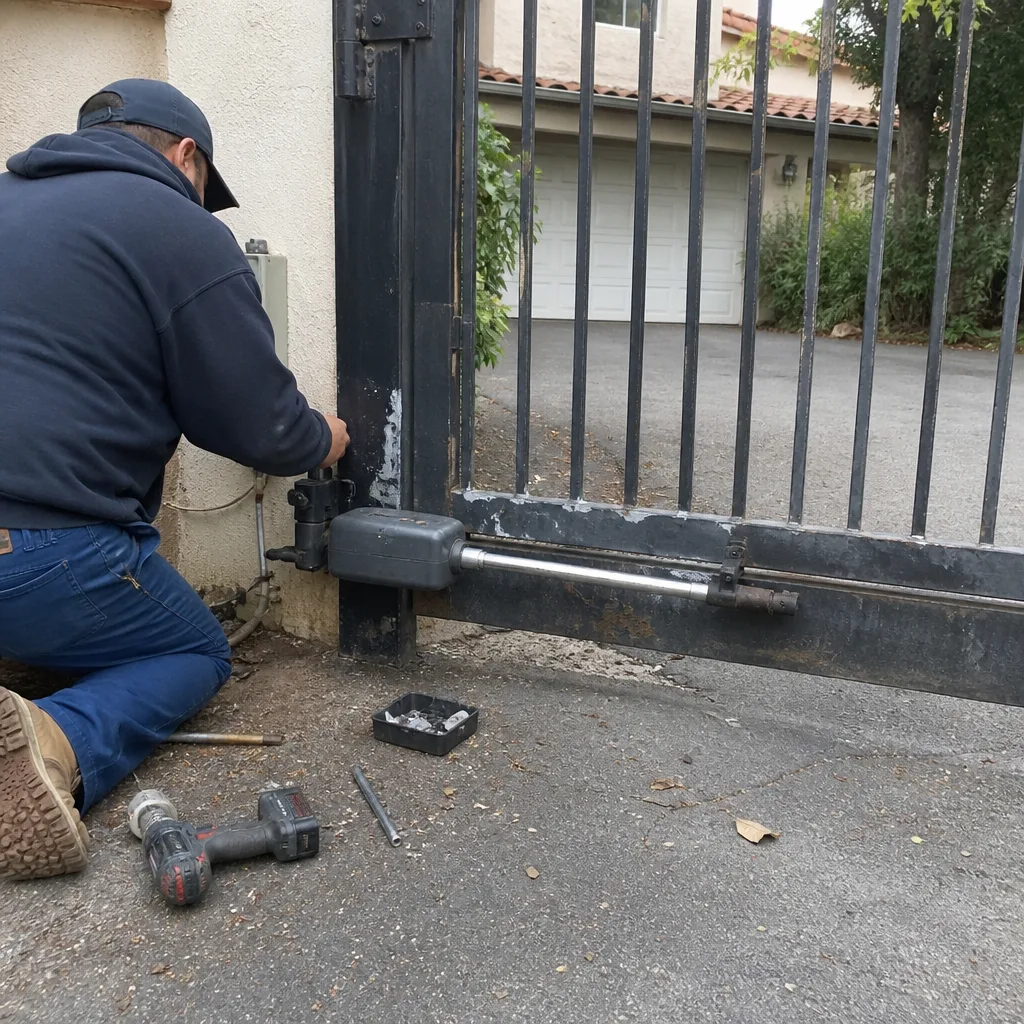 Before
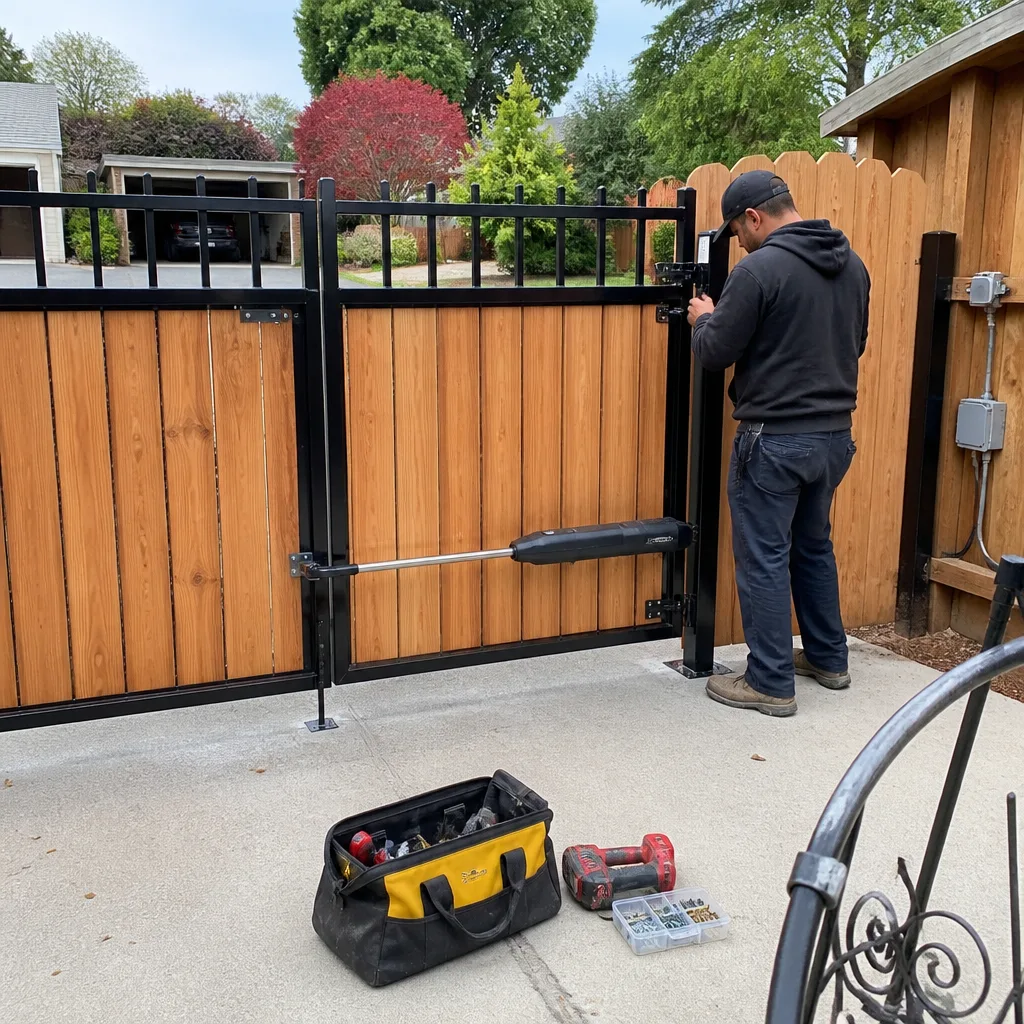 After
After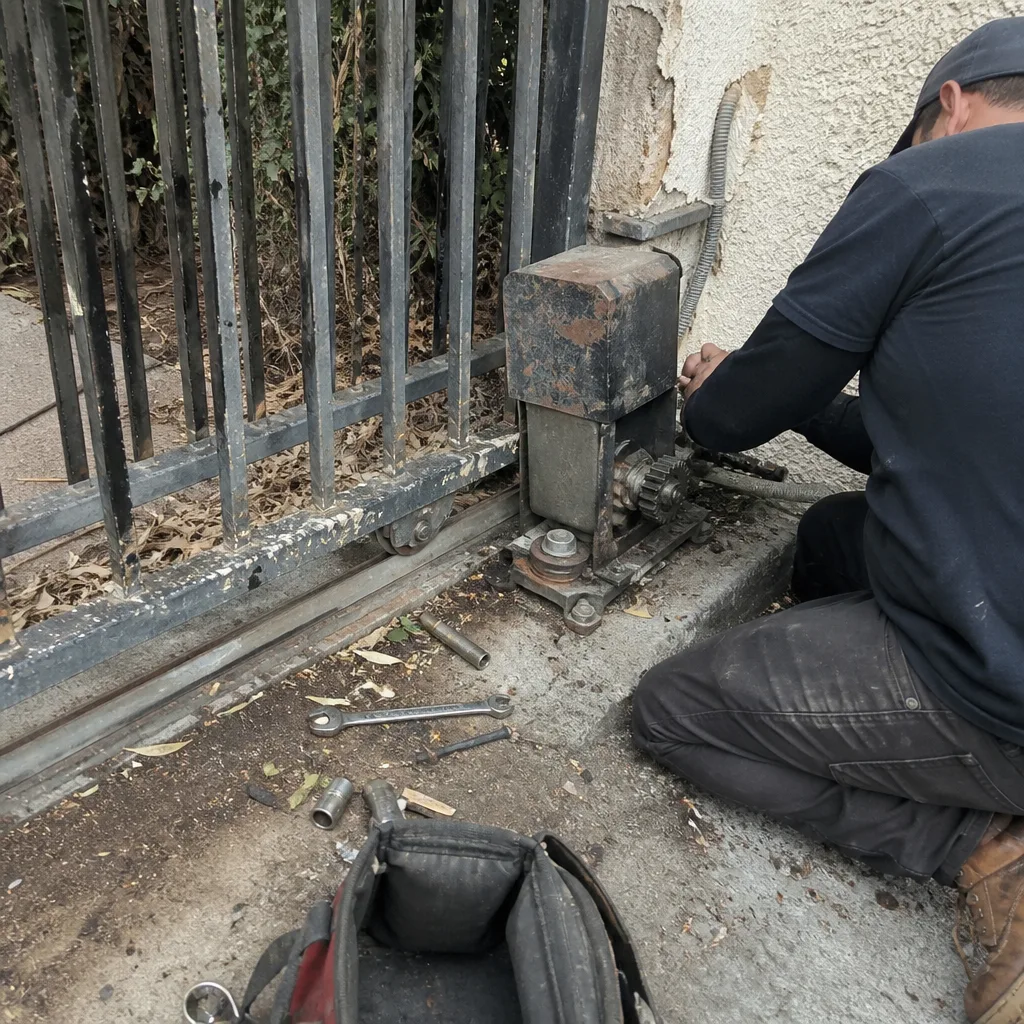 Before
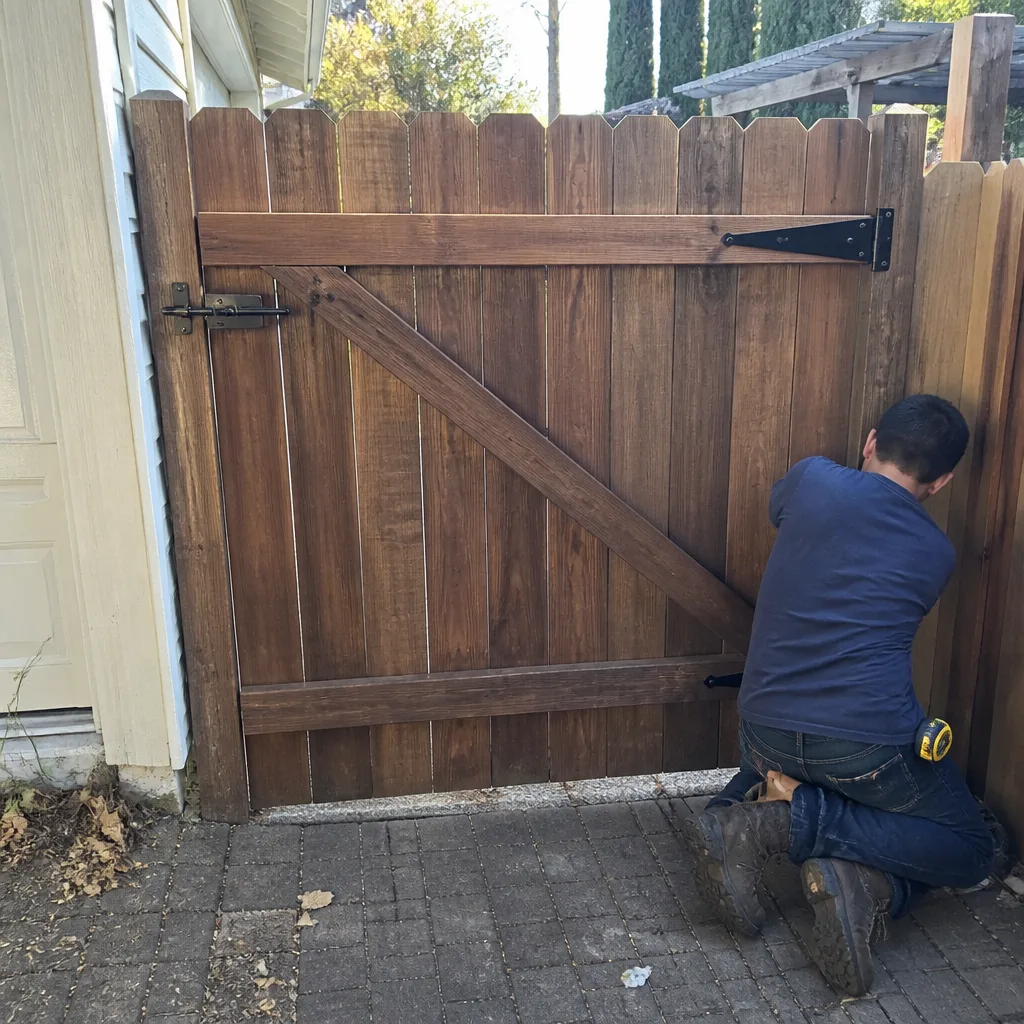 After
AfterHow to Hire a Gate Repair Contractor in Concord: A Step-by-Step Guide
A five-star review tells you the last customer was satisfied. It tells you nothing about whether the technician documented what they found or left you one bad hinge away from the same repair call next year. In Concord, where hillside properties in Clayton Valley and the thermal cycling across the Diablo Range put extra wear on gate hardware, the difference between a fix that lasts and a fix that fails often comes down to one thing: whether the contractor handed the homeowner a written scope before touching a single bolt. This guide - alongside The Complete Guide to Gate Repair in Concord - shows you how to test for that, and what else to look for, before you hire anyone to work on your gate.
Quick Answer
The best way to hire a gate repair contractor in Concord is to require a written diagnosis and scope before any work begins. A contractor who can name the failed component, explain why it failed, and quote a flat price in writing has actually inspected your gate. One who offers only a verbal estimate is guessing, and you’ll likely pay twice to fix the same problem. Verify their CSLB license, ask how they document their work, and get the price in writing - this single test eliminates most bad hires.
Table of Contents
- Why a Written Scope Matters More Than Star Ratings
- How to Check a California Contractor License for Gate Work
- The Exact Questions to Ask During a Quote Call
- How to Evaluate a Written Estimate: Line Items and Red Flags
- Concord-Specific Factors That Affect Gate Repair
- The Documentation You Should Receive After the Job
- How to Structure a Second Opinion Request
- Common Mistakes to Avoid
- When to Call a Professional
- Frequently Asked Questions
- The Bottom Line
BeforeAfterWhy a Written Scope Matters More Than Star Ratings
Most homeowners start with reviews. That’s reasonable, but it’s incomplete. A review captures how someone felt about a transaction. It rarely captures whether the repair was diagnosed correctly or whether the gate failed again six months later because the root cause was never addressed.
We’ve seen this pattern repeatedly in Concord. A homeowner calls with a swing gate that won’t close fully. The first technician adjusts the limit switches, charges $180, and leaves. Three months later, the same symptom returns. The second technician - the one who takes the time to write a scope - discovers the real problem: a cracked arm bracket on a LiftMaster operator that’s allowing the gate to drift past its set travel. The bracket replacement and limit reset, properly documented, solve it permanently.
The written scope is a diagnostic filter. When a contractor puts their findings on paper, they’re forced to be specific. “Gate won’t close” becomes “photo-eye misaligned 2 inches westward, causing intermittent beam break at 3:15 PM when sun angle hits sensor directly.” That level of specificity is what separates a technician from a parts-swapper.
Here’s what a proper written scope should include:
- The specific component identified as failed or failing
- The observed symptom and the root cause, distinguished from each other
- The proposed repair or replacement, with part numbers where applicable
- A flat price for the work, not a range or “time and materials” open end
- The warranty terms, in writing
At Vance Gate Repair Concord home, we operate under The Haven Standard, which makes this documentation mandatory. Gate Repair in Concord shouldn’t be a mystery to the homeowner. Clause 1 of the Haven Standard requires a written price before any work starts. Clause 4 requires photographic evidence of what was found and what was done. These aren’t marketing points; they’re quality controls that keep technicians honest and homeowners informed.
A contractor unwilling to provide this in writing is telling you something. They’re either not confident enough in their diagnosis to stand behind it, or they prefer the flexibility to expand the job once they’re on site. Neither serves your interests.
How to Check a California Contractor License for Gate Work
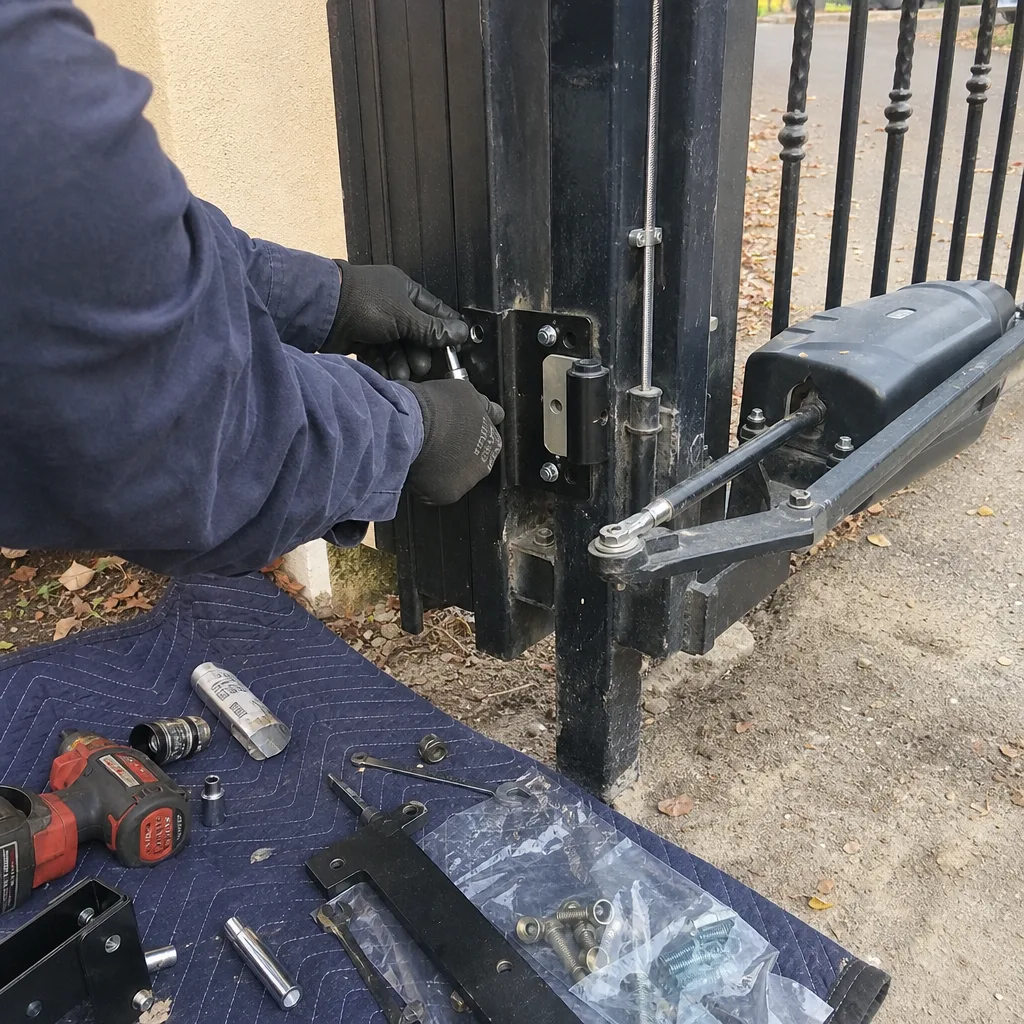
California requires anyone performing gate repair or installation for compensation to hold a valid contractor license from the Contractors State License Board (CSLB). For gate work specifically, the relevant classification is typically a C-61/D-28 (Doors, Gates, and Activating Devices) or a C-10 (Electrical) if the work involves significant low-voltage or line-voltage wiring modifications.
Here’s how to verify a license in under three minutes:
- Go to checkthelicense.cslb.ca.gov
- Enter the contractor’s license number or business name
- Confirm the status shows “Active” - not “Suspended,” “Expired,” or “Cancelled”
- Check that the classification includes D-28 or C-10
- Review the bond history: a valid $25,000 contractor’s bond should be on file
- Look at the workers’ compensation insurance status - required if the contractor employs anyone
Why this matters specifically for gate work: gates are motorized, heavy, and often controlled by low-voltage systems that interface with home automation. An unlicensed operator working on your FAAC or Elite motor isn’t just risking a bad repair. They’re working without the bond that protects you if they damage your property, and without the workers’ comp that protects you if they’re injured on your driveway.
In Concord, the Contra Costa County Building Division also requires permits for new gate installations and for structural modifications to existing gates. A licensed contractor knows this. An unlicensed one may skip permitting to keep their bid low, leaving you with a code violation that surfaces during a future home sale.
Red flags that should stop the conversation:
- “I’m licensed, just not in California” - out-of-state licenses mean nothing here
- “I work under my friend’s license” - this is illegal in California
- “I don’t need a license for jobs under $500” - the threshold is $500 in combined labor and materials, and gate repairs routinely exceed this
- License number not displayed on their website, truck, or estimate form - CSLB requires visible display
Adrian Vance has maintained active licensure since founding the company in 2014. We provide the license number on request and encourage every homeowner to verify it independently. It’s a thirty-second check that eliminates most fraud.
The Exact Questions to Ask During a Quote Call
The quote call is your first chance to test whether a contractor thinks diagnostically or merely dispatches bodies. The questions you ask, and the answers you receive, reveal which category you’re dealing with.
Question 1: “Can you tell me what you think is wrong before you come out?”
A thoughtful contractor will explain that they can’t diagnose remotely with certainty, but they’ll ask clarifying questions: Is the gate swing or slide? What brand operator is installed? Does the failure happen at a specific time of day? Does the motor hum without moving, or is there no response at all? These questions show a diagnostic mind. A contractor who guesses “probably the motor” without asking anything is guessing for a reason - they want to sell a motor.
Question 2: “What does your estimate include, and what would be extra?”
The answer should be specific. “Labor to diagnose, adjust, and test the gate” is acceptable. “Labor” without elaboration is not. At Vance Gate Repair Concord, our Gate Repair services include written estimates that itemize every component: diagnostic time, parts, labor for installation, testing and adjustment, and the documentation package. If we discover additional issues during diagnosis, we stop and write a revised scope before proceeding. The homeowner approves every dollar before it’s spent.
Question 3: “What documentation do I get when the job is done?”
Most contractors will pause at this question. That’s informative. The ones who have a system will describe it: photos of the failed component, photos of the installed replacement, settings recorded from the operator, a written summary of adjustments made. The ones who don’t will deflect: “We warranty our work” or “You can call us if there’s a problem.” Documentation isn’t about distrust. It’s about creating a record that the next technician - whether from the same company or a different one - can read instead of starting from zero.
Question 4: “What happens if the same problem comes back?”
The answer should be immediate and specific. “We’ll come back and fix it at no charge” is good. “We have a warranty” is vague - how long, what does it cover, is labor included? At Vance Gate Repair Concord, the 365-Day Done Right Promise gives a full year. If the repair isn’t right, we make it right. No argument, no fee, no expiration date within that window. We put this in writing because verbal promises evaporate.
Question 5: “Do you service the brand of operator I have?”
This matters more than most homeowners realize. A contractor who only works on one or two brands has an incentive to declare your Mighty Mule or LiftMaster “unrepairable” and sell you their preferred replacement. We service nine major automation brands, which means we can repair what’s there rather than defaulting to replacement. Ask specifically: “Do you stock parts for [your brand]?” A yes with specifics is credible. A yes without follow-through is suspect.
Question 6: “Can I get a second opinion on another company’s estimate?”
A confident contractor says yes. A defensive one discourages it. We offer free second opinions on any written estimate from another company. Bring the paperwork. We’ll review the scope, the parts specified, and the pricing - and we’ll tell you whether the diagnosis makes sense. This costs us time and earns us nothing directly, but it builds the trust that keeps homeowners calling us for the actual repair.
How to Evaluate a Written Estimate: Line Items and Red Flags
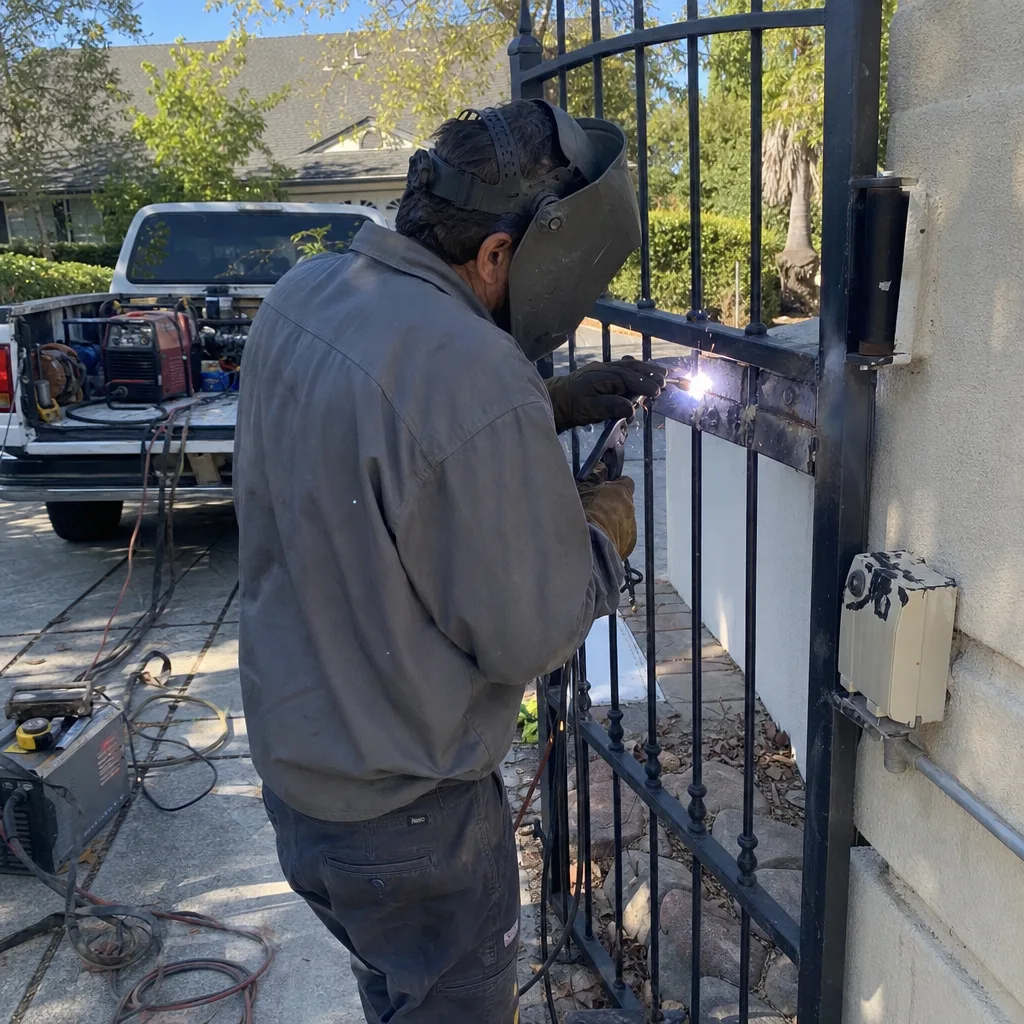
Once you have a written estimate in hand, the real evaluation begins. Here’s what to look for and what to reject.
Required line items:
- Diagnostic fee - named as a separate line, not buried in “labor”
- Parts - specific part numbers or manufacturer names, not “control board” or “motor”
- Labor - hours or flat rate, with the scope of work described
- Testing and adjustment - confirmation that the gate will be cycled and safety features verified
- Documentation - what you’ll receive: photos, written summary, settings log
- Warranty terms - duration, coverage, transferability
Red flag language:
- “Time and materials, final TBD” - open-ended pricing with no ceiling
- “Miscellaneous parts” - a slush fund for unspecified components
- “As needed” or “if required” without trigger conditions - allows unlimited scope expansion
- No part numbers - means the contractor hasn’t identified the specific component
- “Pay half now, half on completion” without a written contract - CSLB requires written contracts for jobs over $500
Green flag language:
- “Flat price for [specific repair], valid for 30 days”
- “Includes cycling test and safety reverse verification per UL 325”
- “Photo record provided under Clause 4 of The Haven Standard”
- “365-Day Done Right Promise: if this repair fails due to workmanship or part defect, we repair at no charge”
Pricing in Concord varies with gate type and access, but here’s what we see in the local market for common repairs:
- Photo-eye alignment and testing: $120-$180
- Limit switch adjustment with documentation: $140-$200
- Control board replacement (most brands): $380-$650, including board and programming
- Swing arm replacement (operator-dependent): $450-$890
- Slide gate chain and sprocket service: $280-$520
These ranges assume standard residential access in Concord neighborhoods like Dana Estates, Holbrook Heights, or the properties off Treat Boulevard. Hillside installations with limited technician access, or gates requiring traffic control on busy streets, may run higher due to logistics. A written estimate should note these conditions explicitly if they apply.
The key test: can the contractor explain, in writing, why each line item exists? If not, they may not fully understand the repair themselves.
Concord-Specific Factors That Affect Gate Repair
Gate repair in Concord isn’t identical to gate repair in other East Bay cities. Local conditions create specific wear patterns that a competent contractor should recognize and address in their diagnosis.
Thermal cycling and the Diablo Range effect. Concord sits in a valley with significant temperature swings, especially in neighborhoods climbing the western hills toward Clayton. A gate that expands in afternoon heat and contracts overnight can develop hinge binding that mimics operator failure. We’ve seen technicians replace a perfectly good LiftMaster actuator when the real problem was a hinge pin galling from thermal stress. A written scope should note hinge condition, not just operator behavior.
Soil movement on hillside properties. Areas like Lime Ridge and portions of the Clayton Valley see seasonal soil movement. A gate post that was plumb in March may lean by October. This affects gate geometry, which affects operator strain, which affects limit switch settings. A technician who resets limits without checking post plumbness is treating a symptom. The Haven Standard requires photographing post condition because we’ve learned - from documented records going back to 2014 - that post movement is a recurring root cause in this terrain.
Wind exposure in open corridors. The corridor between Suisun Bay and the Diablo Range creates sustained afternoon winds, particularly in spring and early summer. Swing gates catch this wind load, and operators without proper clutch sensitivity settings can fault out repeatedly. A local contractor should know to check clutch torque settings, not just cycle the gate in calm morning conditions.
Local code and permit awareness. Concord requires permits for new gate installations and for structural modifications. The Contra Costa County Fire Marshal also has access requirements for emergency vehicle entry that affect gate design. A contractor who doesn’t ask whether your gate is on a fire access route hasn’t done their homework. We check this on every installation quote because we’ve seen gates installed without proper knock-out panels or hold-open features, requiring costly rework when the fire inspection fails.
Water intrusion from seasonal rains. Concord’s wet season concentrates rainfall in December through March. Control boxes mounted without proper drainage, or photo-eyes installed without sealed conduits, fail predictably in January. A competent estimate should address weatherproofing if your installation shows vulnerability. Our photo records from prior visits let us compare enclosure conditions year-over-year and catch deterioration before it causes failure.
The Documentation You Should Receive After the Job
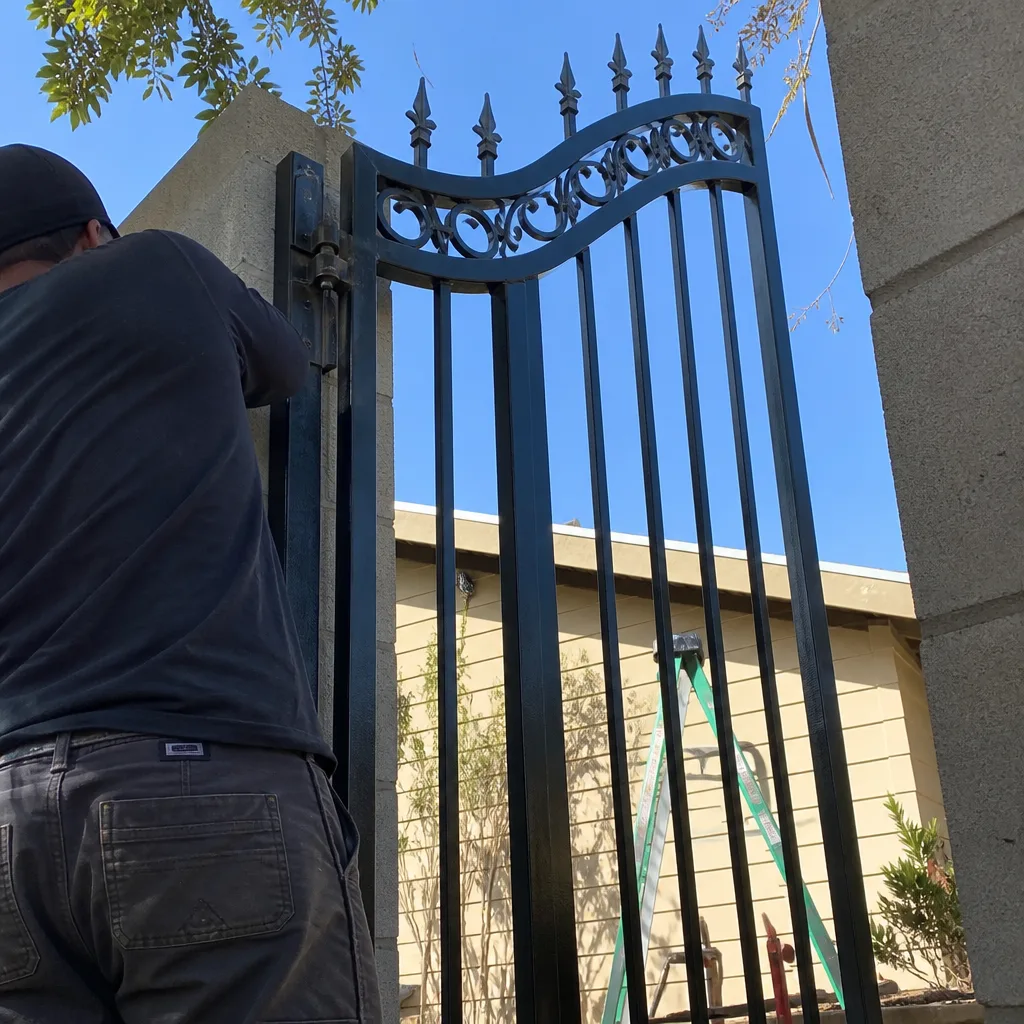
The job isn’t complete when the gate cycles. It’s complete when you have a record that the next technician - or the next homeowner - can use.
Here’s what proper documentation includes, and why each element matters:
Photographic evidence of the failed component. Before removal, the technician photographs the part that failed, showing its condition and installation position. This isn’t for the repair company’s marketing. It’s proof that the component was actually replaced, and it helps diagnose premature failure if the same part fails again.
Photographic evidence of the installed replacement. The new part, installed, with identifying marks visible. For operators, this includes the model and serial number plate. For control boards, the part number sticker. This record protects you if a warranty claim arises - manufacturers require proof of the installed unit.
Settings log. For automated gates, this records limit switch positions, clutch torque settings, photo-eye alignment measurements, and safety reverse force readings. These are the baseline settings that define proper operation. If the gate drifts from these settings, a future technician knows whether the change is gradual wear or sudden failure.
Written summary of work performed. Not a generic “repaired gate” but specifics: “Replaced FAAC 770 control board with 770N updated version. Reset limit switches to 87 degrees open, 0 degrees closed. Verified safety reverse at 15 lbs force per UL 325. Photographed all settings before enclosure closure.”
Warranty document. The 365-Day Done Right Promise, or equivalent, in writing. What it covers, what it doesn’t, how to invoke it, and the response commitment.
Under The Haven Standard, every Vance Gate Repair Concord visit produces this package. The homeowner receives a copy before the technician leaves. A duplicate is filed in the job record. If you call us in 2027 about a gate we serviced in 2024, we can pull the photos and settings. If you sell your home, you hand the next owner a maintenance history that adds value and prevents redundant repairs. For additional upkeep tips, see more guides & resources.
Most contractors don’t do this because it takes time. It does - roughly fifteen minutes per job. But that fifteen minutes saves hours of rediscovery on the next service call, and it eliminates the “well, we don’t know what the last guy did” problem that homeowners pay for repeatedly.
How to Structure a Second Opinion Request
Getting a second opinion isn’t about finding a cheaper price. It’s about testing whether the first diagnosis holds up under scrutiny. Here’s how to request one so you get real value.
Step 1: Bring the written estimate, not a verbal summary.
A second opinion based on “they said it needs a new motor” is worthless. The technician needs to see the scope, the part numbers, the pricing structure. This lets them evaluate whether the diagnosis matches the proposed repair. We require the written estimate for our free second opinion service because without it, we’re just guessing at someone else’s guess.
Step 2: Ask for an independent diagnosis, not a price match.
Frame your request: “Can you diagnose this gate independently and tell me what you find?” not “Can you beat this price?” The second contractor should inspect the gate, document their findings, and explain where they agree or disagree with the first estimate. If they simply offer a lower price for the same unspecified repair, they haven’t added information. They’ve just discounted an unknown.
Step 3: Compare the scopes, not just the totals.
A $600 estimate that replaces a control board, resets limits, tests safety systems, and provides documentation may be better value than a $400 estimate that swaps a board and leaves. Look at:
- Are the proposed parts identical? Different part numbers may indicate different quality levels or compatibility
- Does the second opinion identify additional issues the first missed?
- Does either scope address root cause, or just symptom?
- What documentation and warranty come with each?
Step 4: Ask the second contractor to explain any disagreement.
If Contractor A says “new motor needed” and Contractor B says “limit switch adjustment,” ask B why A might have recommended replacement. There may be a legitimate reason - motor age, prior repair history, compatibility issues. Or there may not be. The explanation reveals diagnostic depth.
Step 5: Check whether the second opinion itself is documented.
A contractor who offers a second opinion verbally, without writing their findings, is repeating the problem you’re trying to solve. Request a brief written summary of their inspection, even if you don’t hire them. This creates a record and tests whether they’ll commit their diagnosis to paper.
We’ve performed hundreds of second opinions in Concord since 2014. In roughly a third of cases, we confirm the original diagnosis and advise the homeowner to proceed. In another third, we identify a less expensive repair that addresses the root cause. In the remaining third, we find that the original scope missed significant issues - structural, safety, or code-related - that would have surfaced as costly surprises later. The value isn’t in the price comparison. It’s in the information gain.
Common Mistakes to Avoid
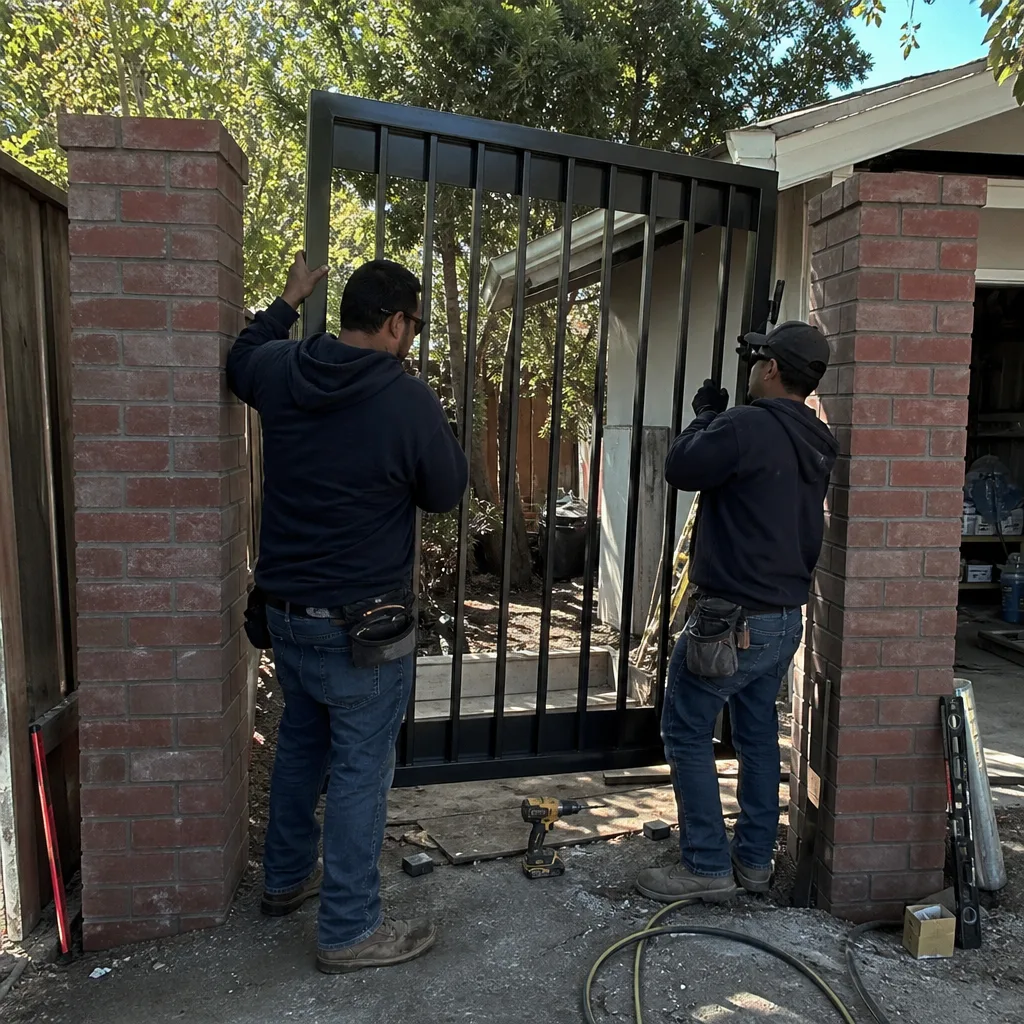
- Hiring based on the lowest verbal estimate. A number spoken over the phone has no enforceability and often expands once the technician is on site. Concord homeowners in the Parkmead and Todos Santos areas have told us stories of $200 quotes becoming $800 invoices with no written authorization.
- Ignoring the brand-specific question. A contractor who doesn’t service your installed brand has a financial incentive to declare it obsolete. Ask directly, and verify with a parts stock question.
- Skipping the CSLB check because “they seemed professional.” Professional appearance and valid licensure are separate variables. We’ve encountered unlicensed operators with polished trucks and licensed contractors with twenty-year-old vans. The license protects you; the paint job doesn’t.
- Accepting “we’ll warranty it” without written terms. Verbal warranties are unenforceable in California. The duration, coverage, and claims process must be in writing. Our 365-Day Done Right Promise is printed on every invoice because we intend to honor it.
- Not asking about documentation until after the repair. By then, it’s too late to create a record of the original condition. Establish documentation expectations before work begins.
- Assuming all gate contractors understand Concord’s hillside conditions. A technician from flat terrain may not recognize thermal binding or soil-movement effects. Local experience matters for persistent problems.
- Neglecting to verify that safety systems are tested. UL 325 requires specific force and entrapment testing. A contractor who cycles the gate twice and leaves hasn’t verified safety compliance. Ask for the test results.
When to Call a Professional
Some gate issues are genuinely DIY-appropriate: clearing debris from a track, cleaning a photo-eye lens, or testing whether a remote needs new batteries. Others require professional attention because they involve safety-critical systems, structural loads, or electrical hazards.
Call a professional when: the gate operator hums but doesn’t move (possible mechanical binding or motor failure); the gate reverses unexpectedly or fails to reverse on contact (safety system failure); there’s visible damage to hinges, posts, or the gate frame; the control board shows fault codes you can’t clear; or you’re considering any modification to the gate’s weight, size, or automation.
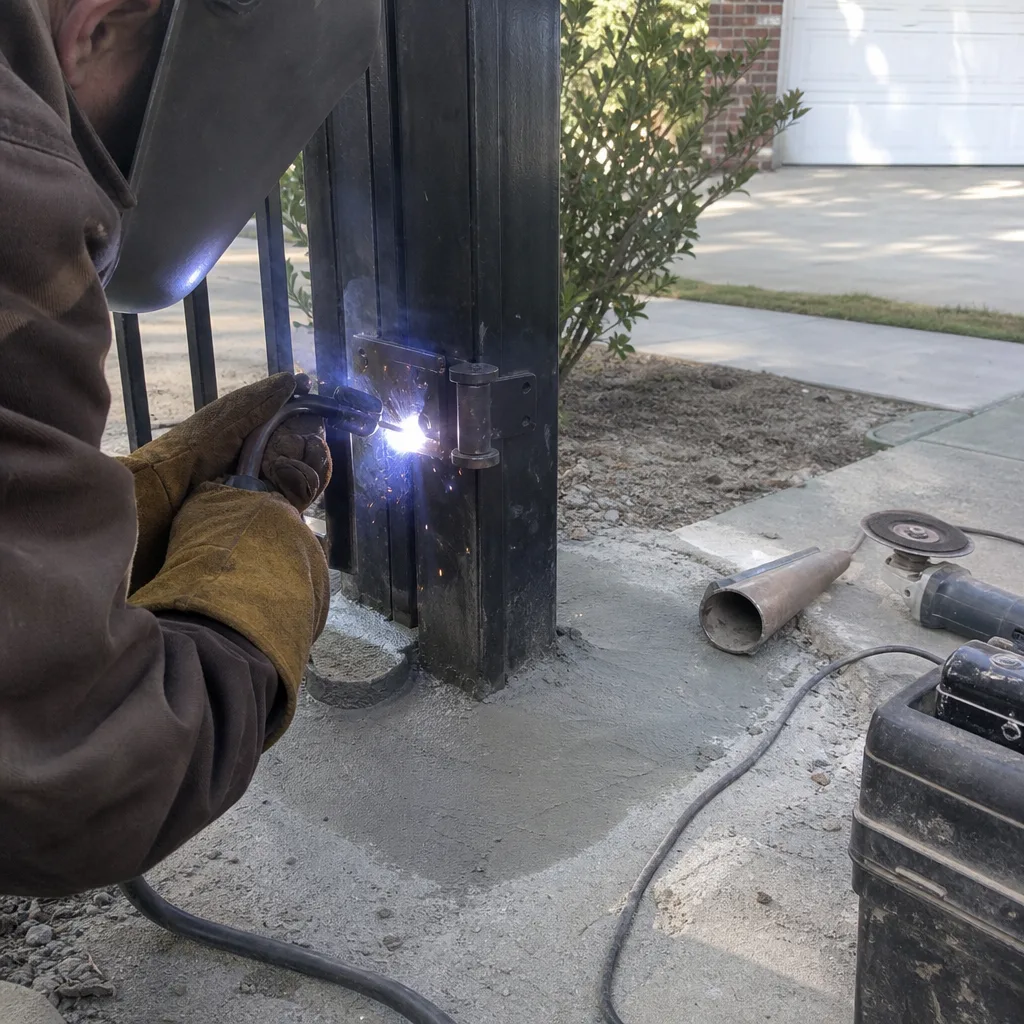
High-torsion spring systems on overhead gates, line-voltage electrical work, and welding repairs should never be attempted without proper training and equipment. The forces involved can cause serious injury.
Gate Installation in Concord and Gate Motor & Opener in Concord both require skilled execution to meet code and function safely. Vance Gate Repair Concord offers free estimates in Concord - call (510) 726-7050. A live person answers 24 hours a day, and we’ll schedule a diagnostic visit that produces a written scope before any work begins.
Frequently Asked Questions
Most residential gate repairs in Concord range from $140 for basic adjustments to $890 for major component replacement, with control board replacements typically falling between $380 and $650. The exact price depends on gate type, operator brand, parts required, and site access conditions. Call (510) 726-7050 for a written estimate - estimates are free.
Gate repair contractors in California should hold a CSLB license with either a C-61/D-28 classification (Doors, Gates, and Activating Devices) or a C-10 (Electrical) if the work involves significant wiring. Always verify the license at checkthelicense.cslb.ca.gov and confirm it’s active with current bond and insurance.
Yes, and you should if the scope seems vague or the price seems disconnected from the described work. Bring the written estimate to Vance Gate Repair Concord and we’ll review it at no cost, providing an independent diagnosis and explaining where we agree or disagree with the original scope.
A repairable operator has available parts, a control board that responds to programming, and mechanical components without catastrophic damage. We service nine major brands including LiftMaster, FAAC, and Mighty Mule, and we stock parts for most common models. If the motor windings are burned, the gearbox is shattered, or the manufacturer has discontinued all support, replacement becomes the practical option. We document this determination in writing before recommending either path.
You should receive photos of the failed component before removal, photos of the installed replacement, a settings log with limit positions and safety test results, a written summary of work performed with part numbers, and a warranty document. Under The Haven Standard, Vance Gate Repair Concord provides this package on every visit at no additional charge.
New gate installations and structural modifications to existing gates require permits through Contra Costa County Building Division. Simple repairs to existing automation - control board replacement, limit adjustment, photo-eye realignment - typically do not. A competent contractor will identify permit requirements in the written scope before work begins.
The Bottom Line
The single most predictive factor in a good gate repair hire is the written scope. It reveals diagnostic competence, pricing honesty, and accountability before any work begins. In Concord’s specific climate and terrain, local experience matters too - but local experience without documentation still leaves you guessing. Verify the CSLB license, require written estimates with specific line items, ask how the work will be documented, and get a clear warranty in writing. These steps eliminate most bad hires and protect you from paying twice for the same problem. The contractors who welcome this scrutiny are the ones worth hiring.
Written by Adrian Vance, Owner at Vance Gate Repair Concord, serving Concord since 2014.