
Last updated September 22, 2026
Free on-site gate assessment - hinges, posts, and your LiftMaster or Nice gate operator checked before anything is quoted
The assessment is free and the quote is the invoice.
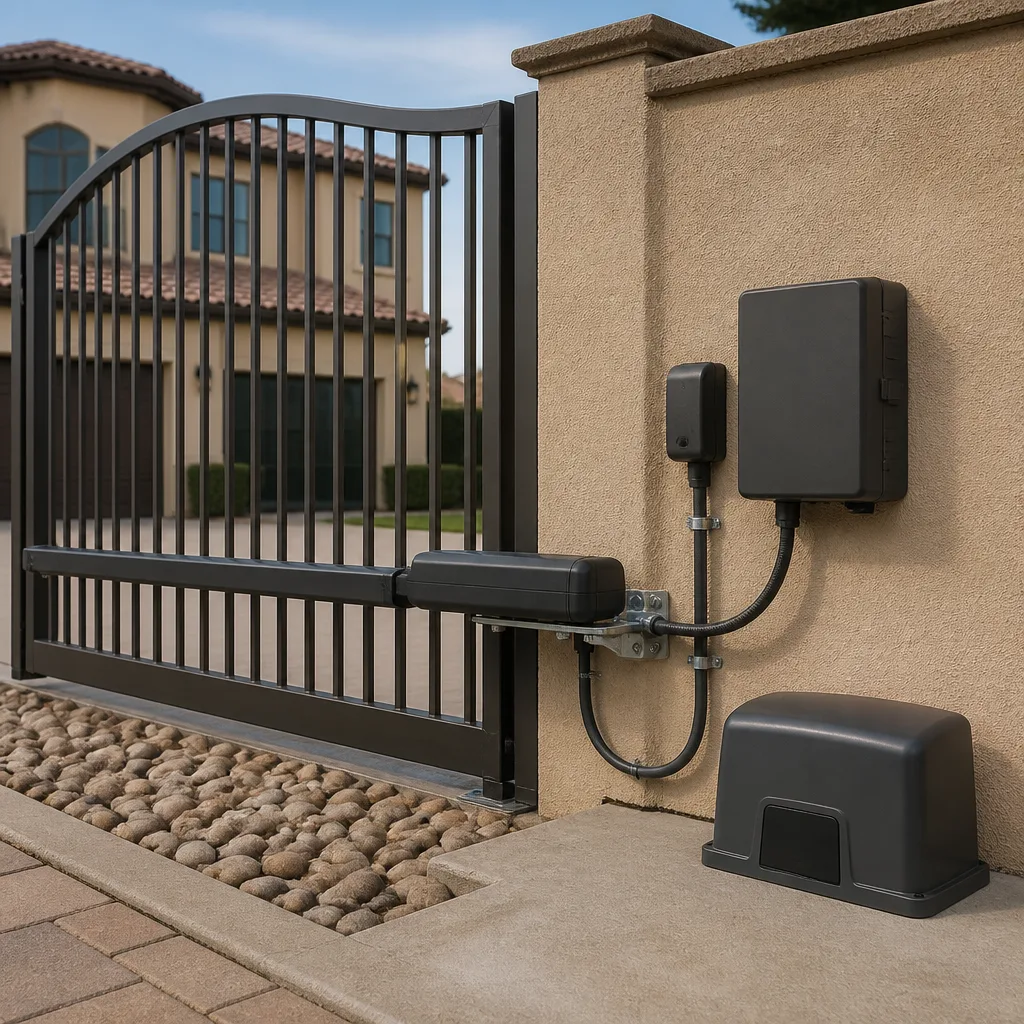
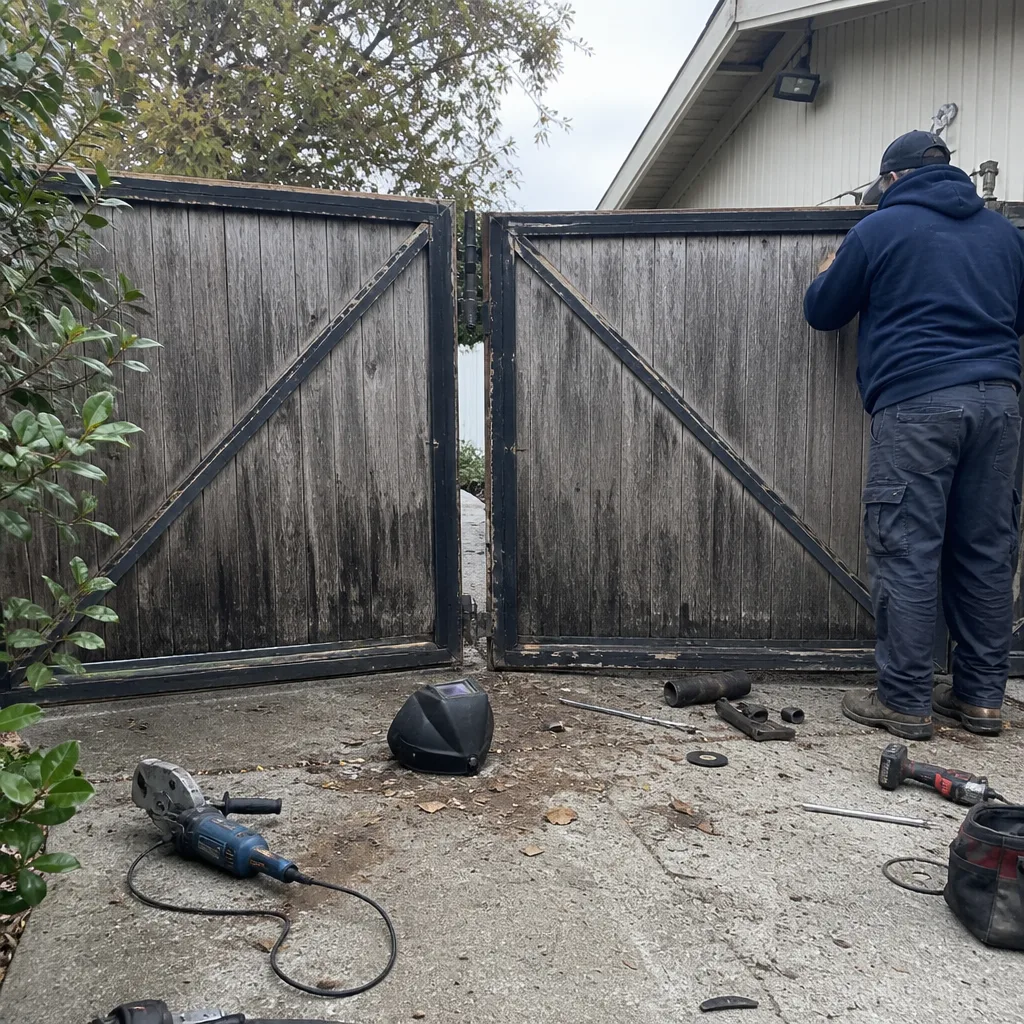 Before
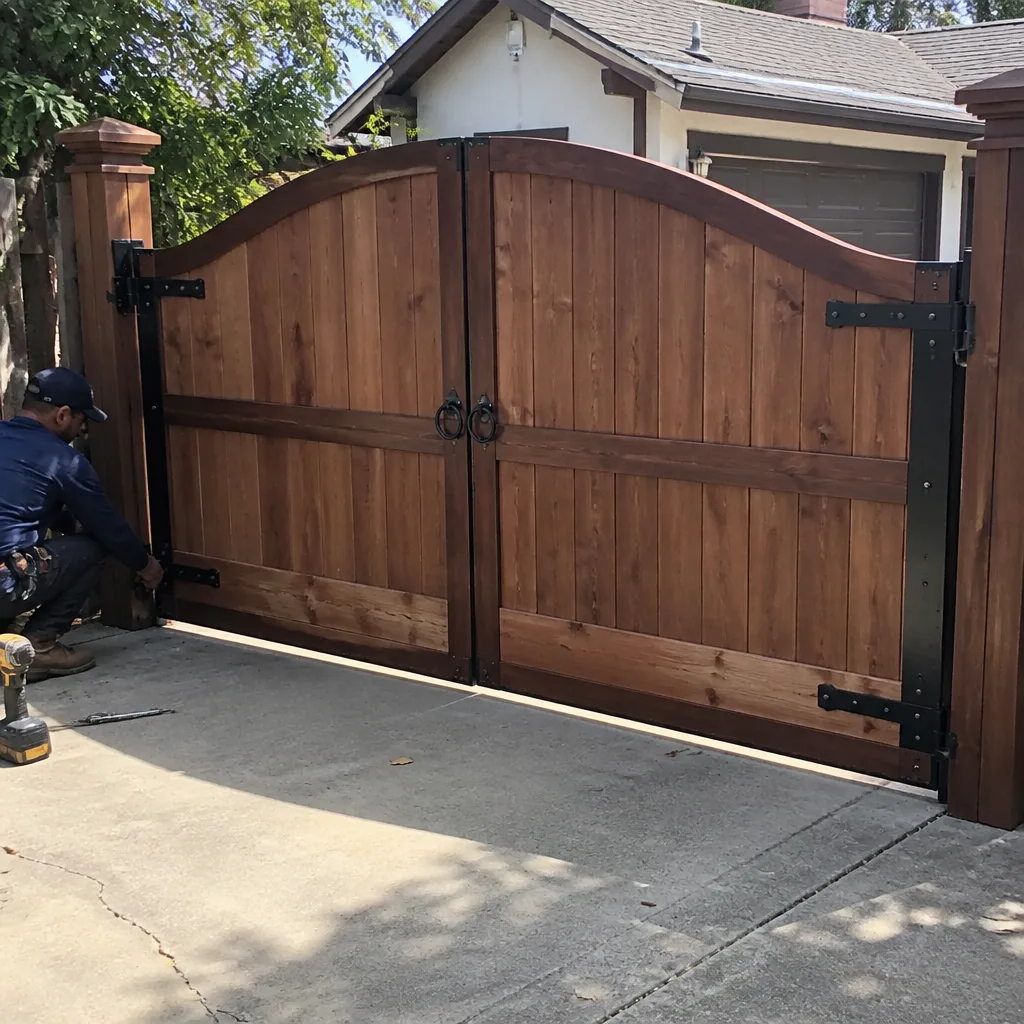 After
After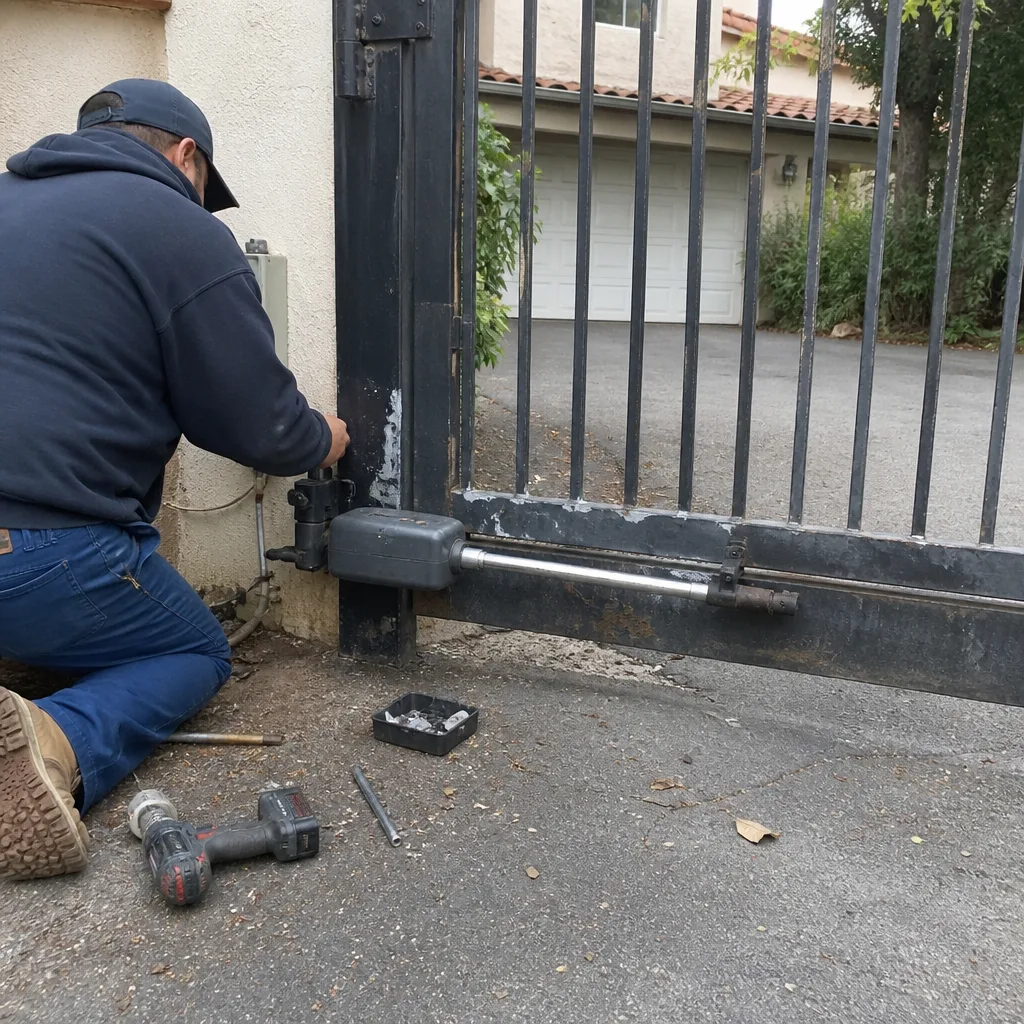 Before
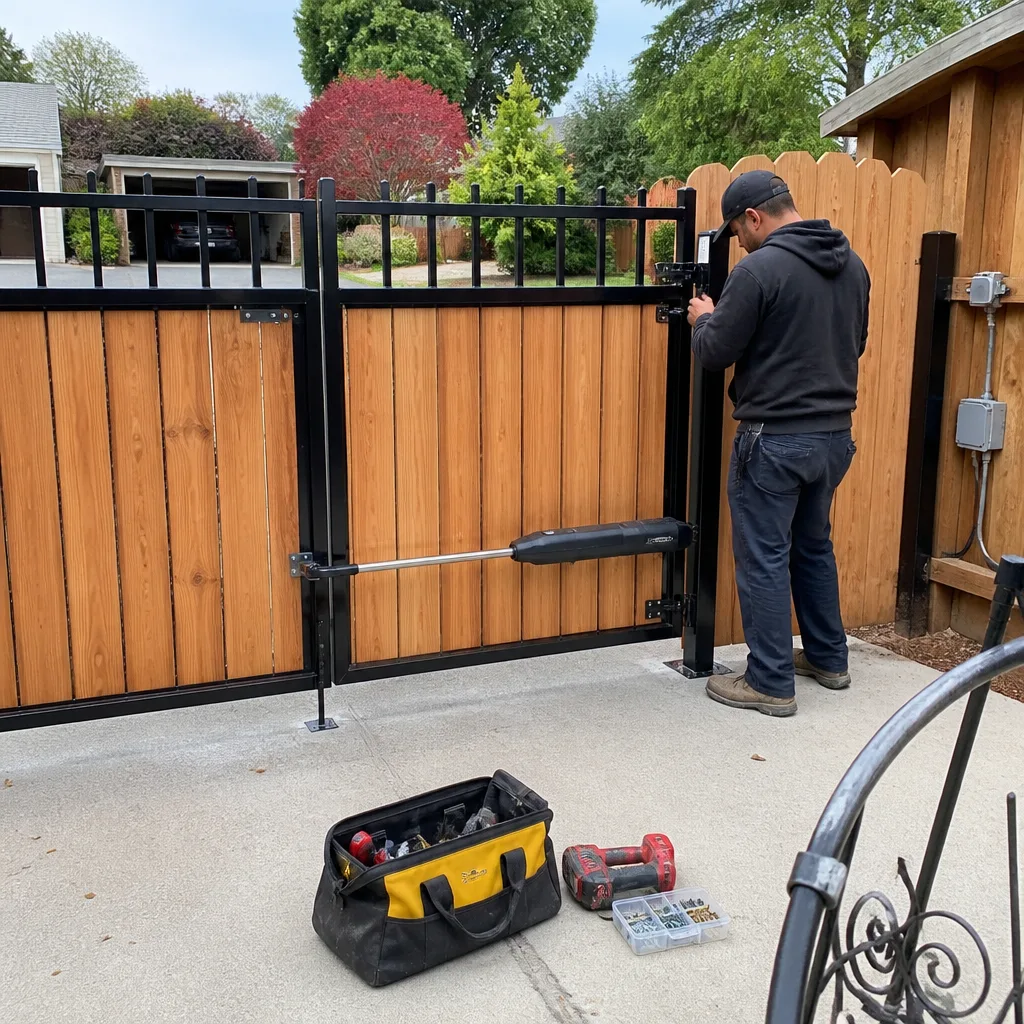 After
After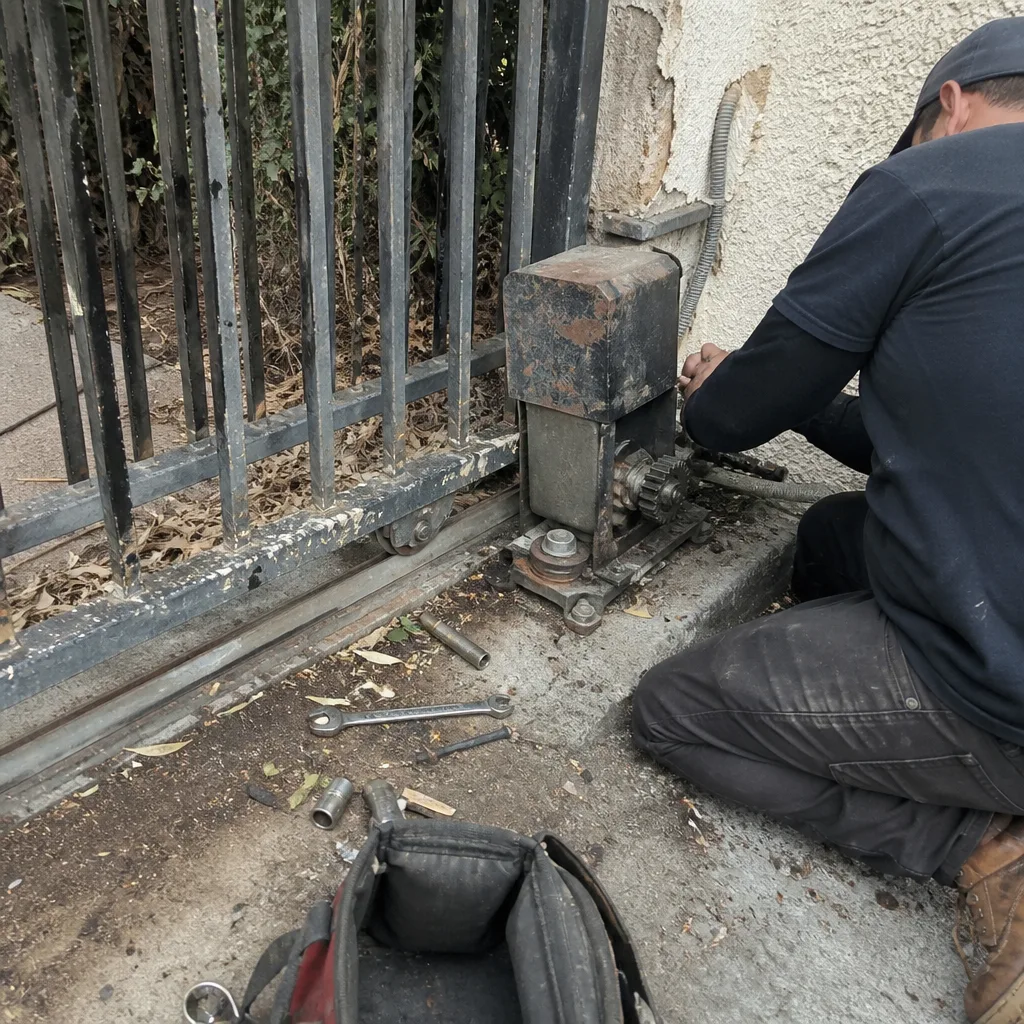 Before
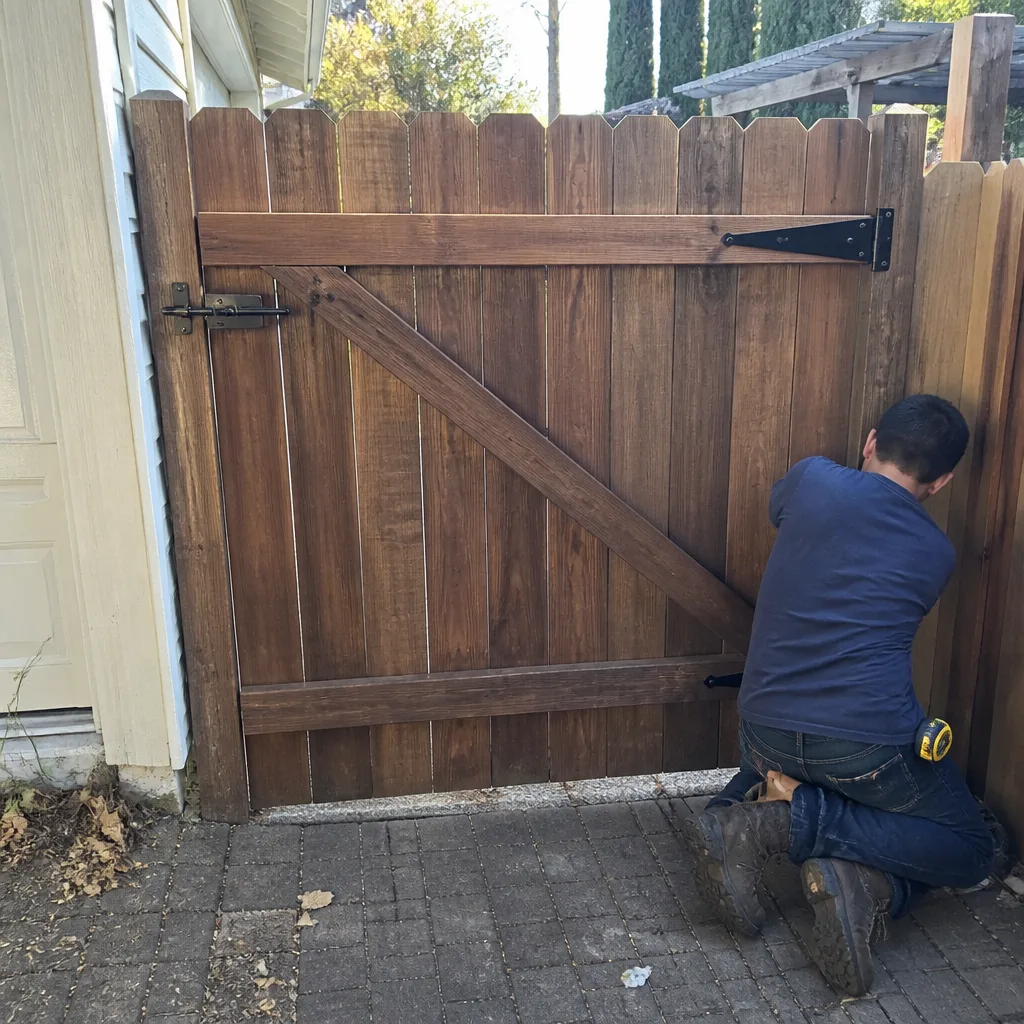 After
AfterGate Repair Warning Signs: A Concord Homeowner’s Reference Guide
A gate that hesitates at open is not the same problem as a gate that grinds at open. Both sound like “gate acting up.” One is a limit-switch drift, a 15-minute adjustment. One is a bearing that’s three weeks from seizing, and if you wait, it’ll take the motor with it. In Concord, we’ve seen both on the same street in the same week - a swing gate on Olivera Road that just needed its Linear operator recalibrated, and a slide gate on Treat Boulevard whose roller bearings had worn so far that the rack gear stripped teeth off the pinion. The homeowner who understood the difference saved $340. The one who didn’t paid for a motor replacement.
This guide sorts every gate warning sign into two categories: failures that have already happened, and failures that are accumulating. Knowing which is which keeps you from paying emergency rates for a non-emergency, or from scheduling a routine visit while your gate is actively destroying itself. For How to Hire a Gate Repair Contractor in Concord: A Step-by-Step Guide, see our companion resource.
Quick Answer
Gate warning signs in Concord fall into two urgency tiers. Accumulating failures - slow operation, intermittent response, minor grinding - typically allow a scheduled repair within one to two weeks. Immediate failures - a gate that won’t close, exposed wiring, or a motor that hums without moving - need same-week service to prevent secondary damage to the operator, rack, or safety systems. Most Concord homeowners can distinguish the two by observing whether the symptom is getting gradually worse (accumulating) or appeared suddenly and now prevents normal function (immediate).
Table of Contents
- The Two Types of Warning Signs: Accumulating vs. Immediate
- Symptom-to-Cause Table: What Each Behavior Actually Means
- How to Tell Mechanical from Electrical Without Opening a Panel
- Warning Signs Unique to Slide Gates vs. Swing Gates in Concord
- How to Document a Warning Sign Before Calling
- Scheduled Repair vs. Same-Week Service: A Decision Framework
- What Gate Repairs Cost in Concord
- Common Mistakes to Avoid
- When to Call a Professional
- Frequently Asked Questions
- The Bottom Line
BeforeAfterThe Two Types of Warning Signs: Accumulating vs. Immediate
Every gate problem starts as one thing and becomes another. The skill is catching it in the right phase.
Accumulating failures build over weeks or months. The gate takes four seconds longer to open than it did in March. The motor strains audibly on cold mornings in Concord’s Todos Santos Hills neighborhood, then sounds fine by afternoon. The remote works from 30 feet on Tuesday and only from 10 feet on Thursday. These symptoms are data. They’re telling you that a component is degrading - a capacitor losing capacitance, a gear tooth wearing flat, a photo-eye lens clouding with dust from the dry summer air that blows off Mount Diablo.
The key trait of accumulating failures: the gate still functions, but function is declining on some measurable dimension. Speed, range, noise level, consistency. If you can say “it’s getting worse,” you’re in this category.
Immediate failures announce themselves suddenly and stop normal operation. The gate opens six inches and reverses. The keypad beeps three times and does nothing. The motor hums for three seconds, trips its thermal overload, and goes silent. These are not degradations - they’re endpoints. Something has broken, disconnected, or detected a condition dangerous enough to halt everything.
The cost difference between catching a failure in its accumulating phase versus its immediate phase is substantial. A worn roller bearing caught early costs $180-$260 to replace in Concord, including labor. That same bearing, seized, often damages the gate track, the rack gear, and sometimes the motor’s internal clutch. We’ve documented jobs in the Dana Estates area where a $220 bearing replacement became an $1,800 rebuild because the homeowner waited until the gate wouldn’t move at all.
Under Vance Gate Repair Concord‘s Haven Standard, we price both scenarios in writing before work starts. But we’d rather write a quote for the bearing.
Symptom-to-Cause Table: What Each Behavior Actually Means
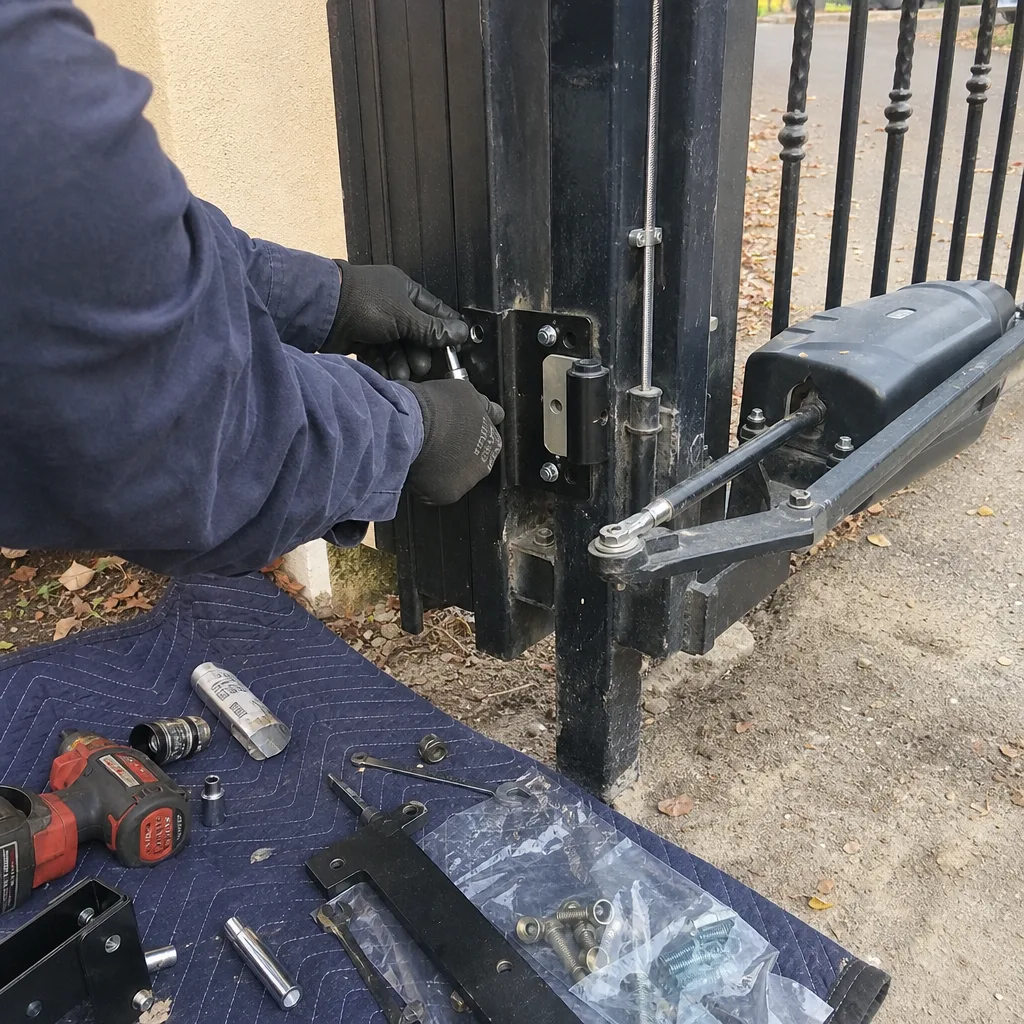
This table connects what you observe to what is actually failing. Use it to describe your problem accurately when you call, and to gauge whether you’re looking at a single component or a cascading failure.
| Observable Behavior | Most Likely Mechanical Cause | Most Likely Electrical Cause | Urgency |
|---|---|---|---|
| Gate opens slower than last month | Worn rollers or track debris; binding hinge on swing gate | Capacitor weakening in operator; low voltage from transformer | Scheduled (1-2 weeks) |
| Gate reverses immediately after starting to close | Physical obstruction in track; misaligned gate leaf | Photo-eye misalignment or dirty lens; limit switch set short | Same-week |
| Grinding noise during travel | Dry or worn rack-and-pinion; damaged roller bearings; loose chain on slide gate | Motor running under excessive load due to mechanical binding | Same-week if worsening; scheduled if stable and minor |
| Motor hums, gate does not move | Seized bearing; broken shear pin; detached operator arm | Blown start capacitor; failed relay; disconnected motor lead | Same-week |
| Intermittent response to remote or keypad | Loose connection in control board; failing receiver | Weak remote battery; antenna damage; RF interference from nearby equipment | Scheduled |
| Hard stop at end of travel (slams or jerks) | Physical end-stop shifted; bent gate frame contacting post | Limit switch drifted out of calibration; deceleration setting lost | Scheduled |
| Beeping from operator cabinet | Not applicable - beeping is always electrical diagnostic | Low battery in backup system; fault code for obstructed photo-eye; thermal overload warning | Varies by pattern (see below) |
| Gate opens but won’t close; or closes but won’t open | Broken spring on swing gate; damaged closer arm | Single-direction relay failure; one photo-eye only (open vs. close side) misaligned | Same-week |
The beeping patterns deserve special attention because they’re the operator’s attempt to tell you what’s wrong. On FAAC and BFT systems common in Concord’s newer developments, a slow beep every 30 seconds typically means the backup battery is below 12VDC. Rapid beeping during operation means a photo-eye fault - something is breaking the beam, or the beam isn’t reaching the receiver. A beep that starts after three failed open attempts is a thermal overload warning on Viking and some Linear operators: the motor has gotten too hot and is protecting itself.
In our experience across Concord’s varied housing stock - from the 1950s ranch homes near Concord Boulevard to the gated communities off Ygnacio Valley Road - the most misdiagnosed symptom is “the gate is slow.” Homeowners and some technicians assume motor failure. In roughly 60% of cases we’ve documented since 2014, the cause is mechanical binding that makes the motor work harder, not a motor that has lost power. Replacing a motor that was never the problem is a $900-$1,400 mistake we see several times per year.
How to Tell Mechanical from Electrical Without Opening a Panel
You don’t need a multimeter to make a useful distinction. You need observation and a few simple tests.
Step 1: Listen to the motor, not just the gate.
A mechanical problem makes the motor sound strained - higher pitch, longer run time, occasional labored pauses. An electrical problem often makes the motor sound normal or absent. If the motor hums confidently and the gate doesn’t move, the motor is getting power but can’t transfer it. That’s mechanical downstream (seized component, detached arm, broken shear pin). If the motor is silent and the gate doesn’t move, that’s electrical upstream (no power reaching the motor, control board fault, tripped breaker).
Step 2: Test with local controls versus remote controls.
Every gate operator has a local control - a push button on the cabinet, a key switch, or a wired wall station. If the gate responds to local control but not to remote or keypad, the problem is in the signaling path, not the motor or mechanics. That narrows it to: remote battery, receiver antenna, keypad wiring, or RF interference. We’ve traced intermittent remote problems in Concord to new LED street lighting on Oak Grove Road that put noise in the 315 MHz band used by older LiftMaster receivers.
Step 3: Observe whether the symptom is directional.
Mechanical binding is often worse in one direction. A slide gate with a worn uphill track roller may open fine (gravity assisting) but struggle to close (gravity resisting). A swing gate with a sagging hinge may close under its own weight but need motor assistance to open. Electrical problems are more often symmetrical - the gate won’t respond to open or close commands, or it reverses in both directions.
Step 4: Check for temperature correlation.
Concord’s summer mornings can start at 55°F and hit 90°F by afternoon. Electrical components - capacitors especially - are temperature-sensitive. A gate that works fine at 10 AM but stalls at 2 PM is more likely electrical. A gate that grinds consistently regardless of temperature is more likely mechanical. We’ve replaced dozens of start capacitors in Concord that tested fine in the shop but failed under thermal load in the field.
Step 5: Look for physical evidence without disassembling.
Stand at the gate’s mid-travel and sight down the track or the gate leaf. A slide gate should run parallel to its track for the full length. A swing gate should hang level when manually moved to 90 degrees open. Check the photo-eye lenses for dust, spider webs, or misalignment - the LED indicators on most units (FAAC, BFT, Linear) show green when aligned and red or off when not. A flashing red LED on the photo-eye is a definitive electrical diagnostic you can see from six feet away.
Warning Signs Unique to Slide Gates vs. Swing Gates in Concord
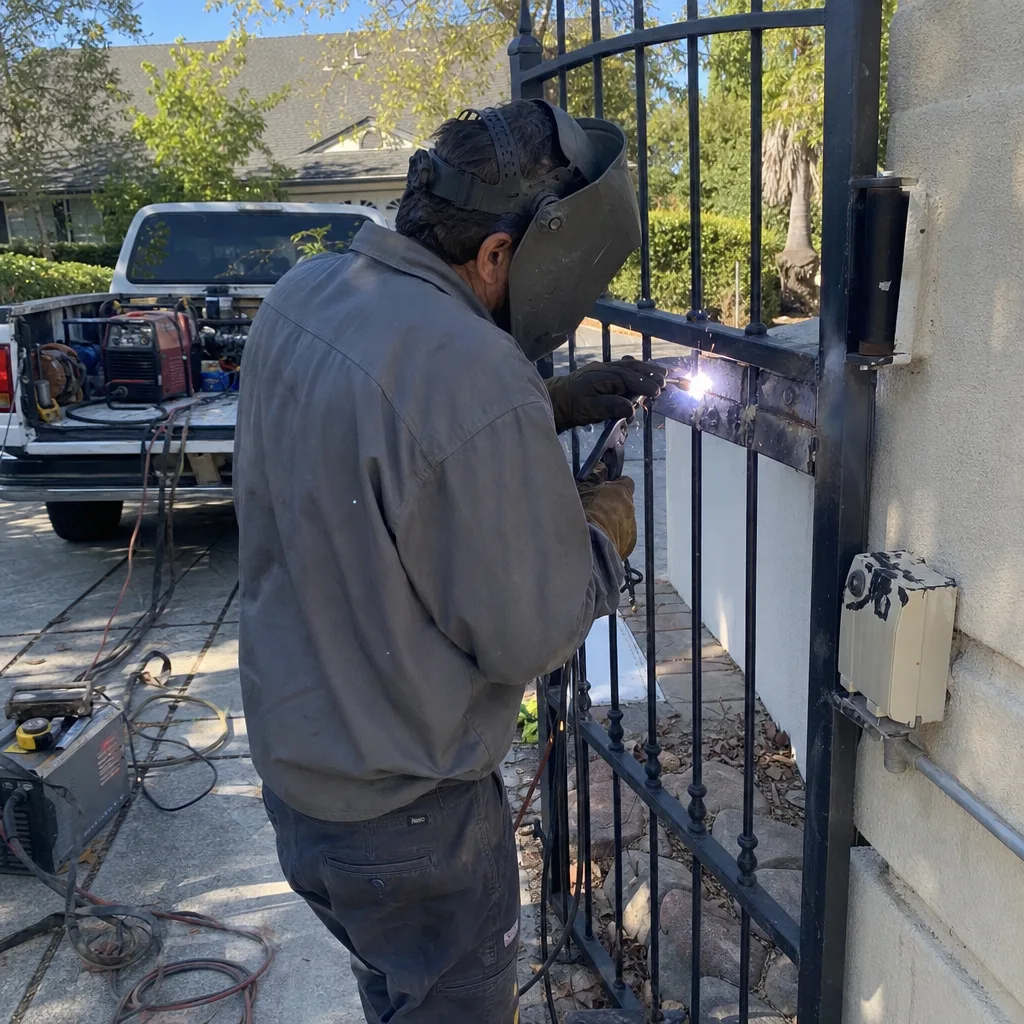
Concord’s residential architecture favors slide gates for properties with uphill driveways or limited clearance inside the property line, and swing gates for flatter lots with room for the leaf to arc. The warning signs differ because the mechanics differ.
Slide Gate Warning Signs
Rack gear wear visible from above. The rack is the toothed metal strip that runs along the gate’s bottom edge, engaged by the operator’s pinion gear. On a slide gate in Concord’s dusty environment - particularly near the open land south of Cowell Road - fine grit works into the rack teeth. Look for polished wear spots on the rack face, or teeth that look pointed rather than squared. Pointed teeth mean the pinion is riding high and will skip under load. This is an accumulating failure that becomes immediate when the gate jams mid-travel.
Track debris that the gate pushes rather than rolls over. A healthy slide gate’s rollers keep the gate bottom clear of the ground. When rollers wear, the gate frame contacts the track bed and pushes leaves, gravel, and rodent debris ahead of it. If you see a windrow of material building up at the closed position, your rollers are low.
Chain sag on chain-driven operators. Viking and some DoorKing slide gate operators use roller chain. Proper tension allows roughly 1/2 inch of vertical play at mid-span. More than that, and the chain will skip teeth on the sprocket, causing the gate to lurch or stop short. Chain stretch is normal wear; replacement is scheduled maintenance, not emergency repair.
Corrosion at the track joints. Concord’s winter rains pool in track splices if drainage is poor. We’ve replaced track sections in the Holbrook Heights area where galvanized steel had rusted through at the joint, causing the gate to drop and bind. The warning sign is a rust stain on the concrete below the track, or a gate that visibly dips at one track splice.
Swing Gate Warning Signs
Hinge pin migration. The hinge pin should be flush with the top of the hinge barrel. If it’s riding up, the gate is sagging and the pin is climbing out of its seat. On a heavy steel gate in Concord, this happens when the j-bolt loosens or the post settles. The symptom is a gate that drags at the latch end, or that requires increasing force to manually swing. Caught early, it’s a hinge adjustment. Caught late, the pin walks completely out and the gate drops, often bending the frame.
Operator arm angle change. The arm that connects the motor to the gate should maintain a consistent angle through the swing arc. If you notice the arm is more vertical or more horizontal than you remember, the mounting bracket has shifted or the gate leaf has settled. This changes the mechanical advantage and overloads the motor. We’ve documented FAAC 415 operators in Concord that failed because a shifted bracket put the arm at 15 degrees outside specification for six months.
Post movement. The concrete footing for a swing gate post should be below frost line and isolated from the driveway slab. In Concord’s clay-heavy soils, especially in the older neighborhoods near downtown, seasonal moisture changes cause post footings to tilt. The warning sign is a gap that opens and closes between the gate and the latch post, or a gate that latches easily in summer and requires shoulder force in winter.
Closer cylinder weep. Hydraulic gate closers, common on manual swing gates and as backup on automated ones, have a small vent hole. If you see oil residue below this hole, the cylinder seal is failing. The gate will close increasingly fast, then not stay open, then leak completely and slam. This is a scheduled repair that prevents a safety hazard.
How to Document a Warning Sign Before Calling
The quality of your repair experience depends heavily on the quality of information you provide before the technician arrives. Under Haven Standard Clause 4 (Evidence on every job), we document everything we find. But your preliminary documentation shapes where we look first.
- Record the sequence precisely. Write down exactly what happens, in order: “Press remote. Gate moves six inches. Stops. Beeps three times. Reverses.” Not “gate doesn’t work.” Sequence matters. Three beeps on a BFT operator means photo-eye fault; five beeps means motor thermal. The same symptom with different beep counts points to different root causes.
- Measure what you can measure. Time the gate’s open cycle with your phone. A month ago it took 12 seconds; now it takes 19. That’s data. Measure the photo-eye LED colors and whether they’re steady or flashing. Note the ambient temperature if the problem is temperature-dependent.
- Photograph from three positions. Wide shot showing full gate and operator. Mid shot of the operator cabinet with any visible LED indicators. Close-up of any physical anomaly - rust, oil, debris, bent component. Email these with your service request. When Adrian Vance reviews preliminary photos, he can often narrow the probable cause to two components and bring the right parts on the first visit.
- List recent changes to the property. New landscaping that might have hit a photo-eye? Construction that tripped a breaker? New vehicle with a different remote frequency? We traced a “random opening” problem in Concord’s Clayton Valley to a new neighbor’s garage door remote on a shared frequency. Context that seems unrelated often isn’t.
- Note the operator brand and model. It’s on a label inside the cabinet door. “Linear LS800” tells us more than “black box on the fence.” If the label is illegible, photograph it anyway - we can often identify the unit from mounting pattern and control layout.
When you call gate repair in Concord, this documentation lets us quote more precisely and dispatch with the right components. It also protects you: if a technician arrives without the parts your description suggested, you have a record of what was communicated.
Scheduled Repair vs. Same-Week Service: A Decision Framework
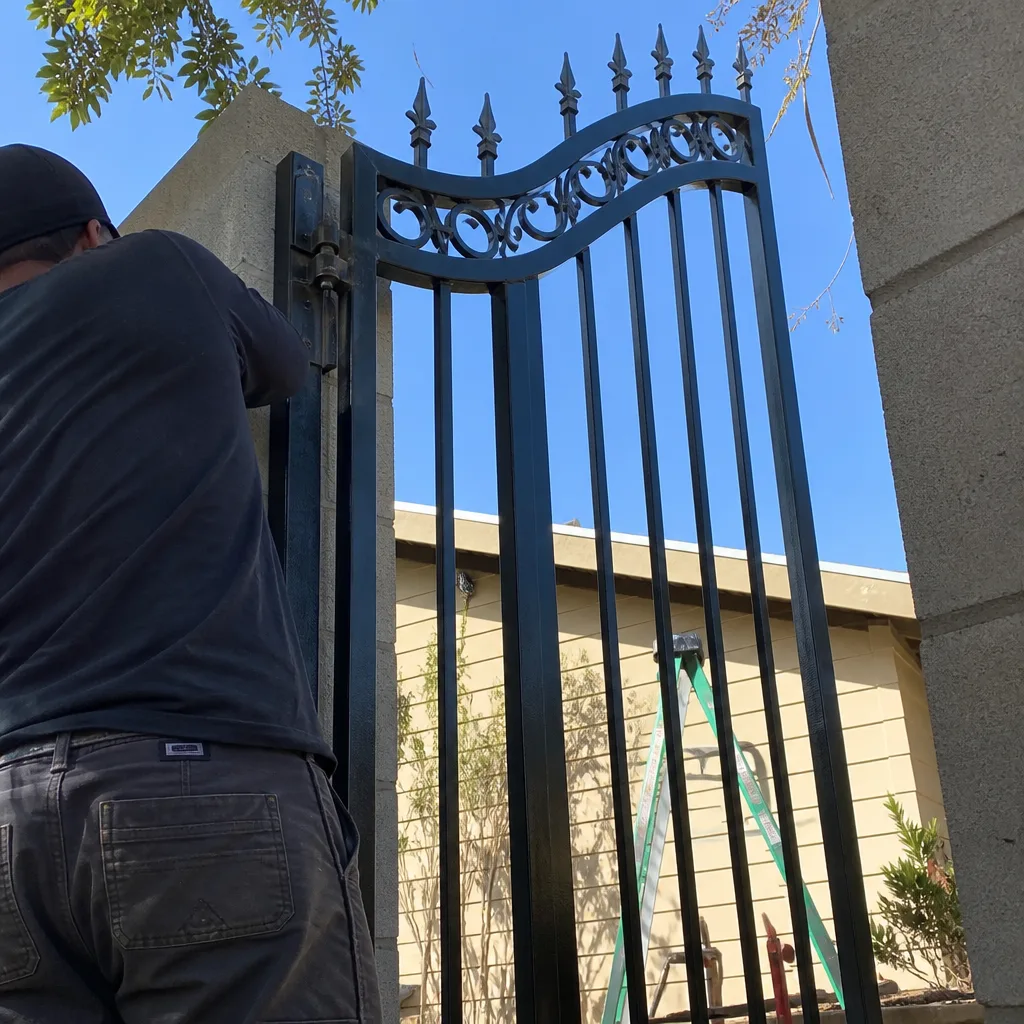
Not every warning sign needs emergency dispatch. The framework below prevents both overreaction and dangerous delay.
Schedule for next available appointment (typically 3-7 days in Concord) if:
- The gate still opens and closes fully, but some performance metric has degraded - speed, noise, remote range.
- The symptom is intermittent and you’ve identified a pattern (only mornings, only after rain, only with one remote).
- A non-safety component shows wear but still functions - rack gear with visible wear but no skipping, hinge with slight sag but no binding.
- The operator beeps a maintenance code (battery low, service interval) rather than a fault code.
Request same-week service if:
- The gate cannot complete a full cycle and is stuck open or closed, compromising security.
- A grinding noise is getting louder over multiple cycles - this indicates accelerating wear and imminent component failure.
- The motor hums without moving, or moves the gate erratically - electrical fault that can damage the control board if repeated.
- Any safety system is non-functional: photo-eyes not responding to obstruction, edge sensors not reversing the gate, manual release not operating.
- You observe sparking, burning smell, or exposed wiring - fire and shock hazard.
In Concord’s climate, one factor pushes scheduled toward urgent: impending rain on a gate with already-degraded drainage or track condition. A slide gate with worn rollers that barely clears the track bed will jam solid when winter debris swells with moisture. We’ve had October “scheduled” calls become November emergency extractions because the homeowner waited through the first storms. See our Seasonal Gate Repair Care for Concord: Year-Round Homeowner’s Guide for timing maintenance to the weather.
Our live answering operates 24 hours a day, seven days a week. A real person will classify your symptom and book the appropriate slot. We don’t use voicemail or callback queues - if your gate is stuck open at 10 PM, you reach someone who can dispatch.
What Gate Repairs Cost in Concord
Price visibility is Haven Standard Clause 1. Below are the ranges we quote in writing before work starts, based on 22,000+ documented jobs since 2014. Your specific quote depends on gate size, operator brand, and access conditions.
| Repair Category | Concord Price Range | Typical Completion Time |
|---|---|---|
| Photo-eye alignment or replacement | $140-$220 | 30-45 minutes |
| Limit switch calibration | $120-$180 | 20-30 minutes |
| Start/run capacitor replacement | $180-$280 | 45-60 minutes |
| Roller bearing replacement (slide gate, 2-4 rollers) | $180-$320 | 1-1.5 hours |
| Hinge rebuild or adjustment (swing gate) | $160-$260 | 1-1.5 hours |
| Rack gear section replacement | $220-$380 | 1.5-2 hours |
| Operator arm bracket rewelding or replacement | $240-$420 | 1.5-2.5 hours |
| Control board replacement (FAAC, BFT, Linear, Viking) | $340-$580 | 1-2 hours |
| Full operator replacement (residential swing or slide) | $1,200-$2,400 | 2-4 hours |
These prices include parts, labor, and the documented photo record delivered before we leave. They do not include gate structure repairs (welding cracked frames, replacing posts) or electrical runs to the operator location, which are quoted separately after inspection.
We offer free second opinions on any written estimate from another company. Bring the paperwork. We’ll review it against what we find and tell you whether the scope and price are reasonable. No charge, no obligation.
Common Mistakes to Avoid
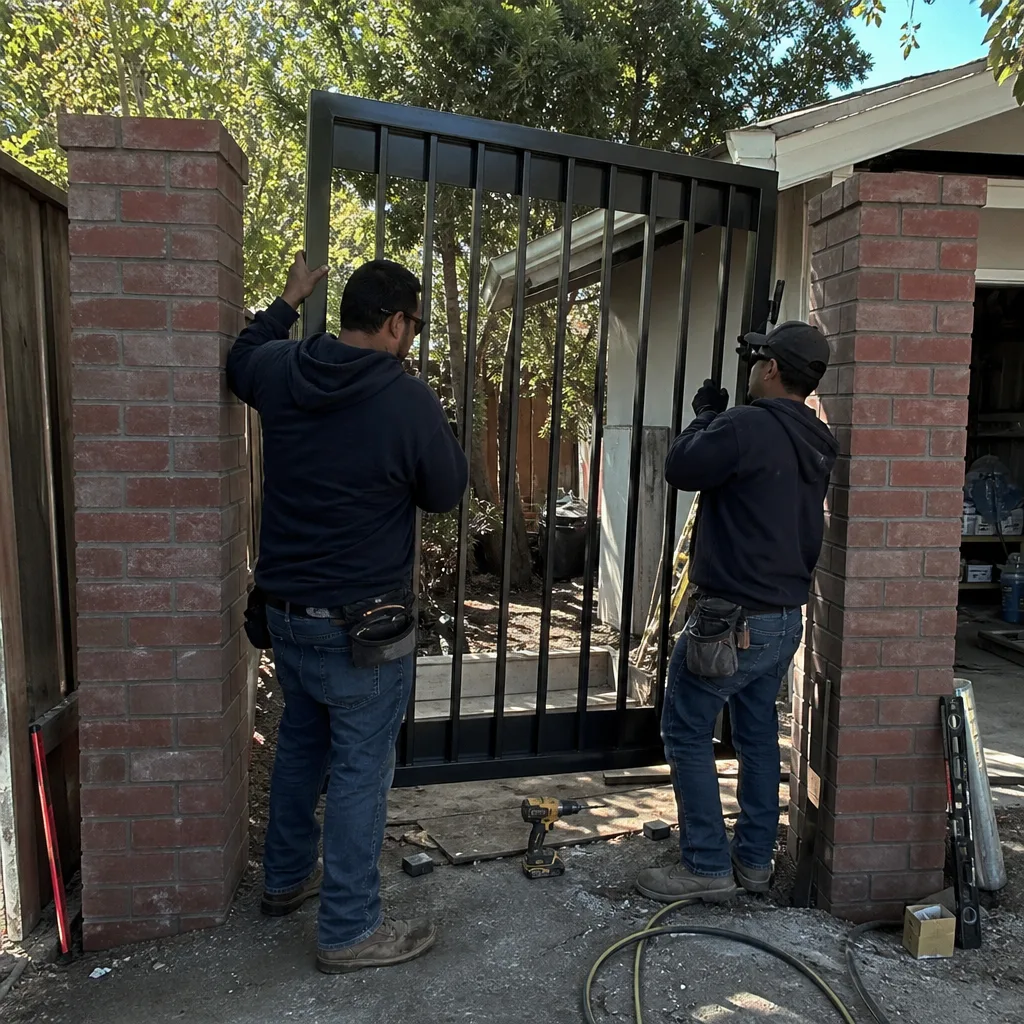
- Ignoring a change because the gate “still works.” In Concord’s variable climate, a gate that works in September often fails in January when thermal expansion, moisture, and debris load all increase. The accumulating failure doesn’t pause - it accelerates under seasonal stress.
- Applying WD-40 to a grinding gate and calling it fixed. Lubrication masks wear but doesn’t reverse it. We’ve opened operators where a homeowner’s repeated oiling turned metal dust into grinding paste that destroyed gears that would have lasted years if replaced when first noisy.
- Assuming the motor is the problem because it’s the only visible component. The motor is the most reliable part of most operators. Control boards, capacitors, and mechanical linkages fail far more often. Replacing a motor without diagnosing the actual cause is the most expensive non-repair we encounter.
- Clearing a photo-eye fault by realigning the eyes, without checking why they misaligned. In Concord’s wind-prone areas near the Carquinez Strait, photo-eyes shift because mounting brackets loosen. Realigning without tightening the bracket guarantees a repeat call. We torque and Loctite every bracket we touch.
- Waiting for “one more quote” when the gate is stuck open. Multiple quotes make sense for scheduled work. For a security-compromising failure, the cost of delay - theft, liability, weather damage - often exceeds any price difference between reputable providers. Get one written quote from a provider who documents, then decide.
- Accepting a verbal estimate for gate work. Verbal estimates are unenforceable and often forgotten by the technician who gave them. Haven Standard Clause 1 exists because we’ve seen too many homeowners surprised by invoices 40% higher than the “ballpark” discussed on the phone. Written price, signed acceptance, then work begins.
- Neglecting to test the manual release. Every automated gate must have a manual release for power failure or emergency access. If you don’t know where yours is or can’t operate it, that’s a safety issue independent of any other warning sign. Test it quarterly.
When to Call a Professional
Call when you’ve documented a symptom that fits the “same-week” criteria above, or when an accumulating symptom has progressed to the point that you can measure degradation over time. Call if you cannot identify the operator brand, if the manual release is inaccessible, or if any electrical component shows physical damage.
Do not attempt to adjust limit switches, replace capacitors, or repair high-tension spring components yourself. These carry shock hazard, crushing hazard, or uncontrolled release of stored energy. A gate that appears stable can shift suddenly when a tensioning component is released.
Vance Gate Repair Concord offers free estimates in Concord - call (510) 726-7050. A live person answers 24 hours a day, seven days a week. We’ll classify your symptom, schedule the appropriate visit, and provide a written price before any work starts. Background-checked, uniformed technicians with name and photo confirmation before arrival.
Frequently Asked Questions
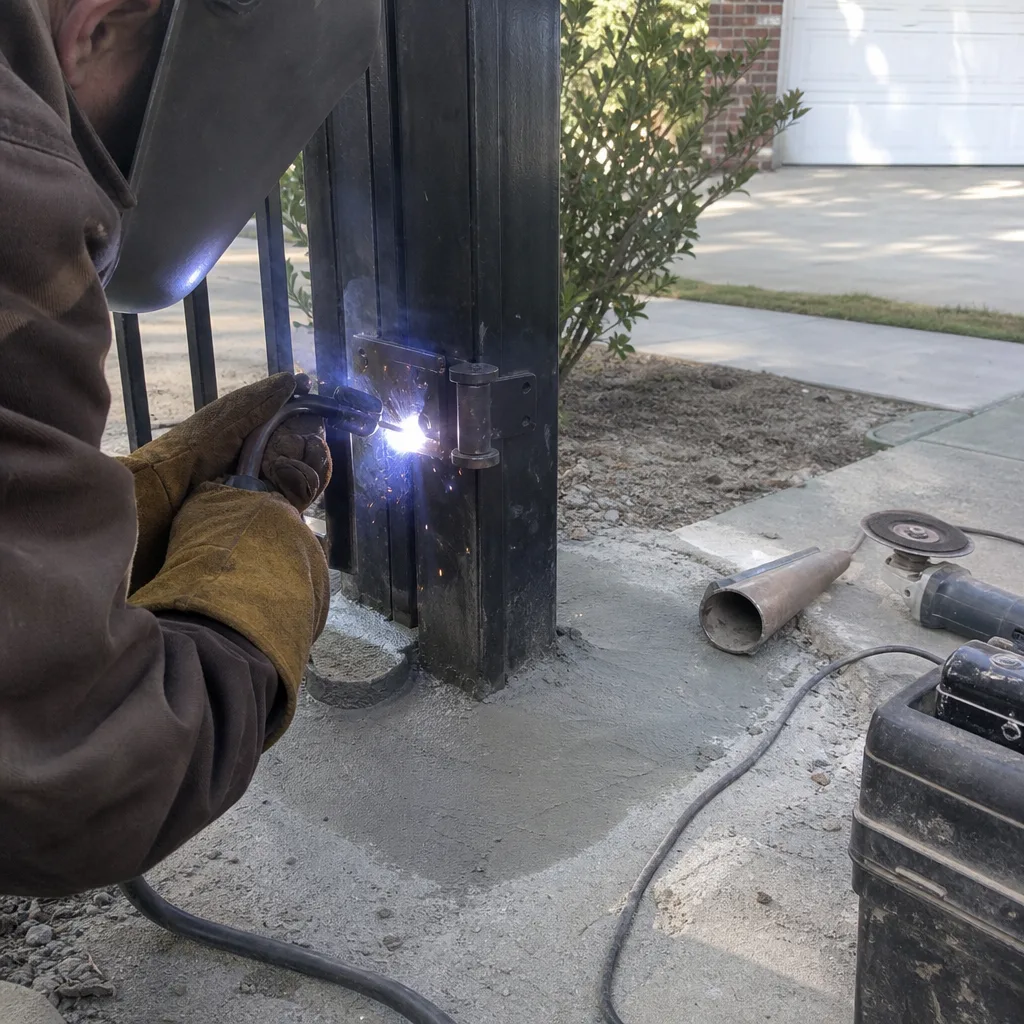
Most residential gate motor repairs in Concord run $180-$580, depending on whether the issue is electrical (capacitor, control board) or mechanical (gearbox, clutch, operator arm). A full operator replacement typically costs $1,200-$2,400 installed. We provide a written, itemized quote before any work begins - no estimate-by-phone that changes on arrival. Call (510) 726-7050 for a free inspection and exact pricing for your specific operator brand and gate configuration, or explore our Gate Repair services online.
Same-day service is available for urgent failures - gates stuck open or closed, safety systems non-functional, or motor hum without movement. For accumulating symptoms that allow scheduling, we typically book within 3-7 days. Our live answering operates 24/7, so you can reach us and get classified for the appropriate slot at any hour. Emergency dispatch carries no after-hours surcharge - the price is the price, written before work starts.
A full gate installation includes the gate structure (aluminum, steel, or wood per specification), posts and footings rated for gate load, the automation operator with appropriate capacity for gate weight and cycle frequency, safety devices (photo-eyes, edge sensors, manual release), and connection to existing power. For gate motor and opener in Concord, we also handle the low-voltage run from operator to control devices and program all remotes, keypads, and access control integrations. Every installation leaves with a written photo record, operator manual, and the 365-Day Done Right Promise.
Yes. Our scope includes the 110V power run to the operator location (within standard trenching distances; longer runs quoted separately), the low-voltage wiring for all control and safety devices, and the installation and calibration of safety edges and photo-eyes. We test every safety component under load and document the response times in your job record. This is standard on every installation, not an add-on.
Listen to the motor: strained or labored sound suggests mechanical binding downstream; confident hum with no movement suggests mechanical failure in the drive train; silence suggests no power reaching the motor. Test local controls versus remotes to isolate the signaling path. Check whether the symptom is directional (often mechanical) or symmetrical (often electrical). For a complete diagnostic walkthrough without opening panels, see the section above on distinguishing mechanical from electrical warning signs. You’ll find more guides & resources in our blog.
We service nine major automation brands: LiftMaster, FAAC, BFT, Linear, Viking, Ghost Controls, DoorKing, Elite, and Mighty Mule. We do not steer customers toward replacement with a “preferred” brand - we repair what is installed, document what we find, and quote repair versus replacement honestly. Our technicians carry common components for all nine brands to minimize return visits.
If any repair we complete is not right - same symptom returns, adjacent component fails due to our oversight, or the fix doesn’t hold - we make it right at no additional charge within one full year. No argument, no fee, no expiration date within that window. This applies to all labor and parts we install. It’s not an extended warranty; it’s our standard on every job, documented in writing under Haven Standard Clause 5.
The Bottom Line
Gate warning signs speak two languages: the language of gradual degradation and the language of sudden failure. Learning to tell them apart saves you from emergency rates on non-emergencies and from catastrophic bills on problems you could have scheduled. Document what you observe, measure what you can, and call with specifics rather than general complaints.
In Concord’s climate and housing stock, the most expensive repair is usually the one delayed past the accumulating phase. A $220 roller bearing replacement, caught when the gate first slows, prevents a $1,800 motor-and-gear rebuild when the bearing seizes and strips the rack. The warning signs are there. This guide shows you how to read them.
Written by Adrian Vance, Owner at Vance Gate Repair Concord, serving Concord since 2014.