
Last updated September 22, 2026
Free on-site gate assessment - hinges, posts, and your LiftMaster or Nice gate operator checked before anything is quoted
The assessment is free and the quote is the invoice.
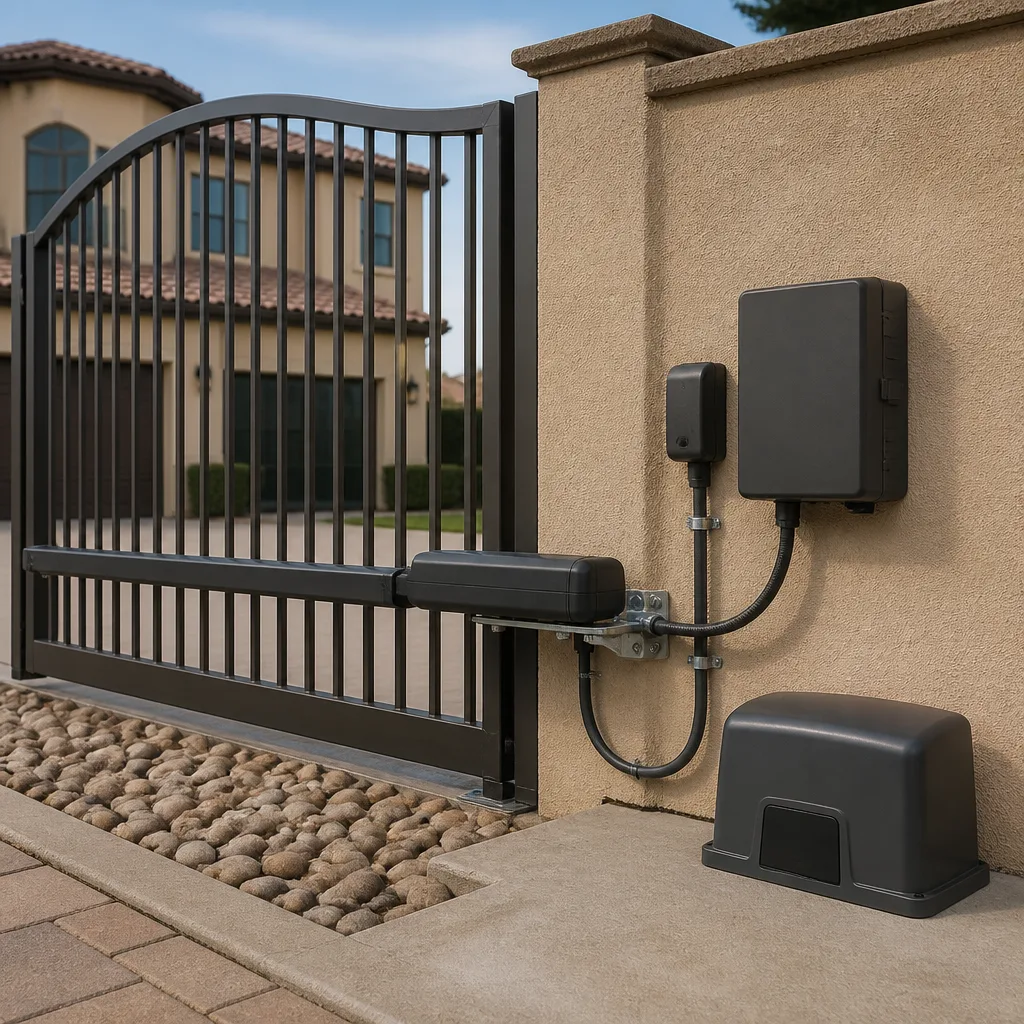
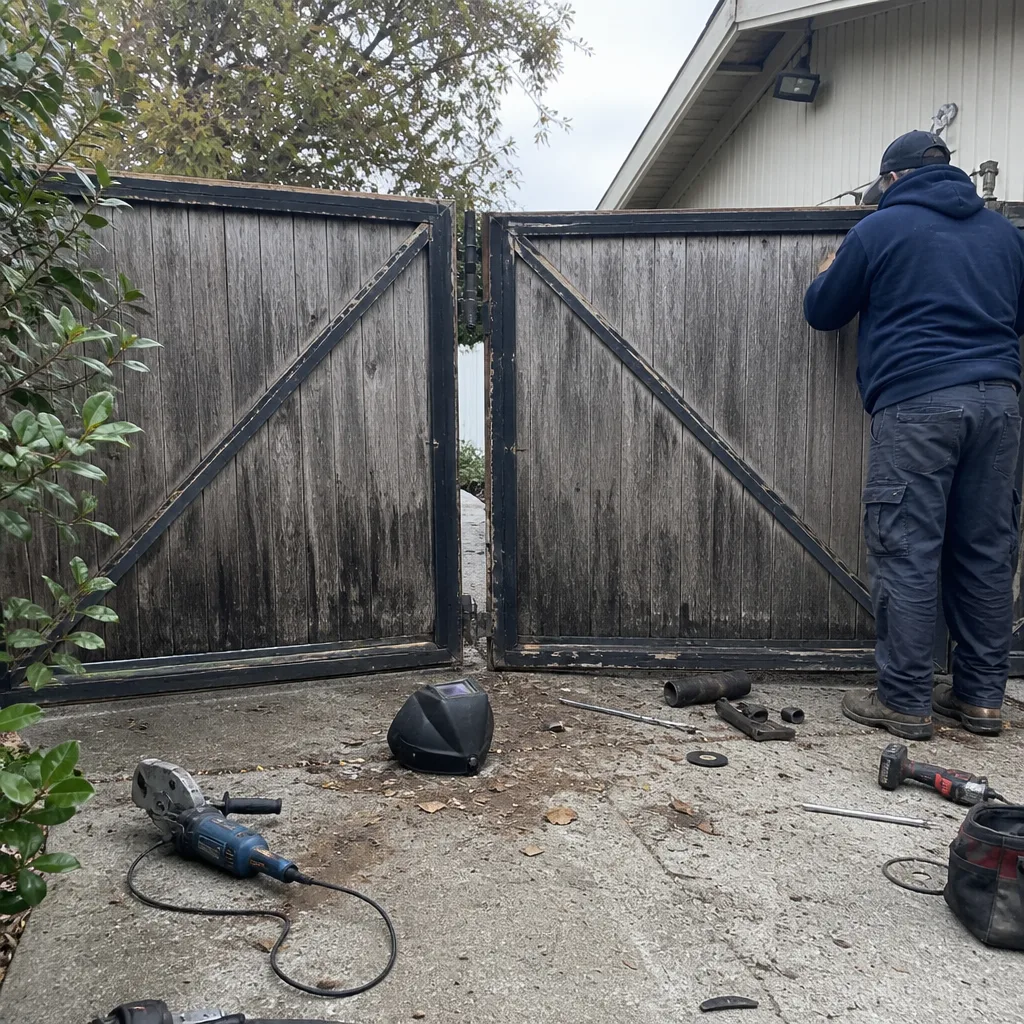 Before
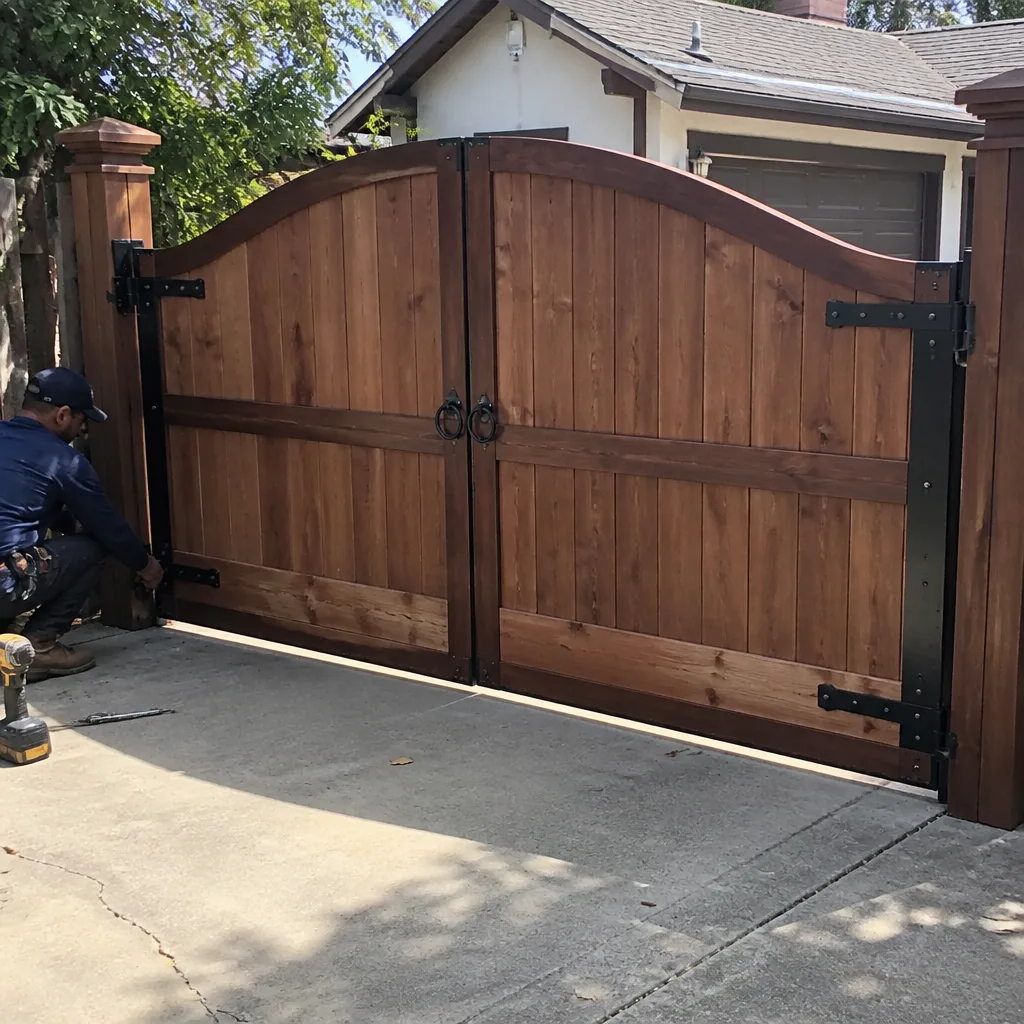 After
After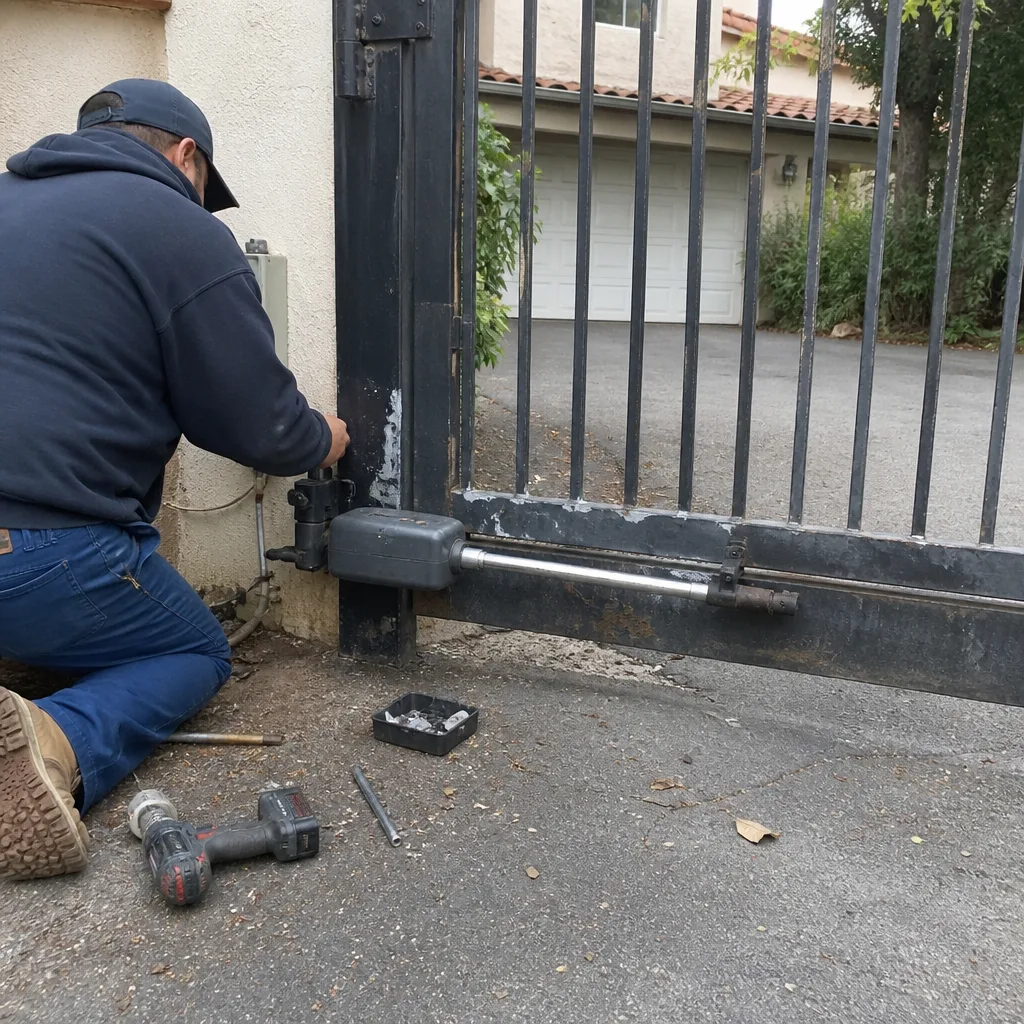 Before
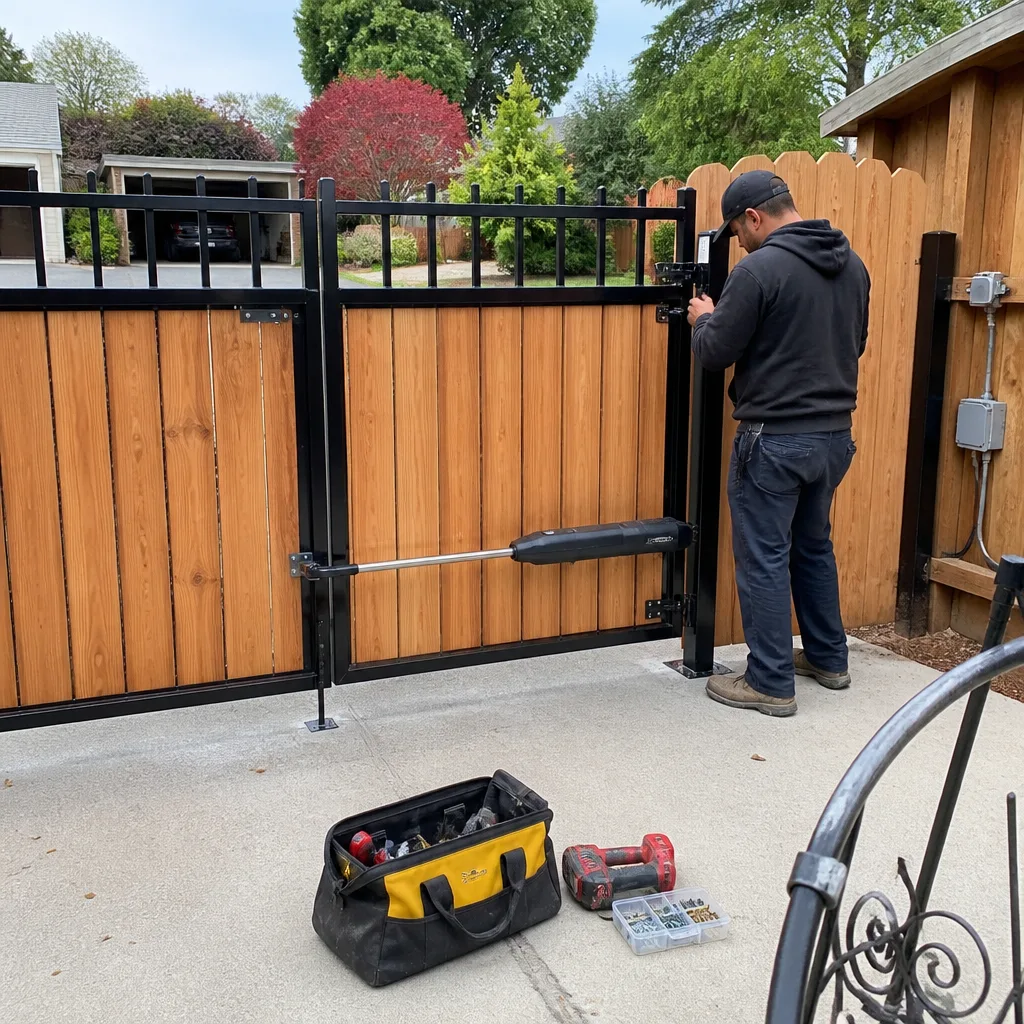 After
After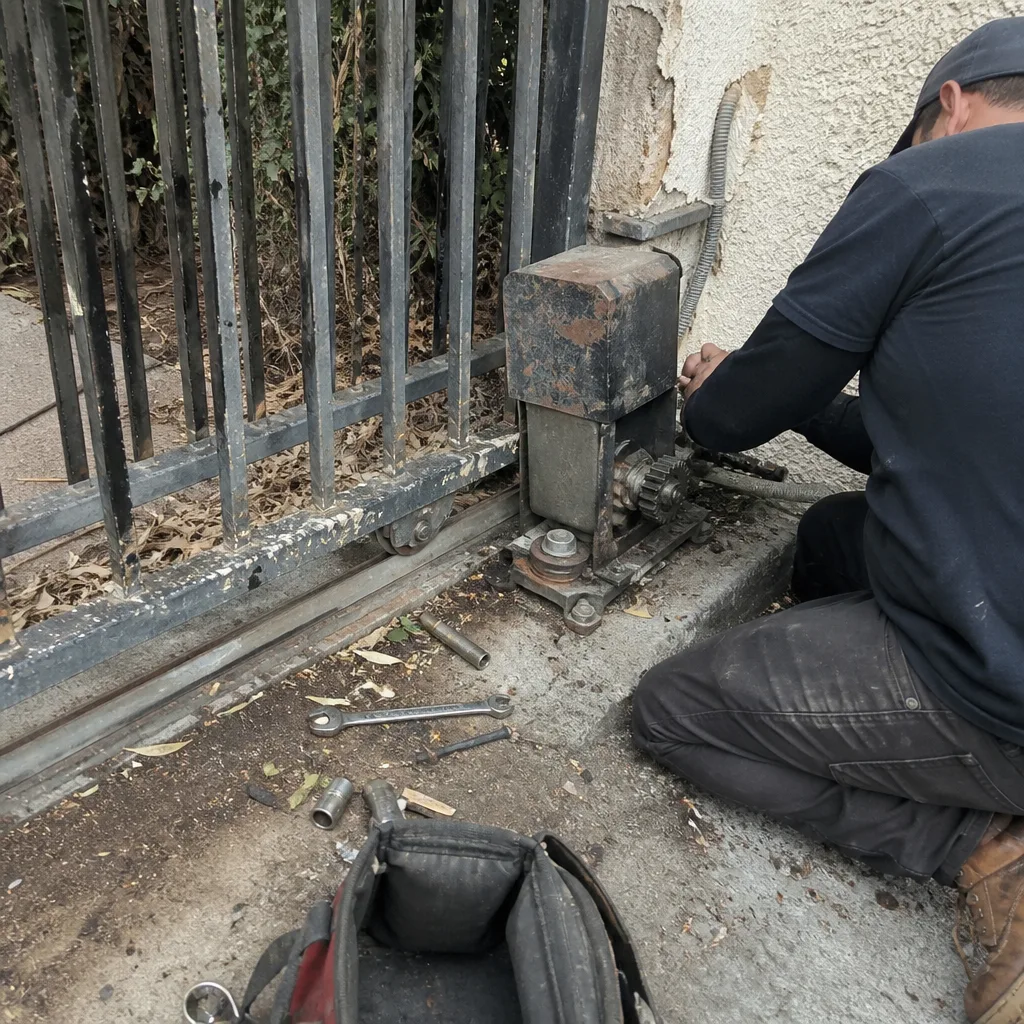 Before
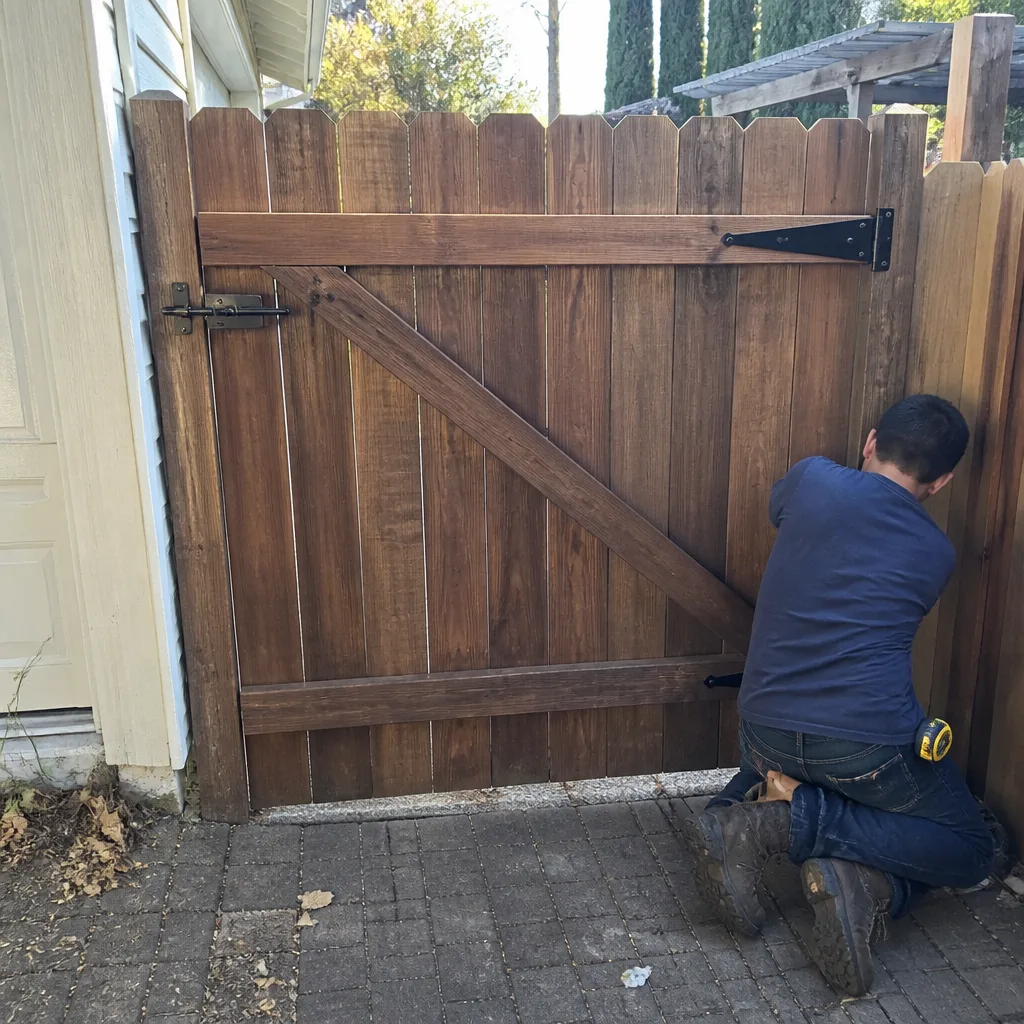 After
AfterSeasonal Gate Repair Care for Concord: Year-Round Homeowner’s Guide
Most seasonal maintenance guides treat Concord like a four-season climate with dramatic swings. The reality is more specific, and more expensive to ignore. Concord sits in a Mediterranean transition zone where winter rains saturate clay-heavy soils for five months straight, then summer inland heat pushes aluminum track expansion past tolerance limits by July. We’ve documented this pattern across thousands of residential gates in Contra Costa County since 2014. The hardware failures we see in December are not the same failures we see in August, and the October checklist that prevents one is largely irrelevant to the other. Our Complete Guide to Gate Repair in Concord maps what actually happens to your gate hardware against Concord’s real weather pattern, month by month.
Quick Answer
Concord gate owners should run two distinct maintenance calendars: a pre-winter inspection in October focusing on post stability, drainage, and rust-prone steel components before clay soils saturate, and a pre-summer inspection in May addressing aluminum track alignment, photoeye lens condition, and operator thermal protection settings before inland heat peaks. Between these windows, light monthly observation is sufficient. The cost of skipping either inspection typically runs $400-$1,200 in avoidable repairs.
Table of Contents
- Why Concord’s Climate Creates Two Stress Windows, Not Four
- The November-March Wet Window: What Soil Moisture Actually Does to Your Gate
- The June-September Heat Window: Thermal Expansion and UV Degradation
- Month-by-Month Maintenance Calendar for Concord
- How to Document Inspections for Year-Over-Year Comparison
- Three Components to Replace Before Winter in Concord
- What Seasonal Maintenance Costs vs. Deferred Repair
- Common Mistakes to Avoid
- When to Call a Professional
- Frequently Asked Questions
- The Bottom Line
BeforeAfterWhy Concord’s Climate Creates Two Stress Windows, Not Four
Concord averages 18 inches of annual rainfall, but 85% of it lands between November and March. Summer highs routinely hit the mid-90s, with several days above 100°F most years. This is not a climate of gradual transition. It is a climate of sustained stress in two distinct modes, separated by mild shoulder seasons where little happens to gate hardware.
The critical factor is soil composition. Much of Concord, particularly in the older neighborhoods north of Willow Pass Road and in the Montecito and Dana Estates areas, sits on expansive clay soils classified as CH and CL in the Unified Soil Classification System. These clays swell when wet and shrink when dry. A gate post set in this soil does not move gradually. It moves in response to moisture fronts. We’ve measured post tilt changes of 3-4 degrees between October and January on properties in the Holbrook Heights area, then watched them return nearly to baseline by June. The hardware attached to that post is subjected to cyclic stress that loosens fasteners, fatigues welds, and misaligns operators.
Meanwhile, the summer heat window operates on entirely different materials. Aluminum track expands at roughly 13 micrometers per meter per degree Celsius. A 20-foot slide gate track in Concord can grow by nearly 3/16 inch between a 65°F morning and a 105°F afternoon. That expansion changes roller clearance, affects limit switch timing, and can cause binding in systems with tight tolerances. The same heat degrades photoeye lenses, dries rubber seals, and triggers thermal overload protection in gate operators.
Understanding these two separate mechanisms matters because the maintenance that prevents one can be wasted effort against the other. Greasing a track in October does nothing to prevent summer expansion binding. Tightening a post bracket in June misses the soil movement that will loosen it by February.
The November-March Wet Window: What Soil Moisture Actually Does to Your Gate
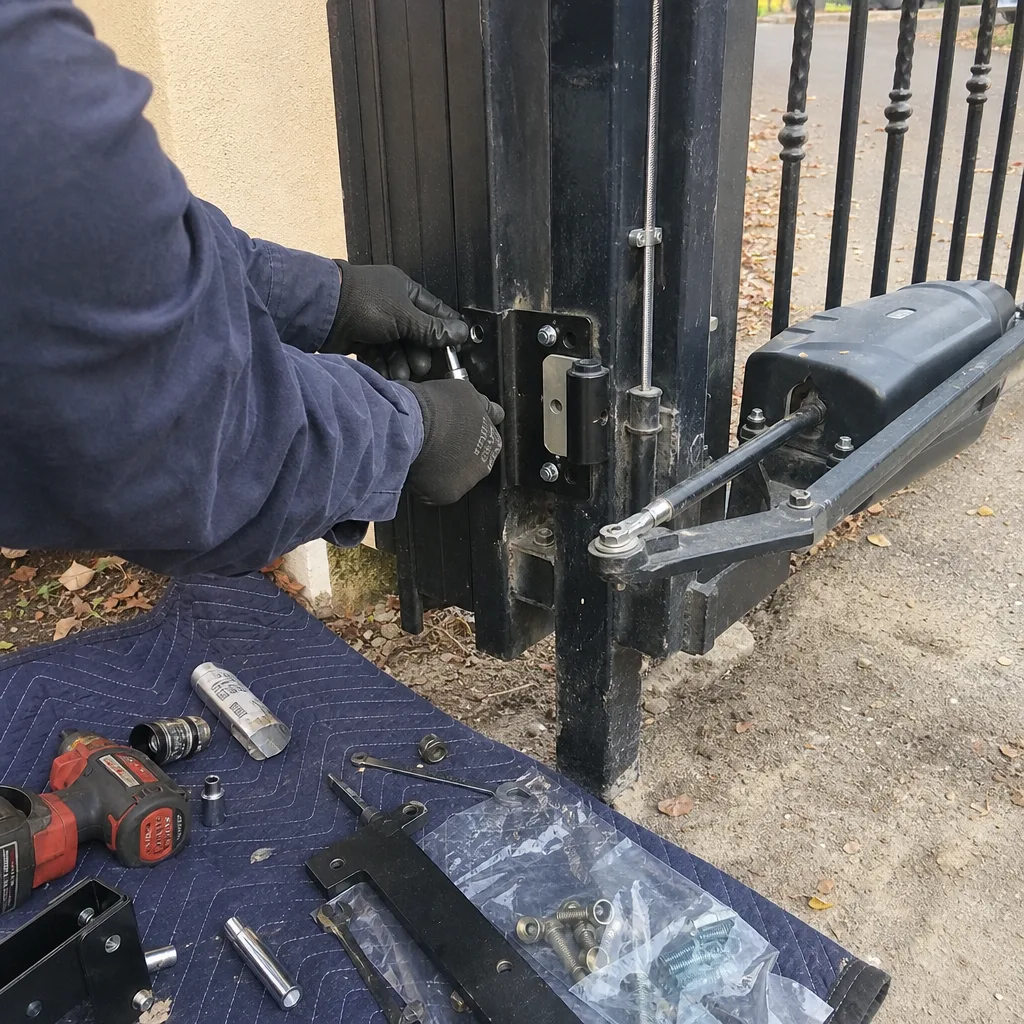
When the first sustained rains arrive in Concord, typically by mid-November, water does not simply run off clay soil. It percolates slowly, creating a saturated zone that can extend 18-24 inches deep within weeks. Any gate post set without proper drainage or gravel backfill is now floating in swelling soil.
Here’s what we find on winter service calls in Concord, particularly in the Todos Santos and Cowell neighborhoods where original installations often date to the 1970s and 1980s:
- Post heave with hinge misalignment. The post tilts toward or away from the gate leaf, changing the hinge geometry. The gate may still open, but the operator arm or chain now pulls at an angle, accelerating wear on the motor gearbox.
- Surface rust initiation on uncoated steel. Concord’s winter humidity stays above 80% for weeks at a time. Bare steel components, chain, and exposed weld points begin rusting within 10-14 days of surface wetting if not previously protected.
- Control box moisture intrusion. Condensation forms inside operator housings when warm daytime air meets cold evening metal. We’ve replaced control boards in January that showed no symptoms in September, simply because a gasket had hardened and allowed moisture migration.
- Photoeye fogging and misalignment. Ground movement shifts the mounting bracket; moisture films on the lens scatter the infrared beam. The gate begins “ghost stopping” or fails to close entirely.
The most expensive winter failure we document is post replacement due to undetected heave. A steel post that has tilted more than 5 degrees from vertical is no longer salvageable by adjustment. The concrete footing must be excavated, the post removed, and a new footing poured with proper drainage. In Concord’s current market, this runs $800-$1,500 depending on gate weight and access. Catching the tilt at 2 degrees in October, and addressing drainage or adding a stabilizer bracket, costs a fraction of that.
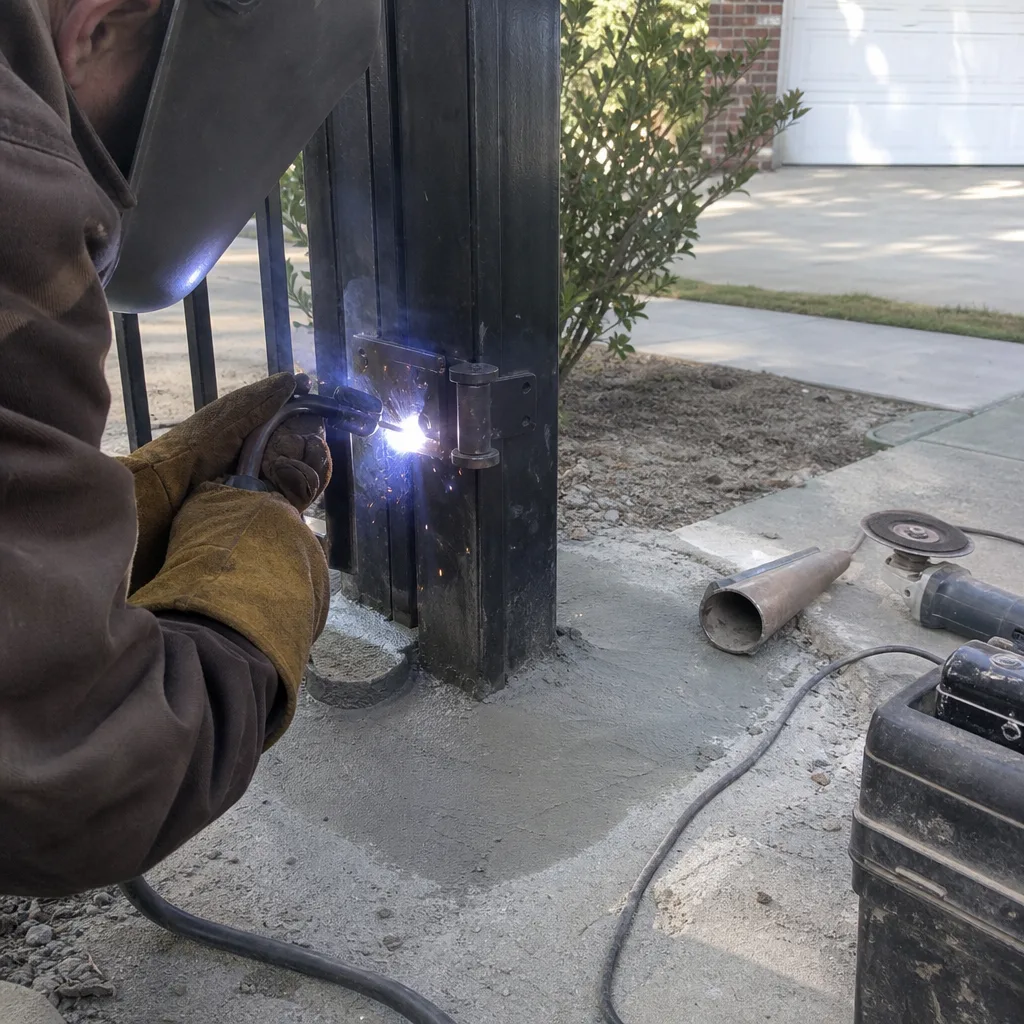
We also see recurring issues with wrought iron gates in the older Concord neighborhoods. The decorative scrollwork traps moisture against horizontal rails. By February, rust jacking has lifted paint and begun pitting the steel. At that point, repair requires grinding to bare metal, welding if pitting is through-wall, then priming and painting. Annual touch-up in October, before the rains, prevents this entirely.
The June-September Heat Window: Thermal Expansion and UV Degradation
Concord’s summer heat is not merely uncomfortable. It is a precision mechanical stress. Gate systems are calibrated at installation temperature, typically 60-75°F. When ambient temperature rises 30-40 degrees above that, materials behave differently than designed.
Aluminum track expansion. Slide gates depend on consistent roller-to-track clearance, typically 1/8-3/16 inch on each side. When a 24-foot aluminum track expands 3/16 inch total, that clearance is consumed unevenly. The gate may bind at the closed position, where the track is warmest from sun exposure, while running freely at the open end. We adjust track alignment in May to account for this, setting slightly wider cold clearance knowing it will tighten in July.
Operator thermal protection. Every major automation brand, including Linear and Viking units we service regularly in Concord, incorporates thermal overload protection. When internal temperature exceeds a threshold, typically 140-160°F depending on model, the operator shuts down until it cools. A gate in full sun with a dark-colored housing can reach this threshold even if the motor is healthy. We document the thermal history on summer service calls, checking whether shutdowns are protective (normal) or symptomatic of failing bearings or excessive load.
Photoeye lens UV degradation. The polycarbonate lenses on safety photoeyes craze and yellow with UV exposure. By late summer, a lens that transmitted 95% of infrared signal in March may transmit 70%. The gate begins intermittent “safety reverse” behavior, closing partway then reopening. Replacement lenses cost $15-$35; diagnosing the issue as an operator failure and replacing a control board costs $300-$600.
Rubber component desiccation. Seals, grommets, and drive belts dry and crack. We replace operator housing gaskets preventively on systems over five years old, particularly for FAAC and BFT operators with European-spec seals that harden faster in California’s dry heat than in their intended climate.
The Claycord area, including Concord and nearby Clayton, sees particularly intense heat pooling in valley-floor neighborhoods. Gates on south- and west-facing exposures without shade experience the full thermal load. We recommend shade sails or operator housing insulation for these installations, not as an aesthetic choice but as hardware preservation.
Month-by-Month Maintenance Calendar for Concord
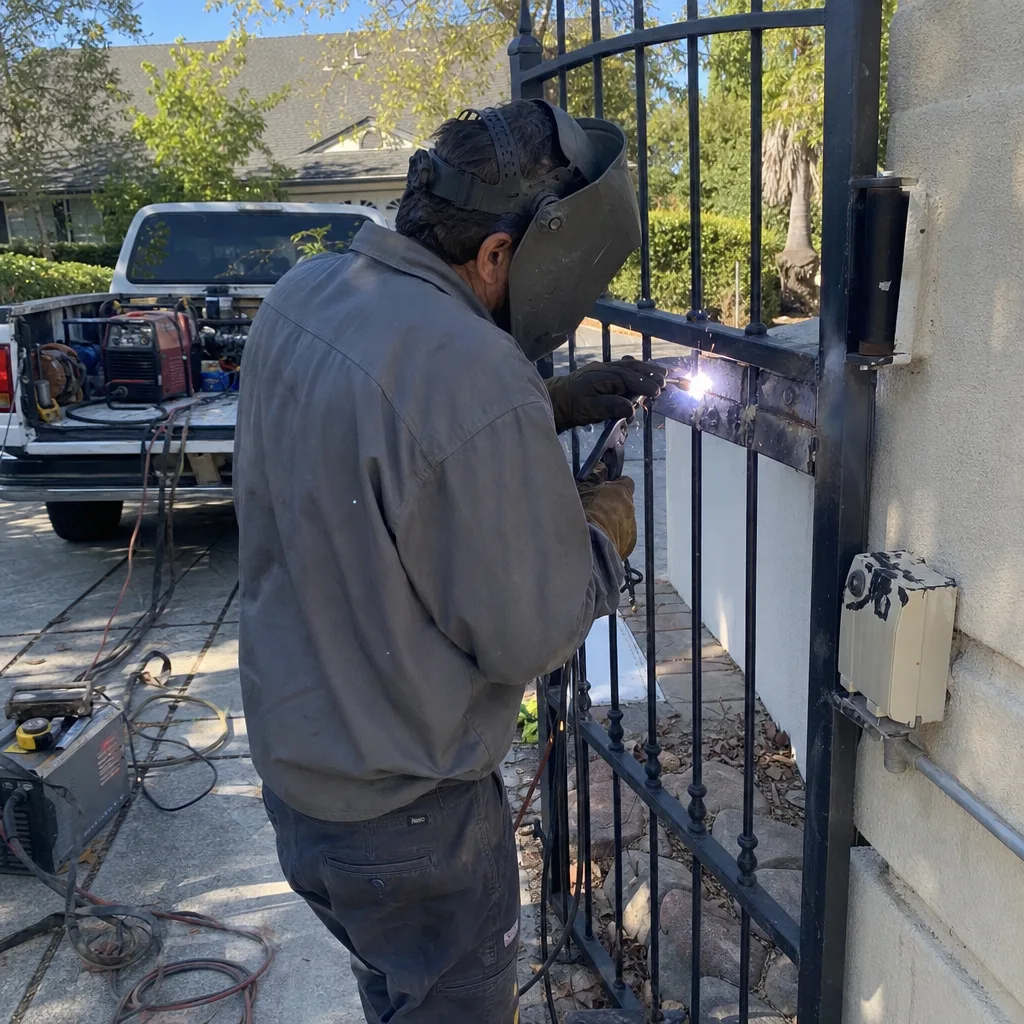
This calendar reflects Concord’s actual weather pattern, not a generic template. Tasks cluster around the two stress windows, with light observation in between.
October: Pre-Winter Preparation (Critical Window)
- Inspect all posts for plumb with a 4-foot level. Record the angle. Any post more than 2 degrees from vertical needs attention before soil saturation begins.
- Check drainage around post footings. Water should not pool within 12 inches of any post base. Clear French drains or add gravel backfill where needed.
- Clean and inspect all steel surfaces. Touch up paint on bare spots. Apply rust-inhibiting primer to wrought iron scrollwork and horizontal rails.
- Test control box gaskets and seals. Replace any that are hardened or cracked.
- Lubricate chain or rack drive with lithium-based grease, not WD-40. Wipe excess to prevent grit adhesion.
- Exercise the manual release mechanism. Corrosion from summer dust and winter moisture can seize these by January.
November-February: Observation Period
- After each major storm, visually check post alignment and gate operation.
- Listen for new noises: grinding from changed hinge geometry, clicking from loose chain, humming from overloaded operator.
- Clear debris from track or path immediately. Wet leaves compact and freeze into abrasive material.
March: Post-Winter Assessment
- Re-check post plumb and compare to October reading. Document any change.
- Inspect steel components for rust initiation despite October prevention.
- Test photoeye alignment. Ground movement may have shifted brackets.
- Schedule any needed repairs before the dry season makes welding and concrete work more difficult.
April-May: Pre-Summer Preparation (Critical Window)
- Inspect aluminum track for wear patterns and set cold-clearance to account for summer expansion.
- Clean photoeye lenses and inspect for UV crazing. Replace if transmission is reduced.
- Check all rubber seals and gaskets. Replace hardened items before heat accelerates degradation.
- Verify operator thermal protection settings are correct per manufacturer specification.
- Clear vegetation growth that may shade the operator housing. Paradoxically, we want some morning shade but not afternoon blockage that traps heat.
June-September: Observation Period
- Monitor for thermal shutdowns. Note time of day and ambient temperature. Patterns indicate whether adjustment or repair is needed.
- Check track clearance on the hottest days. Binding that appears at 3 PM and disappears by 7 PM is thermal expansion, not mechanical failure.
- Keep photoeye lenses clean. Dust adheres more readily to UV-damaged surfaces.
How to Document Inspections for Year-Over-Year Comparison
The value of seasonal maintenance is not fully realized without documentation. A post that tilts 1.5 degrees this October and 2.5 degrees next October is showing progressive instability. Without the first measurement, the second looks like a new problem rather than a predictable trend.
We teach Concord homeowners to keep a simple gate log. Here’s the format we use, adapted from the commercial documentation habit Adrian Vance developed on access-control sites:
- Date and weather: Temperature and recent rainfall affect readings.
- Post plumb: Measure with a 4-foot level, record degrees off vertical for each post.
- Track clearance: Measure roller-to-track gap at three points (open, mid, closed).
- Photoeye test: Note whether interruption test produces consistent stop-and-reverse.
- Operator cycle count: Most operators display this; trending upward indicates binding or overload.
- Photos: Same angles, same lighting, each inspection. Compare year-over-year.
Under Vance Gate Repair Concord home service protocols, we provide this documentation on every professional inspection. But the homeowner who maintains their own log between visits catches problems earlier and communicates more precisely when calling for service.
The specific value in Concord is tracking post movement against rainfall. A post that shifts 2 degrees after a 4-inch January storm but returns to 0.5 degrees by June is responding to soil moisture. A post that shifts progressively and does not recover is failing structurally. These require different interventions, and the log tells you which you have.
Three Components to Replace Before Winter in Concord
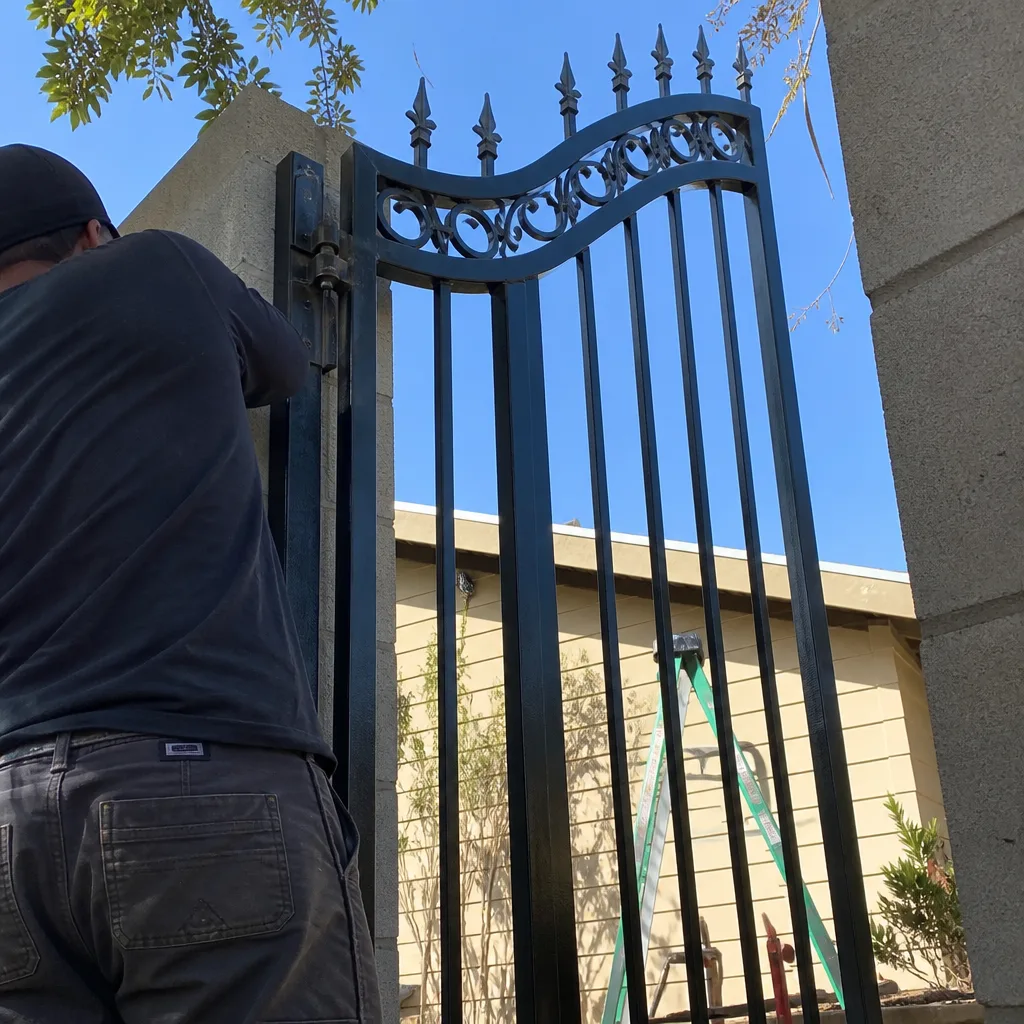
Based on our repair records since 2014, three components show weather-specific failure modes that are predictable and preventable. We recommend pre-winter replacement when these items show any wear, not waiting for failure.
1. Control box gaskets and seals. Hardened gaskets allow moisture intrusion that destroys circuit boards. The cost of preventive gasket replacement is $25-$60 in parts and labor. The cost of control board replacement is $350-$700. We replace gaskets on any system over four years old during October inspections.
2. Chain or rack drive tensioners. Winter ground movement changes gate geometry. A tensioner already at its adjustment limit cannot compensate. The operator then pulls against increasing mechanical resistance, overheating the motor. Preventive tensioner replacement runs $80-$150. Motor replacement runs $600-$1,400 depending on brand.
3. Post base drainage gravel. This is not a component in the traditional sense, but its absence is the single greatest predictor of winter post failure. Original installations in Concord’s 1960s-1980s housing stock often omitted gravel backfill. Adding a 12-inch gravel collar around the post base, sloped for drainage, costs $100-$200 in materials and labor. Post replacement due to heave costs $800-$1,500.
These three items are on our standard October inspection checklist for Concord properties. Under the Haven Standard, we photograph the condition of each, quote replacement if needed, and document the completed work with dated photos for the homeowner’s record.
What Seasonal Maintenance Costs vs. Deferred Repair
We price seasonal maintenance transparently because the alternative is more expensive and less predictable. Here’s what Concord homeowners can expect:
| Service | Preventive Cost | Typical Deferred Repair Cost |
|---|---|---|
| Seasonal inspection and adjustment | $180-$280 | N/A (baseline) |
| Post stabilization and drainage improvement | $200-$450 | $800-$1,500 (post replacement) |
| Gasket and seal replacement | $60-$150 | $350-$700 (control board) |
| Track alignment and clearance adjustment | $120-$200 | $400-$800 (track/roller replacement if binding causes damage) |
| Photoeye lens replacement | $35-$75 | $300-$600 (misdiagnosed operator repair) |
| Chain/rack tensioner replacement | $80-$150 | $600-$1,400 (motor replacement) |
The pattern is consistent: preventive maintenance runs 15-30% of the repair cost it prevents. The 365-Day Done Right Promise covers our seasonal maintenance work, so if an adjusted post shifts again within the year, we correct it at no charge.
For Gate Installation in Concord, we design drainage and material specification around these same climate factors from the start. But most Concord homeowners inherit a gate system whose original installation did not account for local soil and heat conditions.
Common Mistakes to Avoid
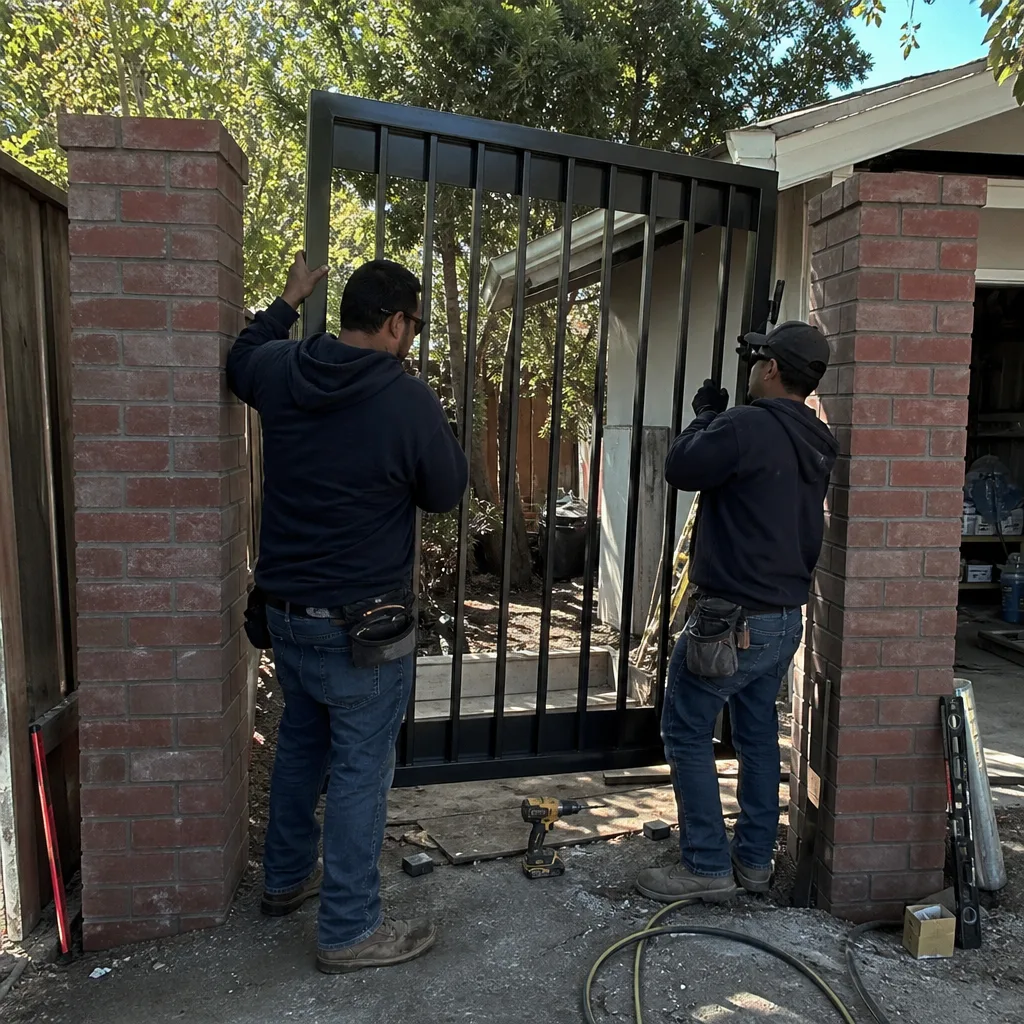
- Treating all seasons equally. Greasing a track in October wastes effort; checking post drainage in June misses the risk window. Match the task to the stress.
- Using WD-40 as a lubricant. It is a solvent and water displacer, not a lubricant. It evaporates and leaves components unprotected. Use lithium-based grease on chains, silicone spray on guides.
- Ignoring morning-only binding. A gate that binds at 9 AM but runs freely by noon is often responding to overnight dew swelling wooden components or thermal lag in aluminum. Track the pattern before calling for adjustment.
- Power-washing the operator housing. We see this annually in Concord. The control box is rated for rain, not directed high-pressure spray. Water intrusion follows.
- Delaying repair until “after the holidays.” January is our busiest month for emergency calls because homeowners deferred October maintenance. Soil is saturated, posts have heaved, and availability is limited.
- Measuring once. A single post plumb reading tells you little. The trend over two or three seasons predicts failure. Document and compare.
- Assuming all operators handle heat equally. Budget operators and older Mighty Mule systems lack the thermal management of commercial-grade units. They need more frequent summer monitoring.
When to Call a Professional
Some seasonal maintenance is within capable homeowner reach: visual inspection, cleaning, basic lubrication, and documentation. For everything else, our Gate Repair services handle conditions that warrant professional assessment.
Call for service when you observe post movement exceeding 2 degrees from vertical, any new grinding or binding that does not correlate with temperature, repeated operator thermal shutdowns, or photoeye behavior that persists after lens cleaning. Welding, electrical diagnosis, and post replacement require specialized equipment and should not be attempted without training.
High-tension spring-assisted gate systems and any work involving the primary electrical feed to the operator present genuine safety hazards. The torsion on a heavy gate leaf can cause serious injury if released improperly. We recommend trained technician handling for these components.
Gate Repair in Concord from Vance Gate Repair Concord includes free estimates with written pricing before any work begins. We document every visit with photographed findings and adjustments, leaving you a record for comparison to next season’s inspection. Call (510) 726-7050 to schedule.
Frequently Asked Questions
A professional seasonal inspection and adjustment in Concord typically runs $180-$280, with preventive component replacement adding $60-$450 depending on what is needed. This compares to $400-$1,500 for typical deferred repairs. We provide a written price before any work starts under Haven Standard Clause 1. Call (510) 726-7050 for an exact quote on your gate system.
Homeowners can handle visual inspection, cleaning, lubrication, and documentation safely. Post stabilization, electrical work, welding, and high-tension component adjustment require professional training and equipment. We recommend professional assessment at least annually for any gate with an automated operator. See our DIY vs Professional Gate Repair guide to decide what’s safe to handle yourself.
Aluminum track expands approximately 13 micrometers per meter per degree Celsius. A 20-foot track in Concord can grow 3/16 inch between morning and afternoon on a 100°F day. If cold-clearance was set tight during installation, summer expansion consumes the tolerance and causes binding. This is adjusted by setting wider cold clearance in May.
Measure post plumb with a 4-foot level and record the degrees off vertical. Repeat seasonally. A post that shifts more than 2 degrees, or that shifts progressively year-over-year, needs professional assessment. Progressive movement indicates structural failure; seasonal movement that recovers indicates soil response.
We service nine major automation brands: LiftMaster, FAAC, BFT, Linear, Viking, Ghost Controls, DoorKing, Elite, and Mighty Mule. Our technicians carry parts and diagnostic tools for all nine, so we can repair what you have rather than steering you toward replacement. For Gate Motor & Opener in Concord, we provide same-day assessment and written repair options.
If any repair or adjustment we complete fails within 365 days, we return and correct it at no additional charge. This includes post stabilizations, track alignments, and component replacements. There is no expiration within that window and no argument about coverage. Under Haven Standard Clause 4, the original visit is documented with photos, so we know exactly what was set and can restore it.
The Bottom Line
Concord’s climate delivers two distinct stress windows: winter soil saturation that moves posts and initiates rust, and summer heat that expands aluminum and degrades rubber and plastic. Maintenance organized around these actual conditions, rather than a generic four-season template, prevents the majority of weather-related gate failures we document. For more guides & resources on protecting your gate system, visit our blog. The October and May inspection windows are critical. Documentation between visits turns single measurements into predictive trends. And preventive costs consistently run 15-30% of the repairs they avoid.
Written by Adrian Vance, Owner at Vance Gate Repair Concord, serving Concord since 2014.