
Last updated September 22, 2026
Free on-site gate assessment - hinges, posts, and your LiftMaster or Nice gate operator checked before anything is quoted
The assessment is free and the quote is the invoice.
 Before
 After
After Before
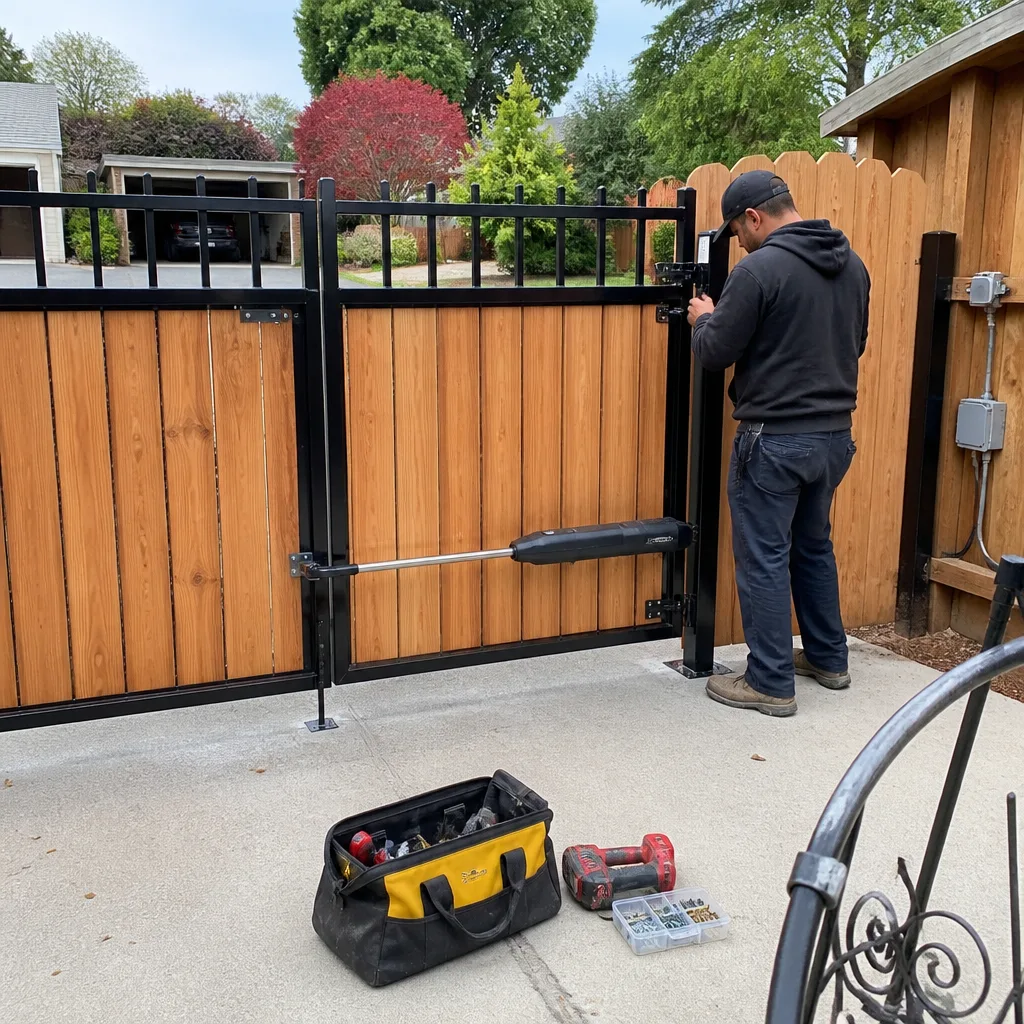 After
After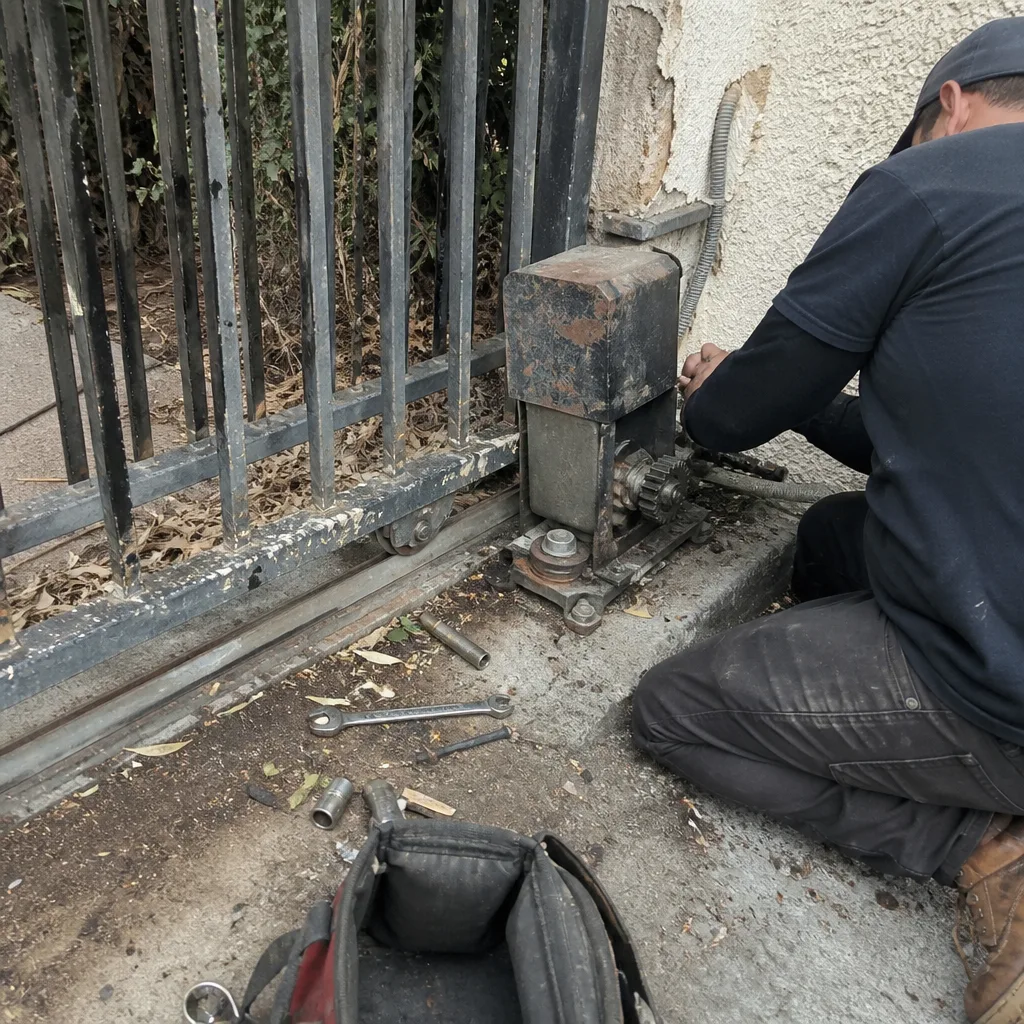 Before
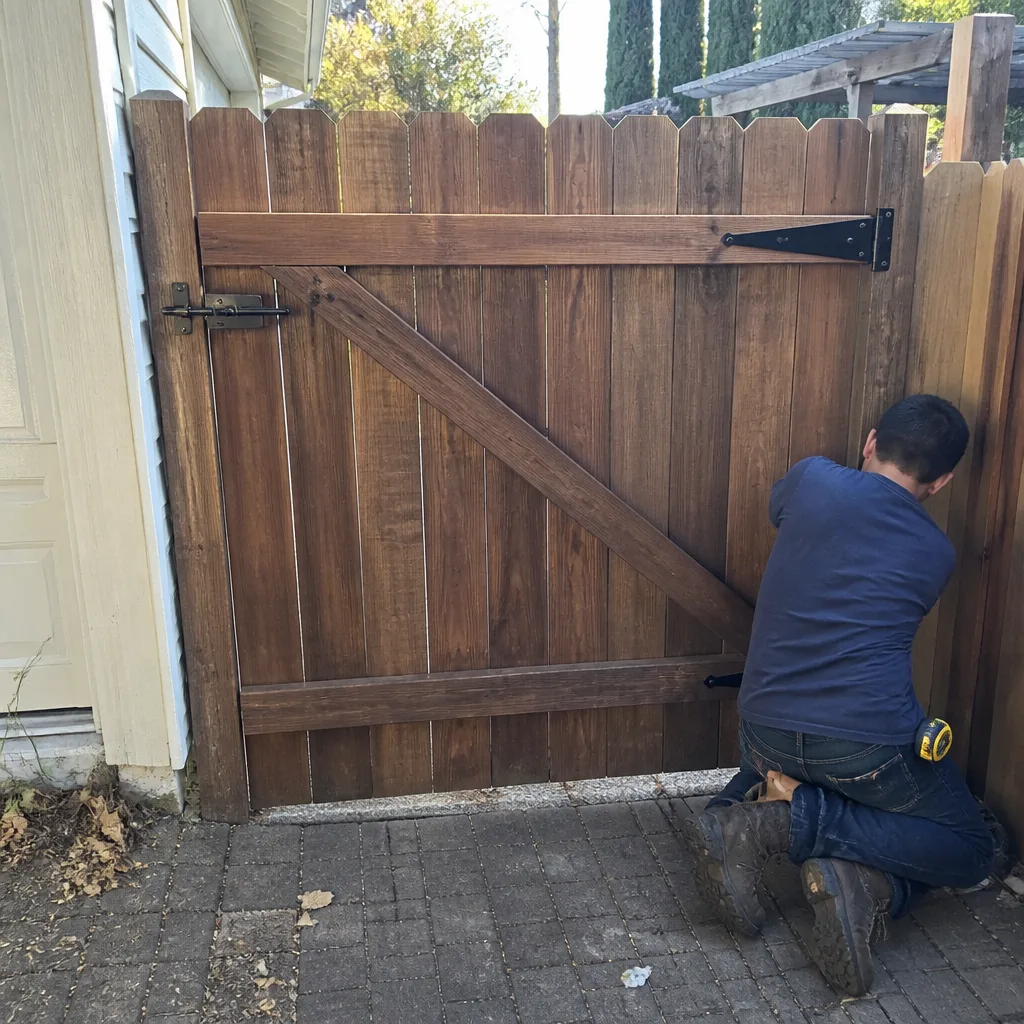 After
AfterGate Repair Permits, Codes & Inspections in CA: What You Need to Know
Permit offices don’t send reminders. The first notice many Concord homeowners get that their gate installation was unpermitted is a buyer’s inspector flagging it during escrow, often with a demand for retroactive permits that cost three times the original work. California’s gate permit rules are threshold-based - triggered by motor horsepower, fence height, and whether the gate connects to a structural post - yet most local contractors never mention them. In this guide, we’ll name the actual code sections and city-specific triggers so you can verify permit status before you buy a property, know when your own repair needs documentation, and avoid the $1,200-$3,800 surprise of retroactive permitting in Contra Costa County. For related reading, see our Gate Repair Warning Signs: A Concord Homeowner’s Reference Guide.
Quick Answer
Most our Gate Repair services in Concord don’t need a permit if they’re like-for-like replacements of existing motors, arms, or access hardware. A permit is required when the work alters the gate’s structural support, increases motor horsepower above 1 HP, adds new electrical circuits, or modifies a fence taller than 6 feet. All automated gates must meet UL 325 entrapment protection standards, and inspectors verify photo-eye placement, edge sensors, and auto-reverse force settings before signing off.
Table of Contents
- When Is a Gate Permit Required in Concord?
- Like-for-Like Repairs vs. Alterations: The Critical Distinction
- California Building Code Sections That Apply to Gate Work
- UL 325 Entrapment Protection: What Inspectors Actually Check
- What Happens During a Gate Inspection
- How to Check Permit History Before Buying a Property
- Permit Costs, Timelines, and Retroactive Permitting in Contra Costa County
- Common Mistakes to Avoid
- When to Call a Professional
- Frequently Asked Questions
- The Bottom Line
BeforeAfterWhen Is a Gate Permit Required in Concord?
Concord follows the 2022 California Building Code (CBC) with Contra Costa County amendments, and the permit trigger points are specific enough that you can check them against your job before anyone picks up a tool.
A permit is required for gate work when any of these thresholds are crossed:
- Motor horsepower exceeds 1 HP: Replacement of an existing motor with the same horsepower is typically exempt, but upgrading from a ¾ HP to a 1½ HP unit triggers mechanical and electrical permits.
- New electrical circuit or 240V conversion: Running a new dedicated circuit from the panel, or converting from 120V to 240V for a heavy-duty swing gate, requires an electrical permit separate from the building permit.
- Structural post modification: Changing the gate post material (wood to steel), increasing post depth or diameter, or attaching to a structural wall of the house - all require engineering review in Concord’s seismic zone D.
- Fence height above 6 feet: Under CBC Section 105.2 and Concord Municipal Code Chapter 8.20, any fence or gate over 6 feet in height requires a building permit; modifications to the gate that affect this assembly trigger review.
- New automated gate where none existed: First-time automation of a manual gate always requires a permit, including plan submittal showing the gate’s path of travel and safety device locations.
Concord’s Building Division processes gate permits at the counter at 1950 Parkside Drive, though many applications now move through the city’s online portal. The key detail competitors miss: Contra Costa County requires a separate fire district clearance for gates on properties with slopes exceeding 15%, common in the Dana Estates and Holbrook Heights neighborhoods where driveways angle sharply from the street. We’ve arrived at jobs in those areas where the homeowner’s contractor installed a beautiful BFT subterranean motor, only to have the fire marshal flag it because the gate’s inward swing encroached on the required emergency access width.
The permit application must include a site plan showing gate location relative to property lines, a detail of the gate operator mounting, and manufacturer cut sheets for the motor and all safety devices. For gate motor replacement in Concord, we prepare these documents during our free estimate visit so the homeowner can submit a complete package, not a half-finished form that bounces back for revision.
Like-for-Like Repairs vs. Alterations: The Critical Distinction
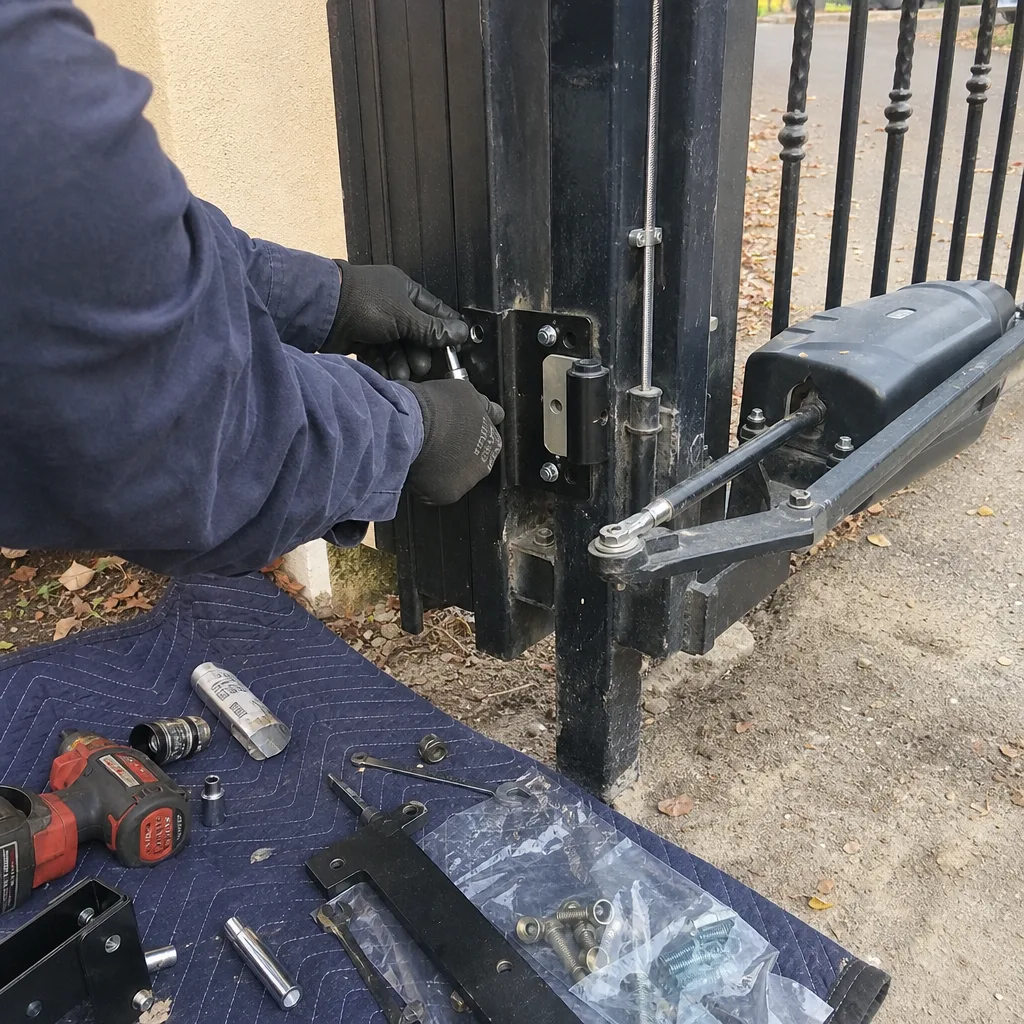
This is where most homeowners and even some contractors get caught. California’s building code distinguishes between “repair or replacement of existing equipment with equipment of similar capacity” (no permit) and “alterations” (permit required). The line is finer than it sounds.
Like-for-like replacement (typically no permit needed):
- Swapping a failed Linear actuator for the same model and horsepower on the same post bracket.
- Replacing a Ghost Controls control board with an identical part number after surge damage.
- Installing new photo-eyes in the same locations as the previous pair.
- Replacing a Viking keypad with another Viking unit using the existing power and data runs.
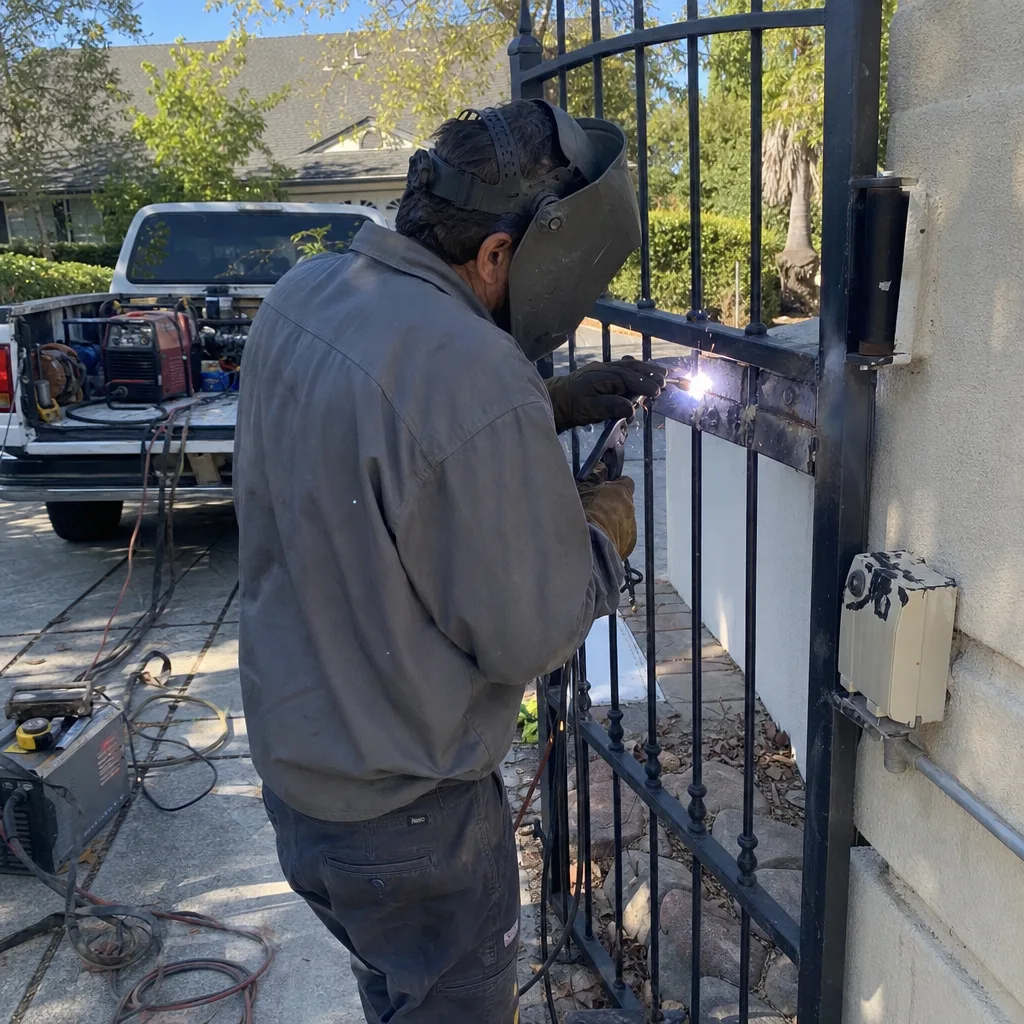
- Welding a crack in an existing gate frame without changing dimensions, weight, or swing radius.
Alteration (permit required):
- Upgrading motor horsepower to handle a heavier gate, even if the gate itself isn’t changing.
- Relocating the motor from a post mount to a subterranean installation (common with BFT hydraulic systems).
- Adding a second gate leaf where only one existed, changing the gate’s width and path of travel.
- Installing a new access control system that requires a dedicated low-voltage run from the main house - this crosses from repair into new electrical work.
- Modifying the gate to connect to a structural column or house wall that wasn’t previously load-bearing.
We’ve documented this distinction in hundreds of Concord jobs since 2014. In one case on Adelaide Drive, a homeowner replaced a ½ HP swing motor with a 1 HP unit to handle a sagging gate. The weight hadn’t changed, but the horsepower increase triggered a permit requirement they discovered only when selling the house four years later. The retroactive permit cost $2,400, including engineered drawings and a new inspection. Under Vance Gate Repair Concord’s Haven Standard, we flag this threshold during our written estimate - before work starts, not after the fact.
The documentation habit we brought from commercial access-control work helps here. When we evaluate a motor replacement, we photograph the existing nameplate, record the horsepower and UL listing, and note the mounting configuration. If the replacement matches, we tell the homeowner no permit is needed. If it crosses a threshold, we say so in writing, with the specific code section cited.
California Building Code Sections That Apply to Gate Work
Several CBC sections govern gate installations and repairs in Concord. You don’t need to memorize them, but knowing they exist helps you ask contractors the right questions and verify permit scope.
CBC Section 105.2 - Work Exempt from Permit: Covers “minor repairs” including replacement of existing equipment with similar capacity. This is the statutory basis for like-for-like exemptions.
CBC Section 1607.7 - Concentrated Loads: Gates are classified as “assembly” occupancies for load calculations. Posts must withstand wind loads specific to Contra Costa County’s 85 mph design wind speed, higher than inland valley standards.
CBC Chapter 31B - Pools and Spas (relevant to gate barriers): If your gate serves as a pool barrier, it must comply with the California Pool Safety Act. Self-closing and self-latching requirements are verified at inspection, and we’ve seen Concord inspectors reject gates where the latch height was 54 inches instead of the required 54 inches above grade - a half-inch tolerance, no exceptions.
California Electrical Code (CEC) Article 430 - Motors: Governs motor branch circuits, disconnecting means, and overload protection. Any new motor installation requires compliance with CEC 430.6 for full-load current ratings.
California Green Building Standards Code (CALGreen) Section 4.410 - Electric Vehicle Charging: Increasingly relevant as Concord homeowners install EV chargers near driveway gates. If your gate motor shares a circuit with a new EV charger, the combined load may trigger electrical permit requirements even if the gate itself is unchanged.
Concord’s local amendment to CBC Section 105 adds a specific requirement: automated gates on corner lots must maintain sight triangle clearance per the city’s General Plan circulation element. We’ve measured this on jobs near the intersection of Treat Boulevard and Oak Grove Road, where a homeowner’s planned slide gate would have blocked the 25-foot sight triangle. The permit was denied until we redesigned the gate to slide inward, away from the street.
For new gate installation in Concord, we submit a permit package that addresses each applicable section explicitly. Inspectors in Contra Costa County appreciate complete submittals; incomplete ones sit in queue for weeks.
UL 325 Entrapment Protection: What Inspectors Actually Check
UL 325 is the safety standard for door, drapery, gate, louvre, and window operators and systems. Every automated gate in California must comply, and Concord inspectors verify compliance methodically. This isn’t a checkbox exercise - we’ve watched inspectors measure, test, and document each element.
The four entrapment protection methods UL 325 recognizes:
- Type A - Inherent (built-in force sensing): The motor detects resistance and reverses. Maximum allowable force is 40 lbf for residential vehicular gates. Inspectors test this with a calibrated force gauge, placing it at the leading edge, center, and trailing edge of the gate leaf.
- Type B - Non-contact sensors (photo-eyes): Infrared beams that stop or reverse the gate when interrupted. Must be installed no higher than 6 inches above grade per UL 325-2018, a change from the previous 12-inch allowance. Many older Concord installations fail modern inspection because their photo-eyes sit at 8 or 10 inches.
- Type C - Contact sensors (safety edges): Pressure-sensitive strips on the leading edge and posts. Must activate within 2 seconds of contact and reverse the gate within 1 second. Inspectors test with a 2-inch diameter test cylinder.
- Type D - Actuated by emergency input: Manual release devices and emergency stop buttons. The manual release must function without tools and be accessible from both sides of the gate.
What Concord inspectors verify on site:
- Photo-eye height and alignment - they use a tape measure, not visual estimation
- Force setting documentation - the inspector reads the control board display or requests the manufacturer’s force-test record
- Edge sensor response time - tested with a stopwatch and calibrated weight
- Manual release function - tested from inside and outside the property
- Warning signage - “AUTOMATIC GATE” signs required on both sides, minimum 4.5 inches high with 2-inch letters
- Entrapment zone coverage - no blind spots where a person could be trapped without triggering a safety device
We’ve serviced Viking and Linear systems in Concord where the previous installer set force limits high enough to overcome gate binding rather than fixing the binding. The gate worked, but the force exceeded 40 lbf. Under our Haven Standard, we document the measured force before and after adjustment, photograph the control board settings, and leave the record with the homeowner. If an inspector ever questions compliance, the documentation is dated and detailed.
One detail competitors rarely mention: UL 325 compliance is not grandfathered. A gate installed in 2010 that met the 2010 standard may fail a 2024 inspection if the current standard has changed. The 2018 photo-eye height reduction is the most common trigger for retroactive compliance work we see in Concord’s older gated communities.
What Happens During a Gate Inspection
Knowing the sequence helps you prepare and reduces the chance of a failed inspection that requires re-inspection fees. Contra Costa County charges $180 for each re-inspection, and scheduling delays can push follow-ups two to three weeks.
Step 1: Pre-inspection documentation review
The inspector arrives with your permit file. They verify that the approved plans match what’s installed - motor model, safety device locations, gate dimensions. Have your documentation ready: manufacturer cut sheets, our written scope of work, and the photo record from installation. We provide this packet to every Concord customer under Clause 4 (Evidence on every job).
Step 2: Physical measurement and placement verification
The inspector measures photo-eye height, edge sensor placement, and warning sign positioning. They check that safety devices are within the manufacturer’s specified range from the gate leaf. On slide gates, they verify the entrapment zone between the gate and the end post is protected.
Step 3: Functional testing
Each safety device is tested individually:
- Photo-eye interruption - gate must stop and reverse
- Edge sensor activation - gate must reverse within 1 second
- Force limitation - measured at multiple points with a calibrated gauge
- Manual release - operated without tools from both sides
- Auto-close timer - if present, must not close sooner than 5 seconds after reaching full open
Step 4: Electrical verification
For permitted electrical work, the inspector verifies GFCI protection for outdoor receptacles, proper grounding of the motor frame, and disconnecting means within sight of the motor. We’ve seen inspections fail because the disconnect was around a corner, out of the inspector’s line of sight from the motor location.
Step 5: Final documentation
The inspector signs the permit card if all tests pass. If anything fails, you receive a correction notice with specific deficiencies and a re-inspection fee. We attend inspections on request, bringing our documentation and tools to address minor issues on the spot - a service we include at no charge for gate repair in Concord that we performed.
Concord’s inspection schedule runs Tuesday through Thursday, with morning slots typically available within 5-7 business days of permit issuance. Afternoon slots book further out. We recommend scheduling for morning, when inspectors are less rushed and more willing to discuss minor corrections without immediate failure.
How to Check Permit History Before Buying a Property
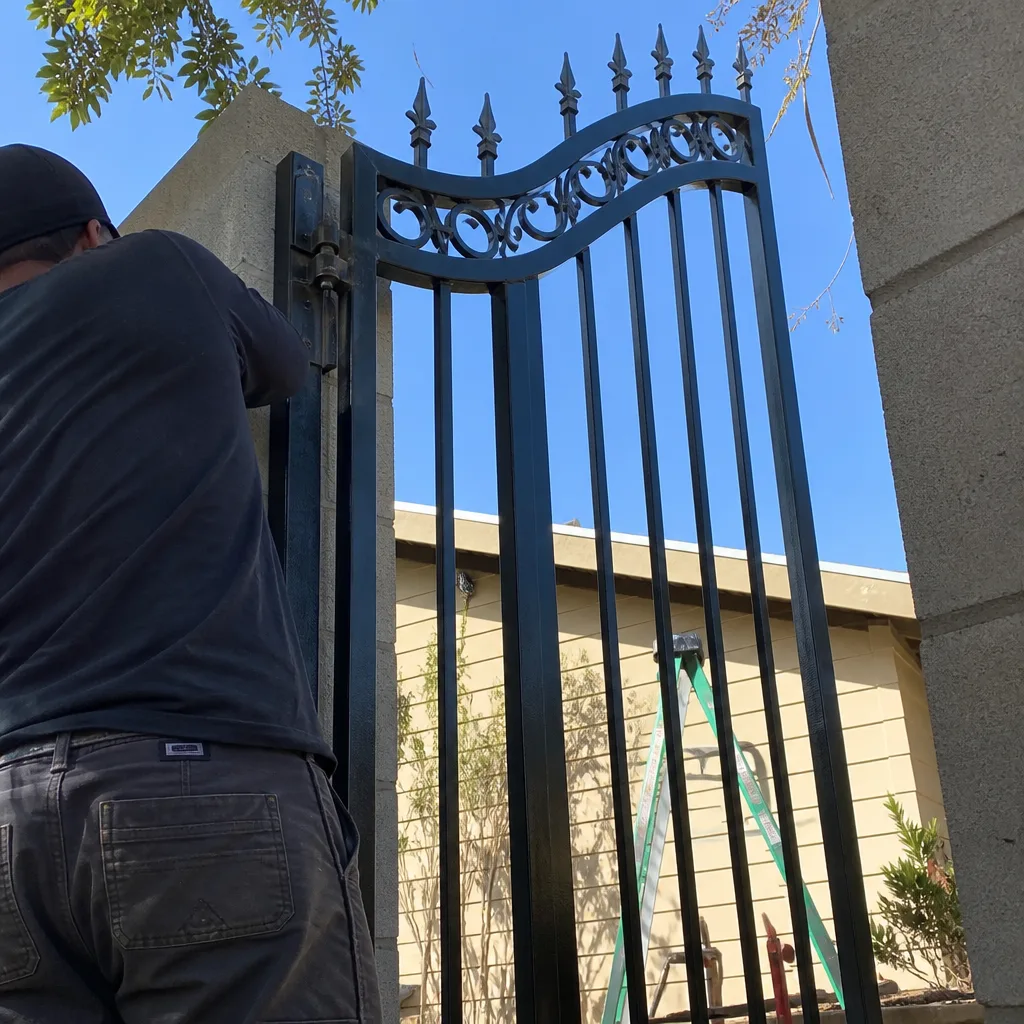
An unpermitted gate is a title issue, not just a code issue. In Concord, open permits or unpermitted work can delay escrow, trigger lender requirements for correction, or reduce appraised value. The due diligence is straightforward and free.
Step 1: Concord Building Division records search
Visit the city’s Community Development Department at 1950 Parkside Drive or use the online permit history tool at concordca.gov. Search by property address. Look for permits with descriptions including “fence,” “gate,” “automatic gate,” or “access control.” Note permit numbers, issue dates, and final inspection dates.
Step 2: Contra Costa County Assessor records
Cross-reference permit dates with construction dates. If the gate appears newer than the last permit, investigate further. County records are at ccassessor.org.
Step 3: Physical verification
Walk the property with the permit history in hand. Count gate leaves, note motor brands, measure fence height. Discrepancies between permitted scope and actual installation are red flags. We’ve consulted for Concord buyers who discovered a permitted single-leaf swing gate had been expanded to a double-leaf without permit - a $3,200 retroactive permit to correct.
What the records mean:
- Permit issued, final inspection passed: Clean. The work was done to code and verified.
- Permit issued, no final inspection: Open permit. The work may be complete but unverified, or incomplete. Concord requires closure within 180 days of issuance; beyond that, the permit expires and work must be re-permitted.
- No permit found, gate exists: Unpermitted work. This is the scenario that triggers retroactive permitting at sale time.
- Permit issued for different scope than installed: Potential fraud or uninformed modification. Requires engineering review.
We provide free second opinions on any written estimate or permit documentation from another company. Bring the paperwork from your escrow disclosure and we’ll review it against what we find on site - no charge, no obligation. This has saved Concord buyers from assuming unpermitted work was “grandfathered” when it wasn’t.
Permit Costs, Timelines, and Retroactive Permitting in Contra Costa County
Permit costs in Concord are formula-based, not flat-rate, and retroactive permits carry multipliers that punish the uninformed.
Standard permit fees (2024):
| Permit Type | Base Fee | Valuation Threshold | Typical Total with Fees |
|---|---|---|---|
| Building permit, fence/gate under 6 ft | $180 | Under $5,000 project value | $180-$340 |
| Building permit, fence/gate over 6 ft | $280 | $5,000-$25,000 | $340-$780 |
| Electrical permit, new circuit | $145 | Any new circuit | $145-$290 |
| Combination building + electrical | $425 | Automated gate with new power | $520-$1,050 |
| Plan check fee (required for engineered drawings) | 65% of permit fee | Structural posts, seismic bracing | Add 65% to base |
Retroactive permit multiplier:
Contra Costa County charges double the standard permit fee for work completed without permit, plus a $250 administrative penalty. If engineered drawings are required retroactively (common for structural modifications), you pay the plan check fee on the doubled base. A $520 standard permit becomes $1,210 minimum, and that’s before any code-upgrade work the inspector requires to meet current standards.
Typical timelines:
- Over-the-counter permit (like-for-like electrical, simple fence): same day to 3 days
- Plan check required (structural, engineered): 10-15 business days
- Inspection scheduling: 5-7 business days after permit issuance
- Re-inspection after failure: additional 5-7 business days, plus $180 fee
- Retroactive permit processing: 15-20 business days, plus correction time
Concord’s climate adds a practical constraint. Rain delays inspection scheduling, and Contra Costa County inspectors won’t conduct outdoor electrical tests in active precipitation. Plan for January-March jobs to take 30% longer due to weather holds. We’ve had Concord customers in the Todos Santos area wait three weeks for a clear Tuesday morning to get their final sign-off.
Our recommendation: if you’re considering any gate work that might trigger a permit, verify status before starting. The Haven Standard includes a permit feasibility review in every written estimate. We tell you whether a permit is needed, what it will cost, and how long it will take - in writing, before you decide.
Common Mistakes to Avoid
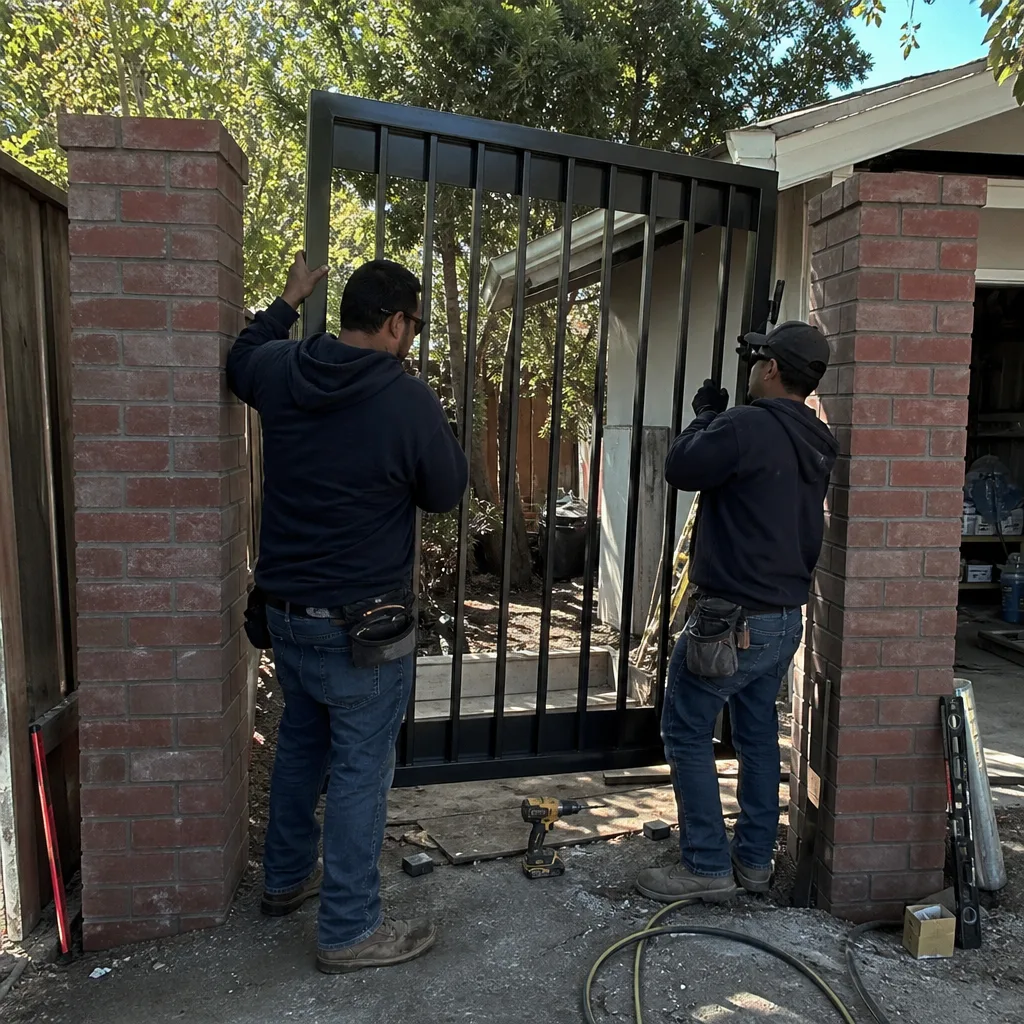
- Assuming repair equals exemption: Upgrading motor horsepower during a “repair” crosses into alteration territory. Always verify the replacement spec matches the existing permit scope.
- Installing photo-eyes at old heights: The 2018 UL 325 reduction to 6 inches catches many Concord homeowners who replace sensors without checking current standards. Inspectors measure with a tape, not a guess.
- Ignoring fire district clearance on sloped lots: Dana Estates, Holbrook Heights, and parts of the Lime Ridge area have driveways exceeding 15% slope. Gates that swing inward can block emergency access. The fire marshal’s approval is separate from building inspection.
- Throwing away documentation: Manufacturer cut sheets, our photo records, and permit copies belong in your property file. Future buyers and inspectors will ask for them. We file copies in our job records, but homeowners should keep their own set.
- Assuming grandfathering protects old installations: UL 325 compliance is not grandfathered for safety-critical elements. A 2012 installation may need photo-eye relocation to sell in 2024.
- Hiring a contractor who won’t put permit responsibility in writing: If a contractor says “permits are your problem” or “we never needed one before,” that’s a liability transfer, not advice. Our estimates specify who handles permitting and what it costs.
- Waiting until escrow to discover permit issues: The cheapest time to fix permitting is before you list. A pre-listing permit review costs nothing and prevents buyer credits or price reductions.
When to Call a Professional
Call a qualified gate technician when your project crosses any permit threshold, when you’re buying a property with an existing automated gate, or when your gate fails safety testing. See How to Hire a Gate Repair Contractor in Concord: A Step-by-Step Guide for vetting tips. The documentation requirements for permitted work are specific, and a technician who understands Concord’s inspection sequence can save you weeks of back-and-forth.
Vance Gate Repair Concord offers free estimates in Concord - call (510) 726-7050. Explore more guides & resources on our blog. We arrive with a written scope and price before any work starts, and we flag permit requirements during that first visit. If your job needs a permit, we prepare the technical documentation for your submittal. If it doesn’t, we tell you why, citing the specific code section, and leave you a dated record for your files.
Our 365-Day Done Right Promise covers all completed work: if an inspector flags something we installed, we make it right at no charge. That promise, combined with our documented photo record on every visit, means you’re not left explaining a repair to a future buyer from memory.
Frequently Asked Questions
Not if it’s a like-for-like replacement with the same horsepower and mounting configuration. Upgrading horsepower, changing from post-mount to subterranean installation, or adding new electrical circuits triggers a permit. Call (510) 726-7050 and we’ll evaluate your specific motor against Concord’s thresholds during a free estimate - no obligation.
Double the standard permit fee plus a $250 administrative penalty. A typical automated gate permit that would cost $520 upfront runs $1,210 or more retroactively, plus any code-upgrade work required to meet current standards. The cheapest path is always permitting before installation starts.
You receive a correction notice listing specific deficiencies, and you pay a $180 re-inspection fee when you reschedule. Common failures in Concord include photo-eyes above 6 inches, force settings exceeding 40 lbf, and missing warning signage. We attend inspections on request and carry tools to address minor issues on site, avoiding re-inspection fees.
Yes. Concord’s permit history search is at concordca.gov through the Community Development Department portal. Search by property address and look for permits with “gate,” “fence,” “automatic gate,” or “access control” in the description. Final inspection dates should be present for closed permits; missing dates indicate open or expired permits.
UL 325 applies to all automated gates in California, regardless of installation date. While the gate itself may be grandfathered for structural elements, safety devices must meet current standards at time of inspection. We’ve relocated photo-eyes on 15-year-old Concord installations to bring them into compliance for sale.
The building permit covers structural elements - posts, gate leaf, mounting hardware, and safety device placement. The electrical permit covers power supply, circuits, grounding, and disconnecting means. Automated gates with new electrical runs require both. Simple motor swaps on existing circuits typically need neither if truly like-for-like.
The Bottom Line
California’s gate permit rules are threshold-based and specific: motor horsepower, structural modification, electrical additions, and fence height are the triggers. Most repairs don’t need permits, but alterations do, and the distinction hinges on technical details that should be documented before work starts. Concord homeowners who verify permit status before buying, who understand UL 325’s current requirements, and who keep documentation organized avoid the $1,200-$3,800 surprise of retroactive permitting. The inspection itself is methodical and predictable if you know the sequence. The key is naming the thresholds in advance, in writing, so no one has to guess what the inspector will find.
Written by Adrian Vance, Owner at Vance Gate Repair Concord, serving Concord since 2014.