
Last updated September 22, 2026
Free on-site gate assessment - hinges, posts, and your LiftMaster or Nice gate operator checked before anything is quoted
The assessment is free and the quote is the invoice.
 Before
 After
After Before
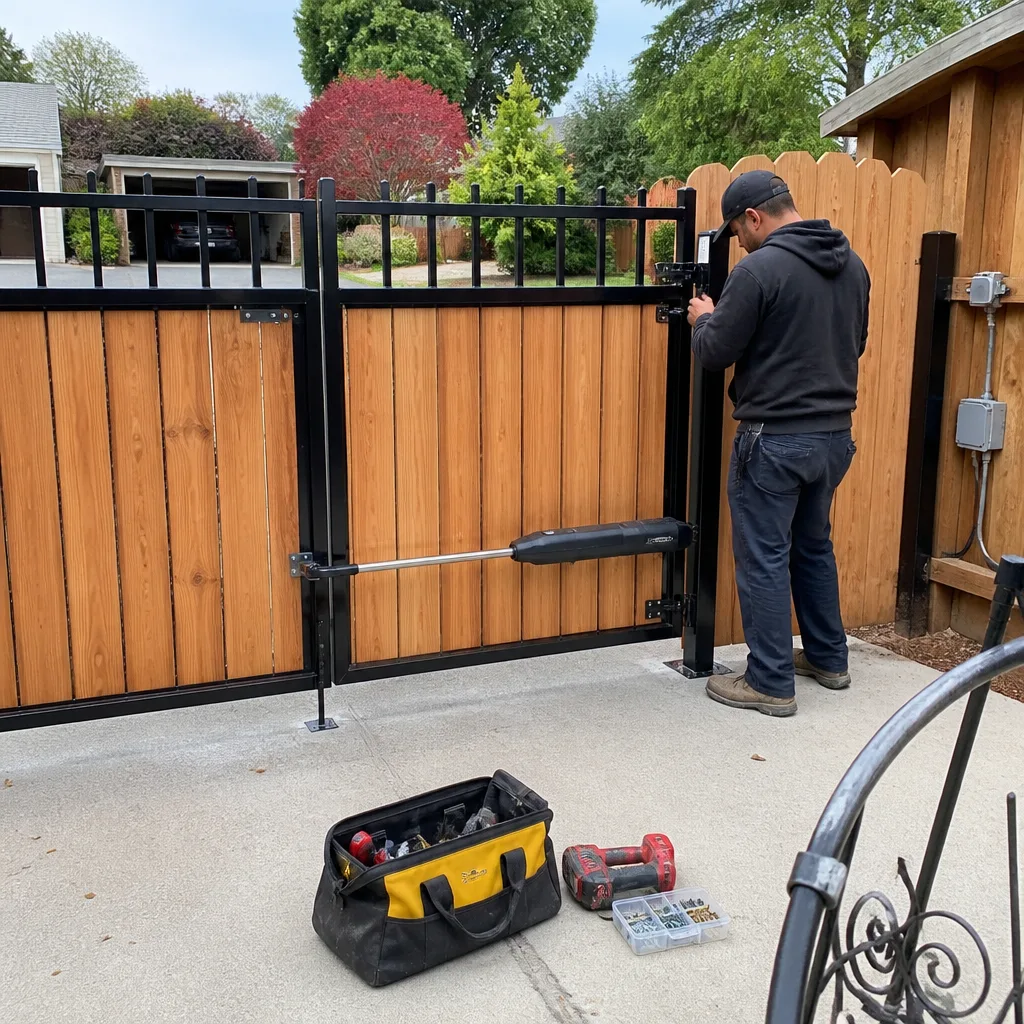 After
After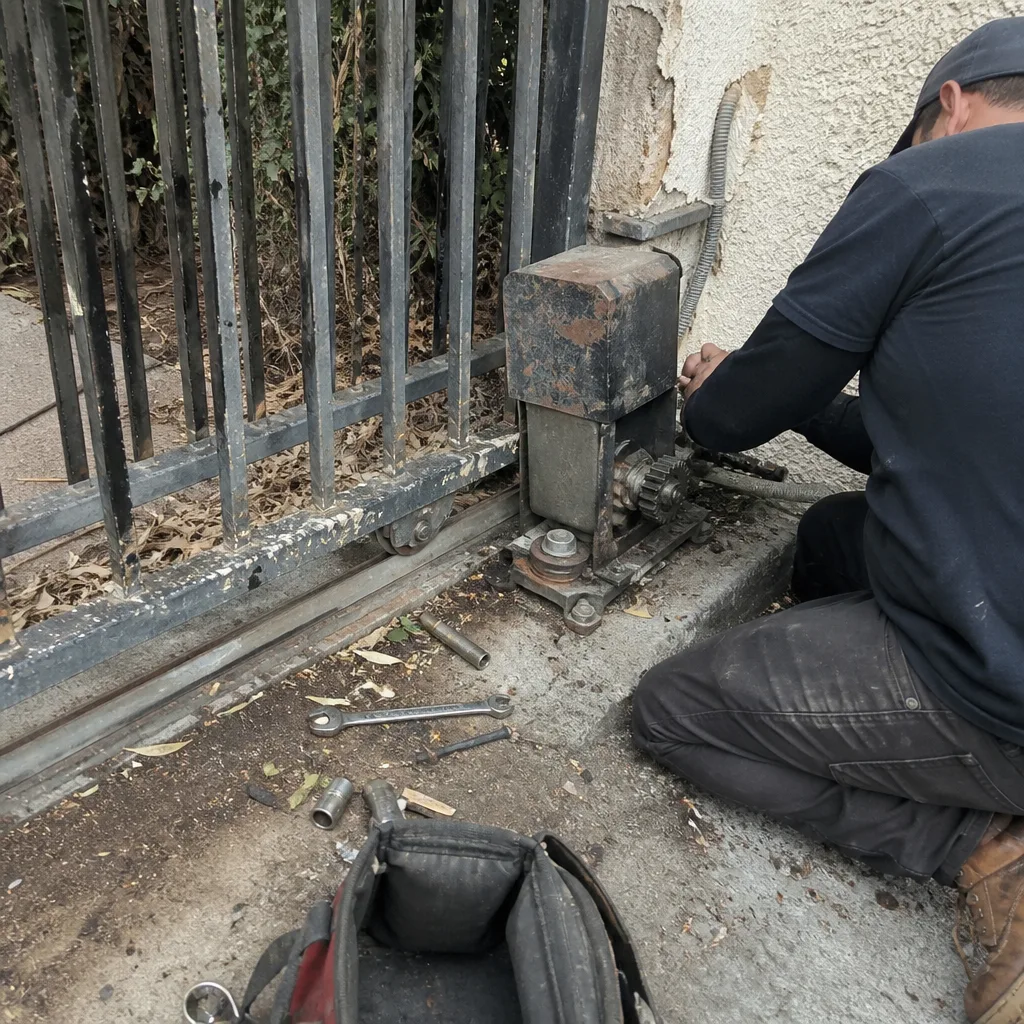 Before
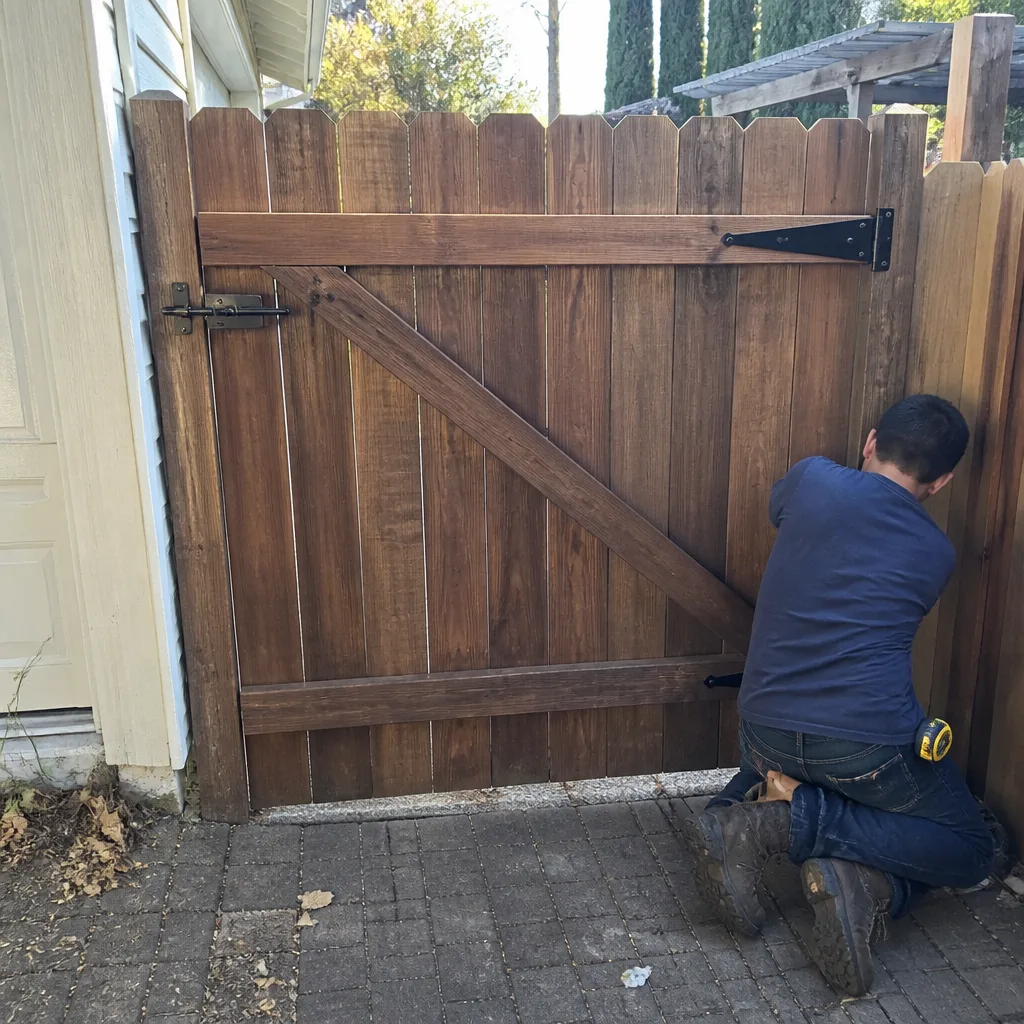 After
AfterGate Repair Maintenance Checklist for Concord Homeowners
Most gate maintenance checklists tell you to lubricate hinges and check for rust. None of them tell you what number to write down so next year’s technician knows whether things got worse. In Concord, where summer heat pushes metal past 140 degrees and winter rains leave mineral deposits on photo-eyes inside of a week, a checklist without baseline readings is just a feel-good exercise. We’ve rebuilt gates in the Monument Corridor that could have lasted another eight years with our Gate Repair services if someone had recorded the motor amp draw in 2019 and compared it to 2022. This guide gives you the specific measurements, photographs, and records that turn a maintenance walkthrough into actual predictive maintenance.
Quick Answer
A useful gate maintenance checklist for Concord homeowners records baseline measurements: limit-switch positions, motor amp draw, and hinge gap widths, photographed from identical reference points year over year. Without these numbers, you cannot distinguish normal wear from pending failure between visits.
Table of Contents
- Why Baseline Measurements Matter More Than Inspections
- What to Record Every Visit: The Six Core Measurements
- How to Photograph Gate Alignment for Year-Over-Year Comparison
- Concord-Specific Seasonal Checks: Rainy Season and Summer Heat
- Clean-and-Lube Visit vs. Diagnostic Maintenance Visit
- Building a One-Page Gate Record for Future Technicians
- Recommended Maintenance Schedule for Concord Properties
- Common Mistakes to Avoid
- When to Call a Professional
- Frequently Asked Questions
- The Bottom Line
BeforeAfterWhy Baseline Measurements Matter More Than Inspections
A technician looks at your gate and says the hinges look fine. Another technician looks at the same hinges six months later and says they need replacement. Who’s right? Without a measurement, it’s opinion against opinion.
We started recording baseline data on every gate repair in Concord after a 2017 call in the Dana Estates neighborhood. The homeowner had been told their swing gate needed a new operator. We measured the arm bracket deflection at 3/16 inch, checked our records from a visit 14 months prior, and found it was 3/16 inch then too. The gate wasn’t failing; the previous company hadn’t measured. The operator was fine. The homeowner saved $1,800 and we learned that documentation is the only defense against unnecessary replacement.
Here’s what a baseline does for you:
- It removes guesswork from multi-year ownership. Gates last 15-25 years. You’ll see four to six technicians in that window. If each starts from zero, you pay for rediscovery.
- It catches degradation before failure. A motor drawing 4.2 amps today and 5.8 amps in 18 months is telling you something. A motor that “sounds a little different” is telling you nothing specific.
- It supports warranty claims. Manufacturers like LiftMaster and DoorKing require documented maintenance for operator warranties. “I checked it regularly” means nothing. “Limit switch position recorded quarterly” means everything.
- It protects property value. In Concord’s competitive home market, a documented maintenance record for automated gates is a transferable asset at sale, same as HVAC logs or roof inspections.
The Haven Standard we operate under has four clauses, and Clause 4 (Evidence on every job) exists because baseline documentation is not extra service. It’s the minimum professional standard. Every Vance Gate Repair Concord home visit leaves you with photographed readings, not just a verbal “all good.”
What to Record Every Visit: The Six Core Measurements
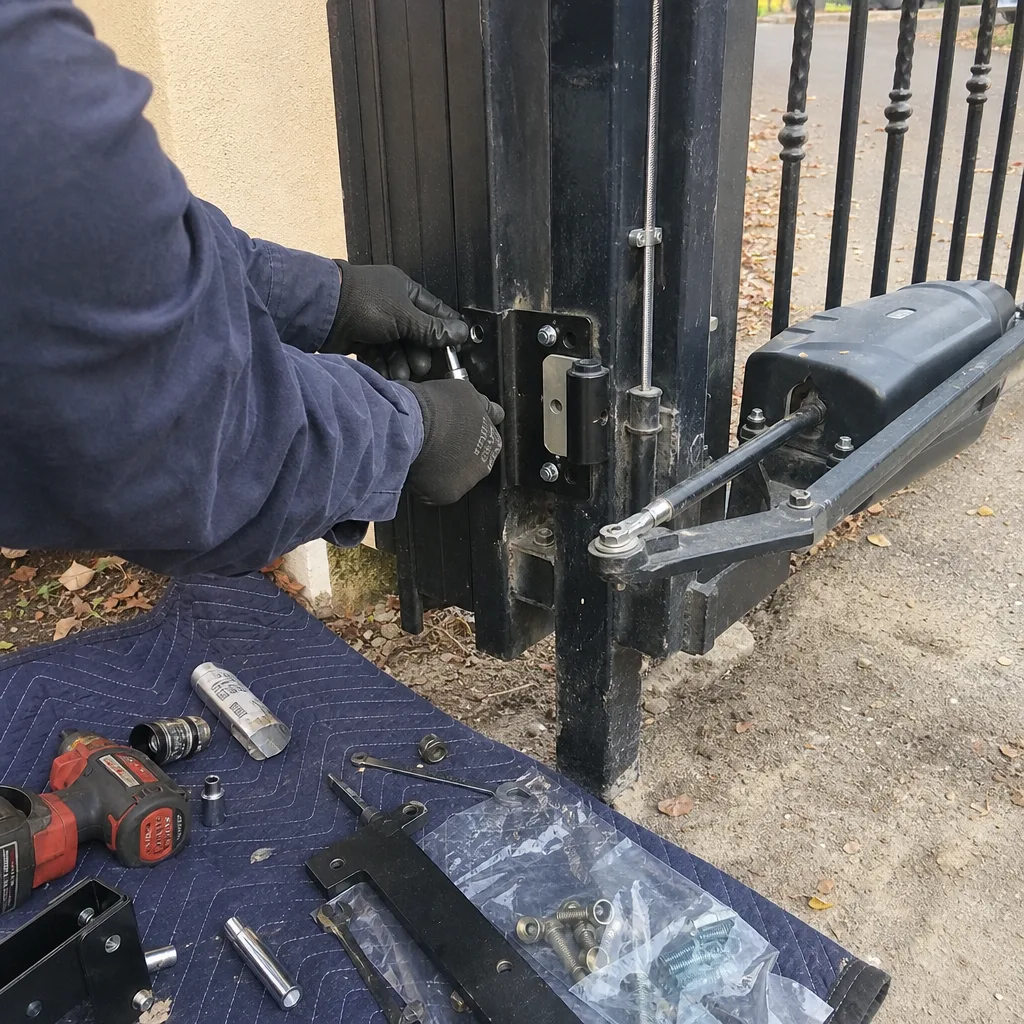
These six measurements take 12 minutes to capture once you know how. They save hours of diagnostic time later and often prevent the diagnostic entirely.
1. Limit-Switch Open and Close Positions
The limit switch tells the operator when to stop the gate in each direction. On a sliding gate, this is typically a magnetic sensor position measured in inches from a fixed point on the track. On a swing gate, it’s usually degrees of arm extension or a cam position on the operator.
What to record: The physical position of the open limit and close limit, measured with a tape measure from a fixed reference (end of track, fence post, concrete edge). For Elite and Mighty Mule operators with digital displays, record the displayed value. For mechanical cams, photograph the cam orientation against a marked reference.
Why it matters: A close limit that drifts 2 inches over two years means the gate is hitting the stop harder, stressing the operator, or failing to latch cleanly. In Concord’s clay-heavy soils, especially in neighborhoods like Clayton Valley where seasonal moisture shifts concrete pads, limit drift is often the first sign of foundation movement affecting gate geometry.
2. Motor Amp Draw
Use a clamp meter on the power lead to the operator. Record amps during normal open, normal close, and stall (the moment the gate reaches the physical stop).
What to record: Three numbers: open amp draw, close amp draw, stall amp draw. Note the brand and model of operator, as nominal draws vary. A LiftMaster CSW200UL draws differently than a Ghost Controls TSS1.
Why it matters: Rising amp draw under normal operation means increasing mechanical resistance: dry bearings, misalignment, or debris in the track. A stall draw that climbs while normal draw stays flat suggests the limit switch is set too deep, forcing the motor to work against the physical stop. We’ve caught both conditions in Concord’s Rancho Medanos area by comparing year-over-year amp logs.
3. Hinge Gap Width, Top and Bottom
On swing gates, measure the gap between the gate frame and the post at the top hinge and bottom hinge. Use the same point each time: we recommend 1 inch in from the hinge barrel edge.
What to record: Two measurements per hinge set (top gap, bottom gap). For gates with multiple hinges, record each pair. Note the gate position when measured: we use “fully closed, latched.”
Why it matters: Sagging gates show up here first. A top gap that shrinks from 3/8 inch to 1/8 inch while the bottom gap grows from 3/8 inch to 5/8 inch means the gate is rotating on its hinges. Caught early, hinge adjustment or pin replacement solves it. Caught late, the gate frame distorts and you’re into welding or replacement.
4. Photo-Eye Alignment Offset
The photo-eye (the infrared beam that stops the gate if something crosses the path) has a transmitter and receiver. Misalignment causes nuisance stops or safety failures.
What to record: The physical offset between transmitter center and receiver center, measured horizontally and vertically. Most units have alignment LEDs; note how many LEDs are lit and which color. Photograph the LED status.
Why it matters: Concord’s winter rains leave water spots and mineral film on photo-eye lenses. Homeowners wipe the lens and call it good, but the bracket may have shifted 1/4 inch during the season. A recorded offset lets you distinguish “needs cleaning” from “needs realignment.”
5. Track or Rollway Clearance
For sliding gates, measure the gap between the bottom of the gate frame and the highest point of the track or rollway surface. For cantilever gates, measure roller-to-frame contact points.
What to record: Clearance at three points: near the motor end, midpoint, and far end. Note any wear patterns on the track surface itself.
Why it matters: Debris accumulation, track settling, or roller wear reduces clearance until the gate drags. Dragging shows up as increased amp draw, but clearance measurement catches it before the motor complains.
6. Control Board Error History
Modern operators from DoorKing, Elite, and LiftMaster store error codes in memory. Access varies by model; consult the manual or have your technician pull it.
What to record: Error code, date cleared, and any pattern (same code recurring, codes clustering around weather events).
Why it matters: An occasional “obstruction detected” during Santa Ana wind events in late summer is normal. The same code appearing weekly in calm conditions means a failing safety edge or intermittent wiring fault.
How to Photograph Gate Alignment for Year-Over-Year Comparison
Photographs are only useful if they’re comparable. A photo from March 2023 and a photo from March 2024 should show the same view, same lighting, same reference points. Here’s how we do it on every gate installation in Concord and every maintenance visit afterward.
- Choose three fixed reference points. For a swing gate: the latch post cap, a specific fence picket, and a permanent landscape feature (tree trunk, house corner, established boulder). For a sliding gate: end of track, operator housing corner, and a fence post at the far end.
- Mark your camera position. Use spray paint or a paver stone to mark where you stand. Record the distance from the gate and the height of the camera. A phone at chest height, 8 feet from the closed gate, produces consistent framing.
- Shoot in the same lighting condition. We recommend overcast morning or late afternoon. Direct Concord summer sun at noon washes out detail and casts shadows that hide gaps. If you must shoot in sun, note the time and season for next year.
- Include a measurement tool in frame. A tape measure held against the hinge gap, or a level placed on the gate top rail, gives scale and shows plumb. Without scale, a photo of “the gate looks straight” is unverifiable.
- Photograph the operator display and any error codes. Even if you don’t understand the code, the photo preserves it for comparison or for a technician’s review.
- Store with date and gate position in filename. “2024-03-15_GateClosed_HingeGap.jpg” is searchable. “IMG_4827.jpg” is not.
Under Clause 4 of the Haven Standard, we leave every homeowner with these photos already taken, already named, and already stored in the job record, alongside Gate Repair Permits, Codes & Inspections in CA: What You Need to Know. If you maintain your own gate, adopt the same discipline. Your future self, or your future buyer, will have evidence instead of memory.
Concord-Specific Seasonal Checks: Rainy Season and Summer Heat
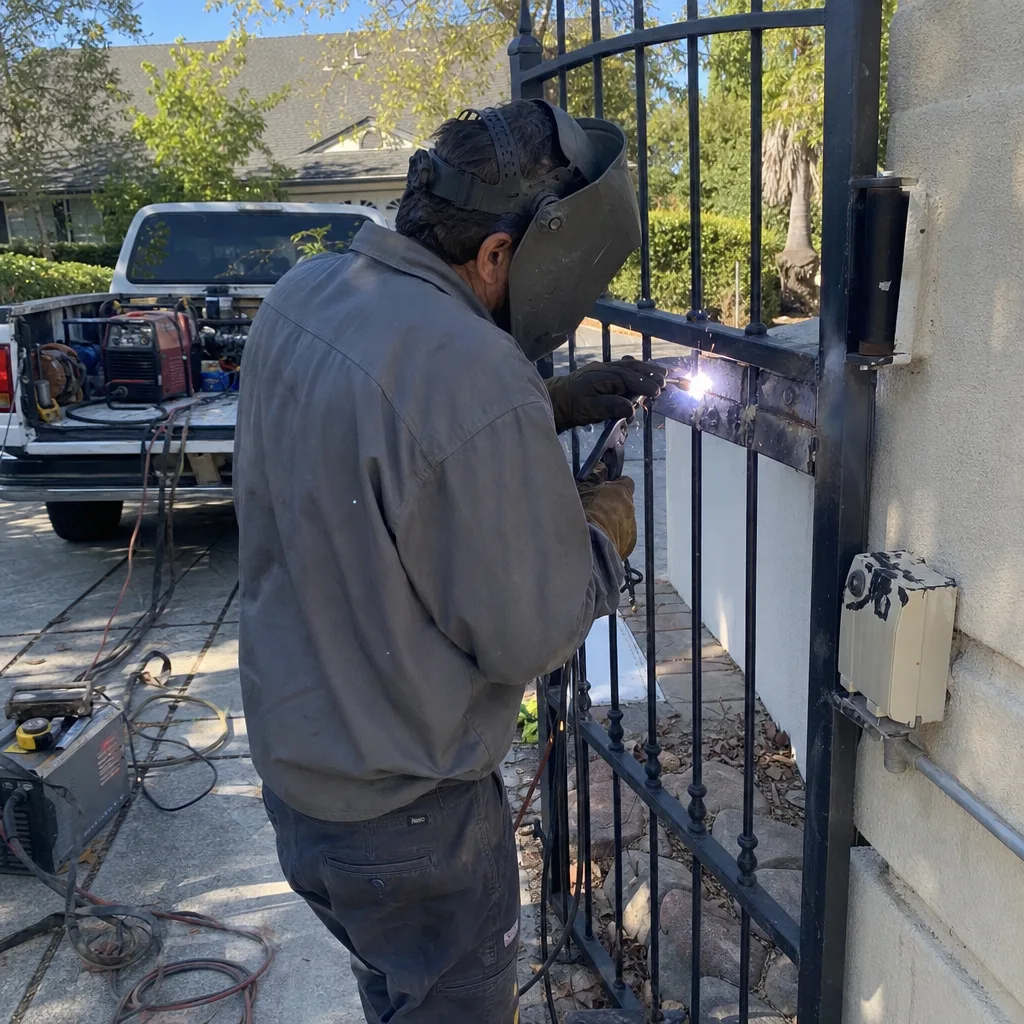
Concord’s climate is harder on gates than many homeowners realize. The city sits in a microclimate corridor where summer days regularly hit 95-105 degrees, winter rains concentrate in December through March, and the diurnal temperature swing (day high to night low) can exceed 40 degrees in shoulder seasons. That swing cycles metal through expansion and contraction daily.
After the Rainy Season Ends (April-May)
Check these items specifically:
- Photo-eye lens condition. Concord’s winter storms carry particulate from the Diablo Range. When rain dries, it leaves a film that scatters the infrared beam. Clean with lens solution, not household glass cleaner (ammonia can degrade some coatings). Record the alignment offset before and after cleaning; if it shifted, the bracket loosened.
- Drainage at the operator pad. Standing water around the operator housing is the leading cause of control board failure we see in Concord’s lower-lying areas near Willow Pass. The pad should slope away from the housing at 1/4 inch per foot. If it doesn’t, document the puddle depth and frequency; that’s evidence for a drainage correction before electrical damage.
- Track debris and corrosion. Sliding gate tracks in Concord collect oak leaf tannin, which is mildly acidic, and road grit from wet-season runoff. Brush out, inspect for rust bloom, and measure track clearance at the three standard points. Any reduction from your baseline indicates debris compaction or track settlement.
- Hinge pin lubrication state. Water washes grease from exposed hinge pins. If the pin shows rust streaking, the lubricant barrier failed. Clean, re-grease with a lithium-based product, and record the hinge gap; water exposure often accelerates sag.
After Summer Heat Peaks (September-October)
Check these items specifically:
- Motor thermal overload history. Operators in direct sun, especially dark-colored housings on south-facing gates, can exceed internal thermal limits. Check the error log for thermal events. A single event during a 108-degree day is expected. Multiple events at 85 degrees means the cooling fins are clogged or the motor is overloading due to mechanical resistance.
- Control board capacitor condition. Heat degrades electrolytic capacitors. Look for bulging tops or leakage stains on the board. This is advanced inspection; if you’re not comfortable removing the housing cover, schedule a diagnostic maintenance visit and ask the technician to photograph the board for your record.
- Vinyl or rubber component hardness. Safety edges, loop detector lead-in seals, and some roller covers harden in sustained heat. Press with a fingernail; if it doesn’t indent slightly, the material has aged and will crack with the first winter cold snap. Record the location and plan replacement before failure.
- Gate material expansion effects. Steel gates expand roughly 1/16 inch per 10 feet per 100 degrees of temperature change. A 16-foot Concord gate can move 3/16 inch from winter low to summer high. If your summer hinge gap measurement differs from winter by more than this, you’re seeing mechanical wear, not thermal expansion.
Clean-and-Lube Visit vs. Diagnostic Maintenance Visit
Not every maintenance visit is the same. Knowing which type you need, and what each should produce in writing, prevents paying diagnostic rates for basic service or missing early failure signs during a quick lube.
Clean-and-Lube Visit
This is preventive maintenance: debris removal, lubrication, visual inspection, and baseline recording. It should take 45-75 minutes for a single residential gate.
What it produces in writing:
- A checklist showing each item inspected, with checkmarks or initials
- The six core measurements recorded (or confirmation of no change from prior baseline)
- Photographs of gate position, hinge gaps, and operator display
- List of lubricants applied and locations
- Any items noted for future attention, with recommended timeframe
What it does NOT include: Component replacement, electrical testing beyond amp draw, control board inspection, or troubleshooting of reported malfunctions. If your gate is making a noise or stopping intermittently, you need diagnostic maintenance, not clean-and-lube.
Diagnostic Maintenance Visit
This is investigative: the gate has a symptom, or the clean-and-lube found an anomaly in the baseline data.
What it produces in writing:
- A symptom description in your words, recorded by the technician
- Systematic test results: individual safety device function, motor load under varying conditions, control board error history, wiring continuity tests
- A written finding: what is failing, how it was diagnosed, and what will happen if uncorrected
- A written scope of repair with flat price, before any work starts (Haven Standard Clause 1)
- Post-repair baseline measurements showing the corrected state
At Vance Gate Repair Concord, we separate these visit types clearly when you call. A clean-and-lube for a properly functioning gate is priced differently than diagnostic work for a symptomatic gate. Both leave documentation. Neither leaves you with a verbal “it’s fine” and a handshake.
Building a One-Page Gate Record for Future Technicians
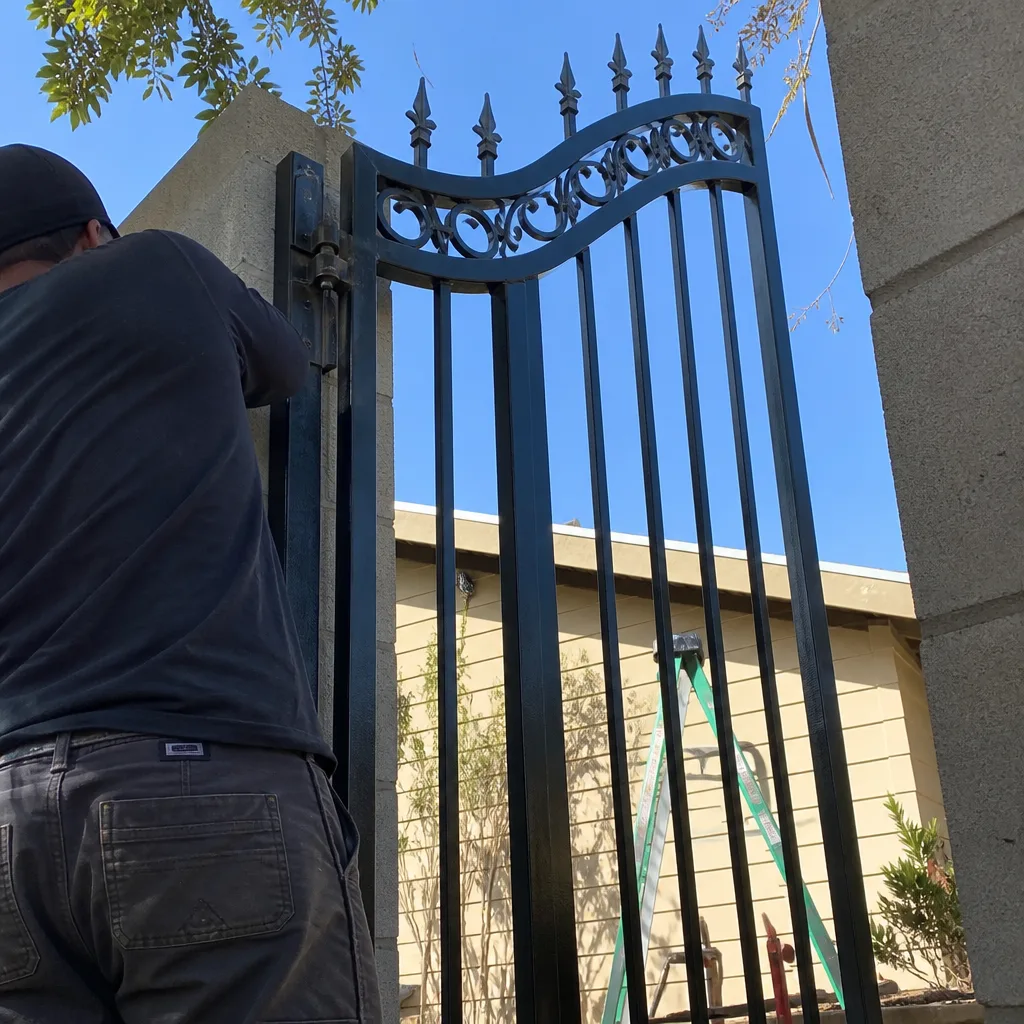
The goal is a single sheet any technician can read in 60 seconds and know the gate’s history, current baseline, and any anomalies. We’ve refined this format across 22,000+ gates since 2014, with more guides & resources available for homeowners.
Header Block:
- Property address
- Gate type (swing/sliding/cantilever), material, approximate age
- Operator brand, model, and serial number
- Date of record creation and last update
Baseline Data Table:
| Measurement | Date/Value 1 | Date/Value 2 | Date/Value 3 | Notes |
|---|---|---|---|---|
| Limit Switch Open | ||||
| Limit Switch Close | ||||
| Motor Amp (Open/Close/Stall) | ||||
| Hinge Gap Top/Bottom | ||||
| Photo-Eye Offset H/V | ||||
| Track Clearance (3 points) |
Maintenance History: Date, type (clean-lube/diagnostic/repair), technician/company name, brief description, and whether documentation was left. This is where you record that Vance Gate Repair visited in March 2024, performed clean-and-lube, left photo record, and noted hinge pin wear for 2025 attention.
Anomaly Log: Date, symptom, measurement that flagged it, action taken, result. Example: “2023-09-12: Gate stalled mid-travel. Amp draw 6.2 vs. baseline 4.1. Found track obstruction (landscaping rock). Cleared. Post-repair amp: 4.0.”
Keep this record in a waterproof sleeve near the operator, or digitally with cloud backup. The physical copy is for the technician who shows up when your phone is dead. The digital copy is for you, and for property sale disclosure.
Recommended Maintenance Schedule for Concord Properties
Based on Concord’s climate data and our field experience, this schedule balances thoroughness against cost. Adjust for gate usage: a gate cycling 20+ times daily (multi-family, home-based business) needs more frequent attention than a residential gate cycling 4-6 times.
| Frequency | Service Type | Focus Areas |
|---|---|---|
| Monthly (homeowner) | Visual walkthrough | Photo-eye lens clean, track debris check, listen for unusual noise, verify safety reverse function with a 2×4 test |
| Quarterly (homeowner or technician) | Clean-and-lube | Full six-measurement baseline, hinge lubrication, operator housing debris removal, drainage check |
| Annually (technician recommended) | Diagnostic maintenance | Electrical testing, control board inspection, safety device function verification, error log review, written condition assessment with 3-year outlook |
| Post-event | Targeted inspection | After sustained heat over 105°F, after significant rain/wind storm, after any vehicle impact or landscaping work near gate |
For Concord homeowners in the Todos Santos or Holbrook Heights areas, where hillside drainage and wind exposure are more severe, we recommend quarterly technician visits rather than homeowner-performed quarterly work. The 20-minute drive from our dispatch point means scheduled visits are predictable, and the documented record builds faster with professional measurement.
Common Mistakes to Avoid
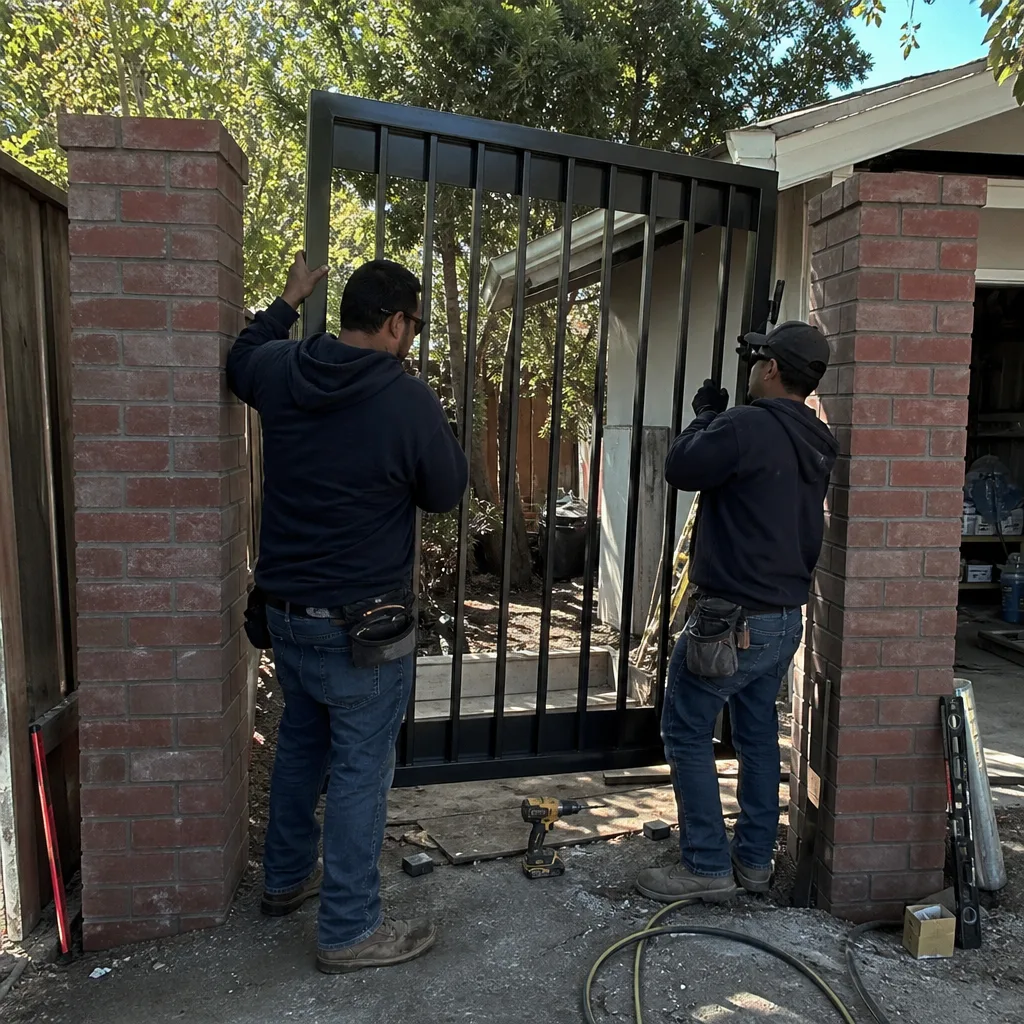
- Recording “looks good” instead of a number. “Hinges look good” is useless to next year’s technician. “Hinge gap top 3/8 inch, bottom 3/8 inch” is actionable. The homeowner who called us from Concord’s Ayers Road area in 2022 had six years of “looks good” notes and a gate that had sagged 3/4 inch without anyone noticing the trend.
- Using different measurement points each visit. If you measure hinge gap at the barrel edge in 2023 and 1 inch from the barrel in 2024, you’ve introduced a variable that masks real change. Mark your points with paint or a permanent marker.
- Ignoring the operator error log. Homeowners often clear error codes to stop the beeping without recording what they cleared. That log is the gate’s complaint history. Clear it only after photographing or writing down the contents.
- Assuming summer sluggishness is normal. Some Concord homeowners accept slow gate operation in August as “the heat.” It’s not. Operators have thermal protection that shuts them down, not slows them. Sustained slow operation means mechanical resistance or low voltage, both of which worsen until failure.
- Skipping post-rain inspection because the gate works. Water damage to control boards often has a 2-6 week latency. The gate works fine until corrosion reaches a critical trace. The photo-eye misalignment or pad drainage issue you catch in April prevents the June control board replacement.
- Not updating the one-page record after professional visits. If a technician replaces a component, the baseline changes. A new operator means new nominal amp draws. A new hinge set means new gap measurements. The record must reflect the current state, not accumulate obsolete data.
- DIY adjustment of high-tension components. Swing gate torsion springs and some cantilever counterbalance systems store significant energy. Measuring their tension is appropriate; adjusting without proper tools and training risks serious injury. Record the measurement, call a professional for adjustment.
When to Call a Professional
Call for diagnostic maintenance when: the gate makes a new noise, stops or reverses without visible obstruction, responds inconsistently to remote or keypad, or any baseline measurement changes more than 20% from your recorded norm. These are early failure indicators that clean-and-lube will not resolve.
Call immediately when: the gate does not reverse on safety contact, the operator housing has visible moisture or corrosion, or you smell electrical burning. These are safety hazards, not maintenance items.
For any gate work in Concord, Vance Gate Repair Concord offers free estimates - no charge to review your existing record, measure current baselines, and provide a written scope and price before any work starts. Call (510) 726-7050. A live person answers 24 hours a day, including weekends and holidays. We do not use voicemail or callback queues.
Frequently Asked Questions
A clean-and-lube maintenance visit for a standard residential gate in Concord typically runs $150-$250, while a diagnostic maintenance visit with electrical testing and error log analysis ranges from $200-$350 depending on gate type and accessibility. The price is written and agreed before any work starts under Haven Standard Clause 1. Call (510) 726-7050 for an exact quote - estimates are free.
Homeowners can perform monthly visual checks, photo-eye cleaning, and baseline measurement recording safely. Electrical testing, control board inspection, and any work on high-tension spring components should be done by a trained technician. We provide free second opinions on any written estimate from another company - bring your paperwork and we’ll review it at no cost.
For typical residential use in Concord’s climate, schedule professional diagnostic maintenance annually and clean-and-lube quarterly. Gates in high-exposure locations (hillside wind, poor drainage, direct south sun) benefit from quarterly professional visits. Heavy-use gates (10+ cycles daily) need diagnostic attention every six months.
Vance Gate Repair services nine major automation brands: LiftMaster, FAAC, BFT, Linear, Viking, Ghost Controls, DoorKing, Elite, and Mighty Mule. Most Concord properties have one of these operators already installed. We do not steer customers toward replacement with a “preferred” brand; we repair what you have and document what we find.
Yes. In Concord’s active real estate market, transferable maintenance records for automated gates are increasingly requested by buyers and their inspectors. A documented history with baseline measurements, photos, and professional assessments demonstrates that the gate is an asset, not a deferred liability. We provide complete job records on request for property sale packages.
If any repair we complete is not right - the gate fails, the symptom returns, or a related issue emerges from our work - we make it right at no additional charge within one full year. No argument, no fee, no expiration date within that window. The promise applies to all completed work and is documented on every invoice under Haven Standard Clause 3.
The Bottom Line
A gate maintenance checklist without baseline measurements is a to-do list without memory. The specific numbers - limit positions, amp draws, hinge gaps - are what turn annual maintenance into predictive care that extends gate life and prevents emergency repairs. In Concord’s demanding climate, where summer heat and winter rains stress metal, electronics, and foundations simultaneously, documentation is not extra. It’s the difference between knowing your gate’s condition and guessing at it.
Start your one-page record today. Take the photographs. Write down the numbers. Next year, you’ll know exactly what changed. And when you need a professional who records the same way, we’re here.
Written by Adrian Vance, Owner at Vance Gate Repair Concord, serving Concord since 2014.