
Last updated September 22, 2026
Free on-site gate assessment - hinges, posts, and your LiftMaster or Nice gate operator checked before anything is quoted
The assessment is free and the quote is the invoice.
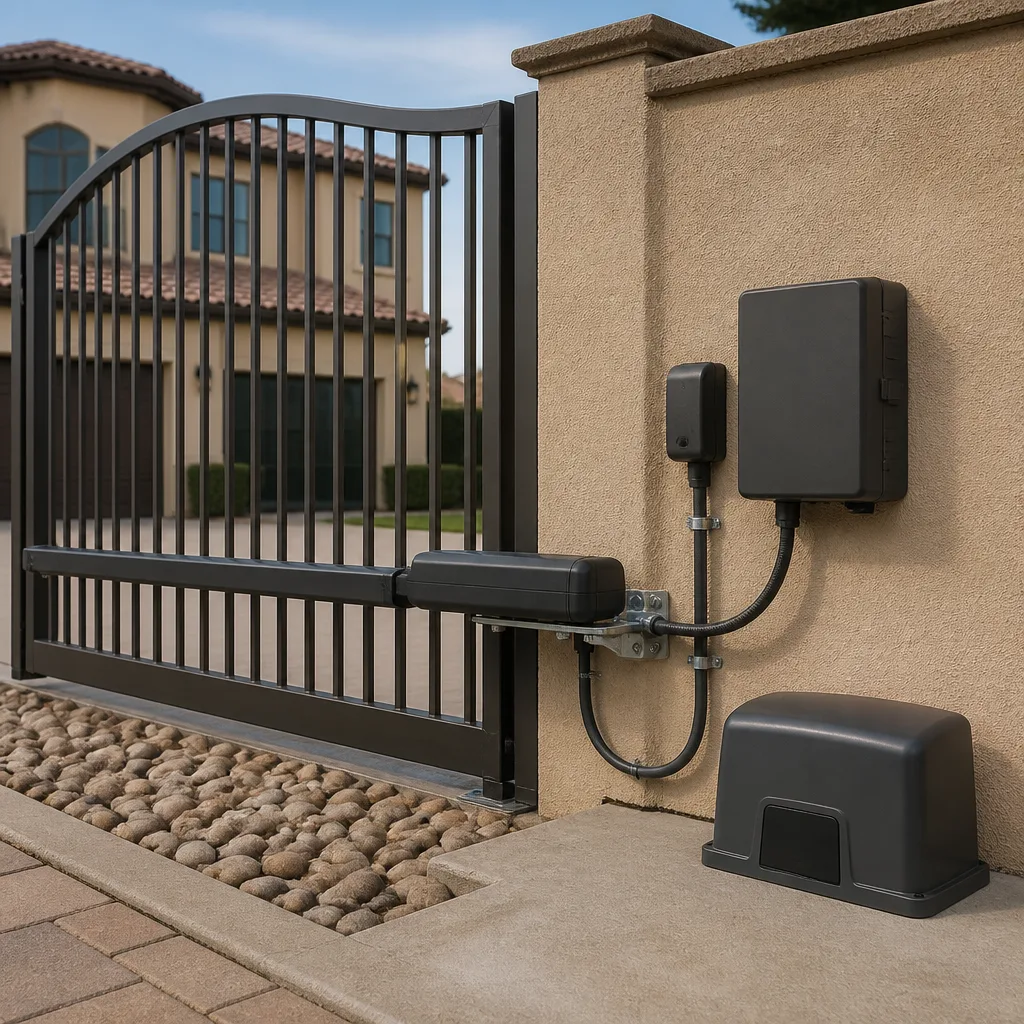
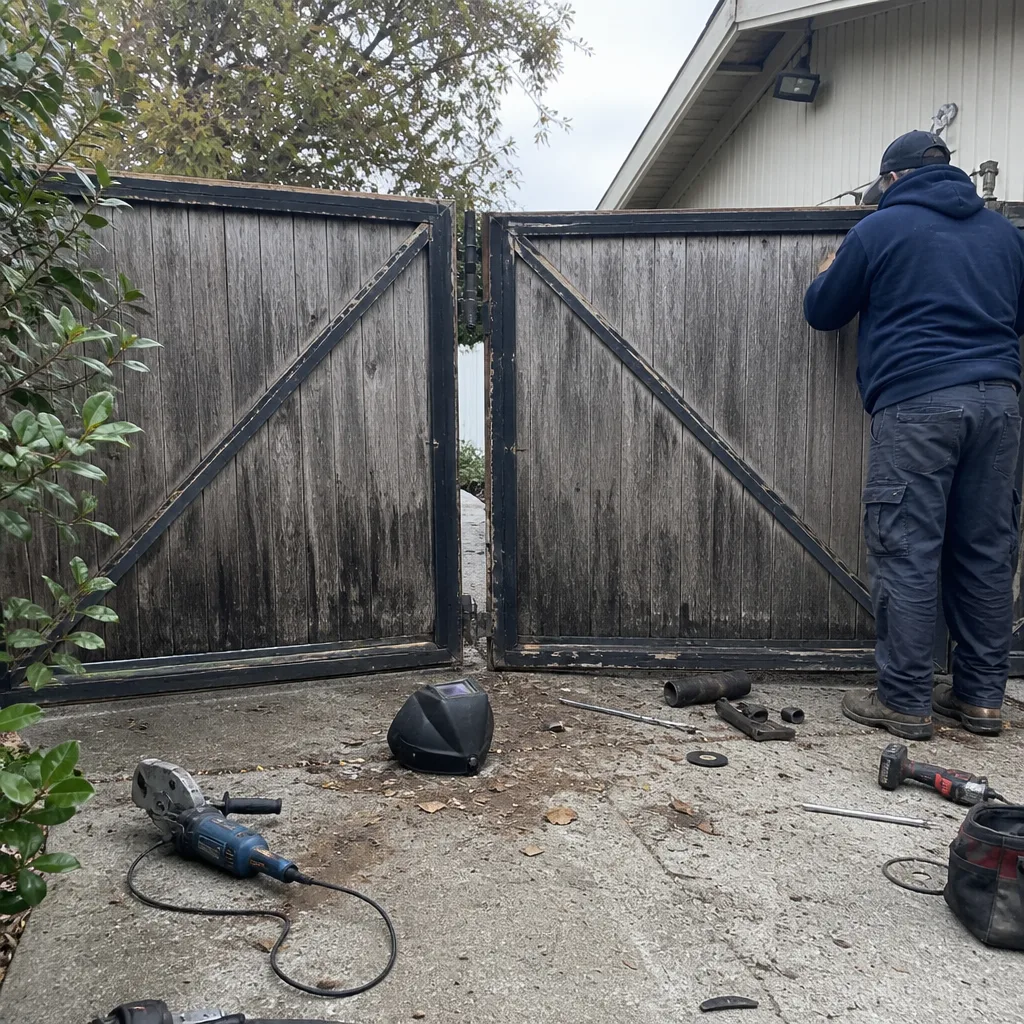 Before
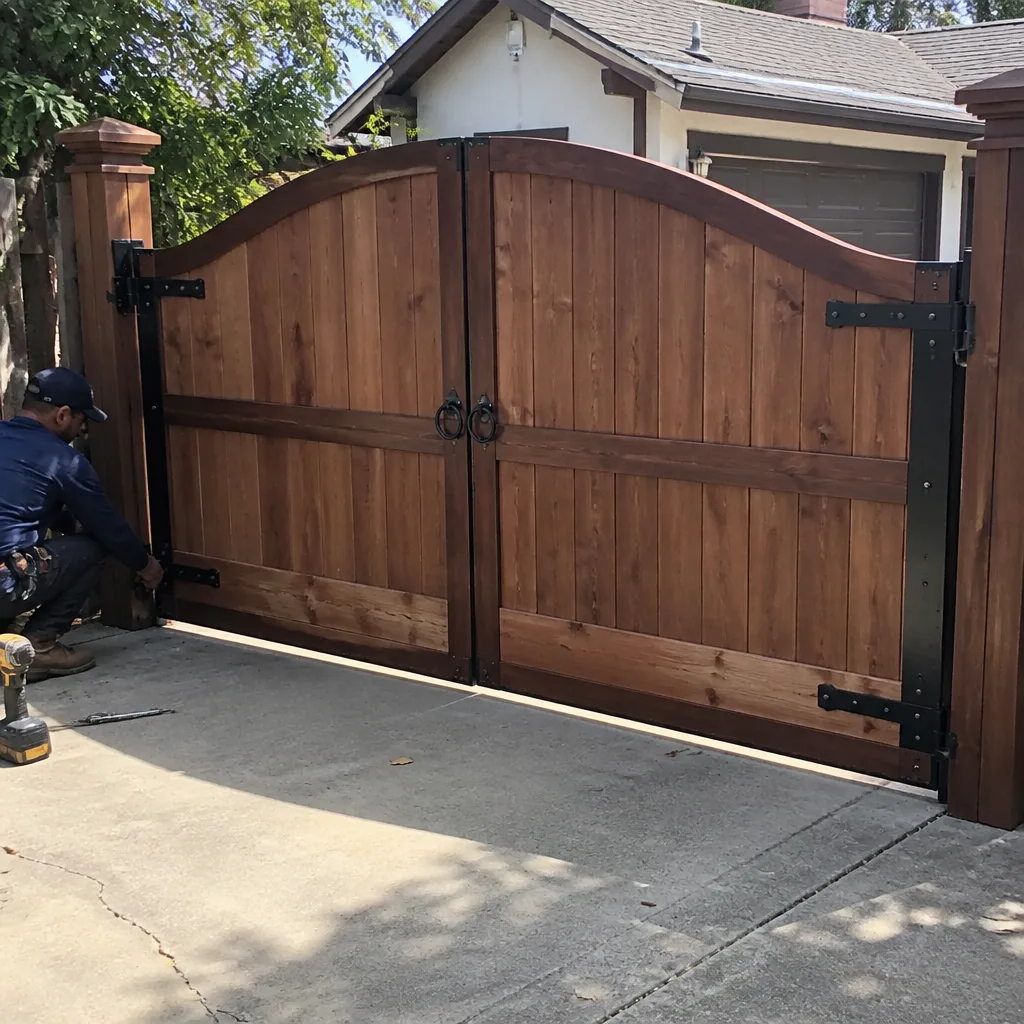 After
After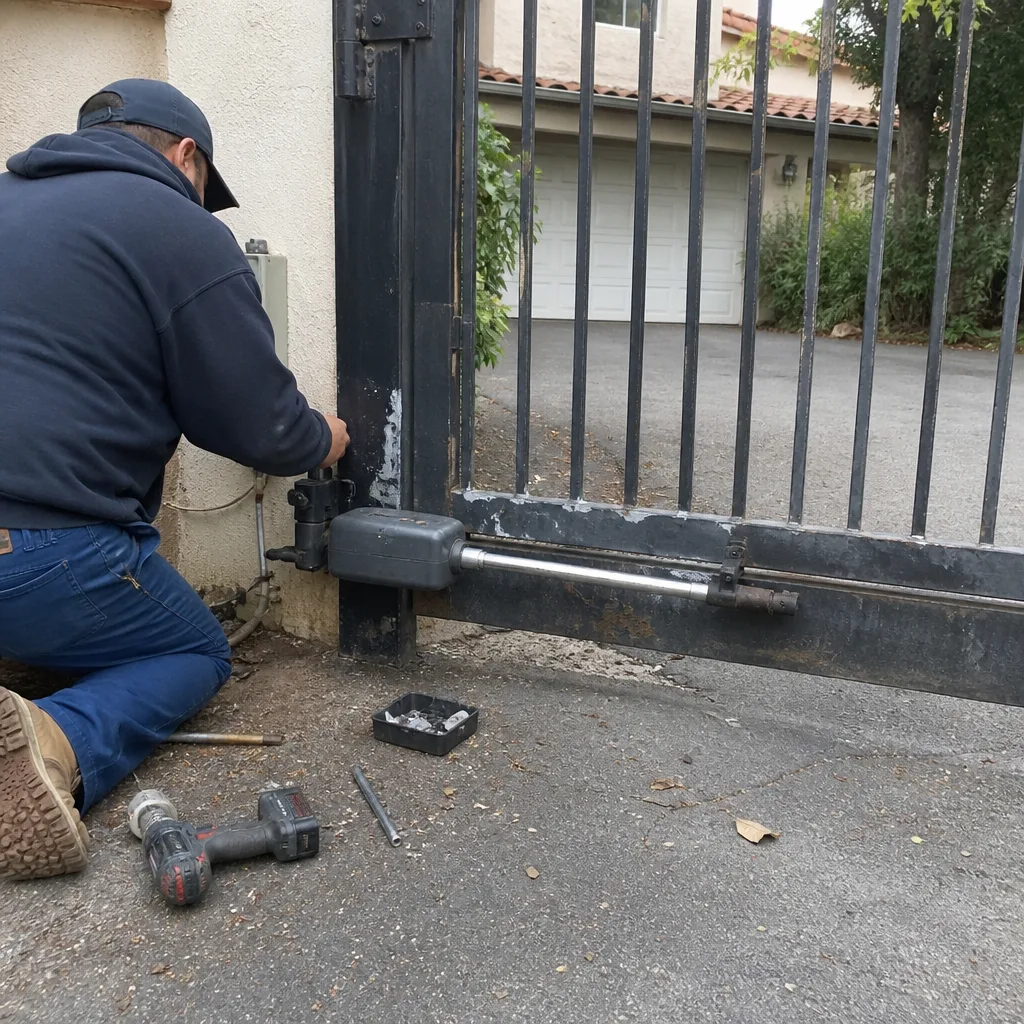 Before
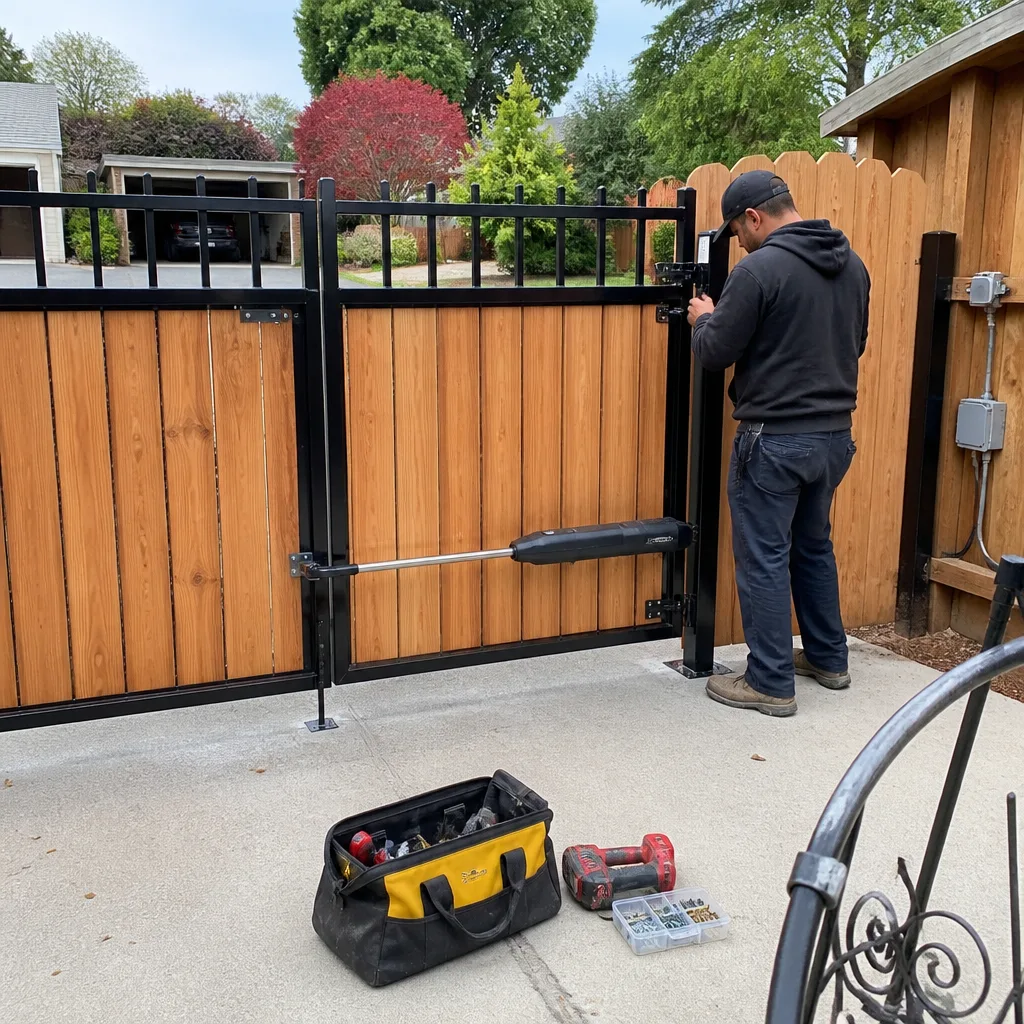 After
After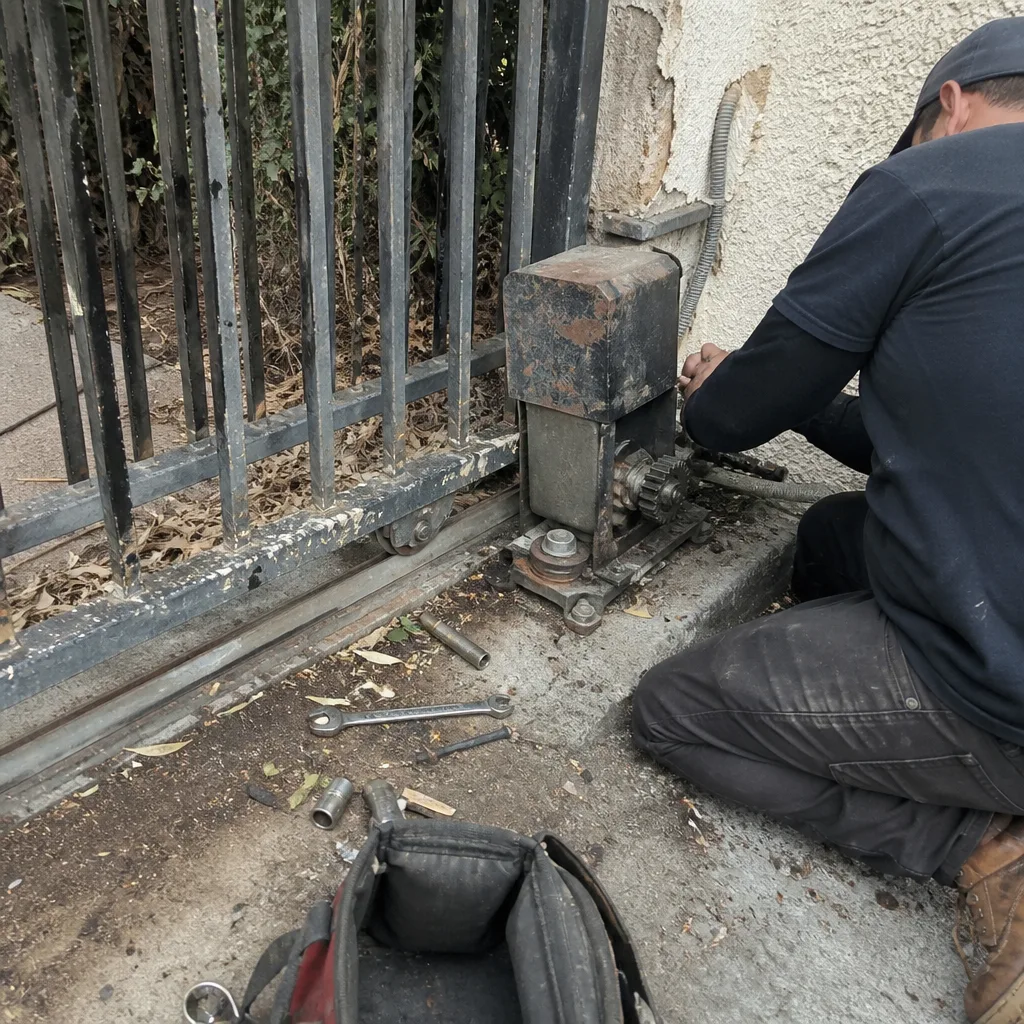 Before
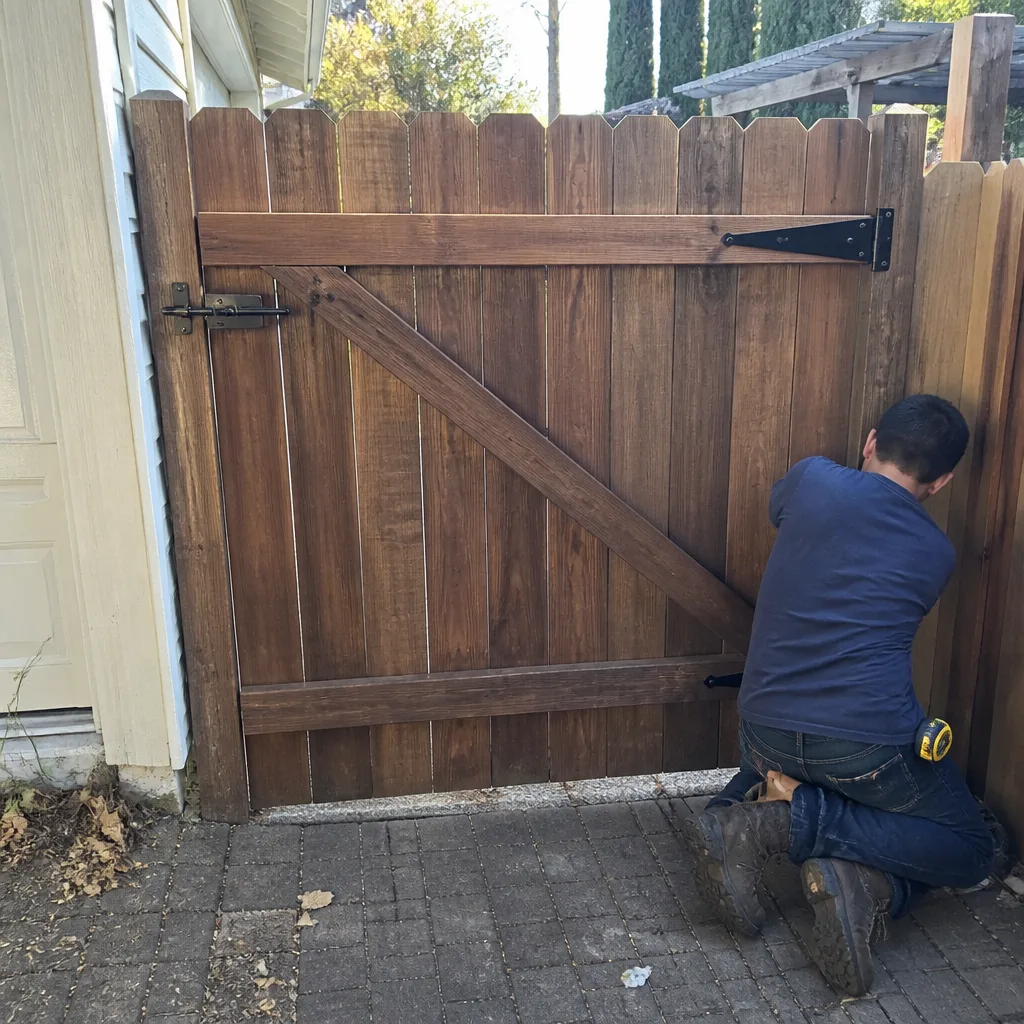 After
AfterThe Complete Guide to Gate Repair in Concord
The part that breaks visibly is rarely the part that caused the failure. In gate repair, the motor gets replaced while the sagging hinge that burned it out stays exactly where it was. Since 2014, we’ve documented over 22,000 gate repairs, and the pattern is consistent: the homeowner sees a stopped gate, the technician sees a failed motor, and nobody traces the load path back to the hinge that started it all. This guide maps every common repair category in Concord to its actual root cause, so you stop paying for symptoms and start fixing systems. You’ll learn how Concord’s clay-heavy soil shifts posts seasonally, why limit-switch calibration errors destroy more motors than lightning strikes, and what a written repair scope covers that a verbal estimate cannot.
Quick Answer
Gate repair in Concord typically addresses mechanical wear from seasonal soil movement, electrical faults in automation systems, or safety-device failures. Most residential repairs fall between $180 and $850 depending on whether the issue is isolated to a single component or traces to a systemic problem like post shift or ground-wire corrosion; see our Gate Repair Cost Breakdown: The Concord Homeowner’s Reference for 2026 for detailed pricing. A complete repair includes documentation of three subsystems: mechanical load path, electrical continuity, and safety-device function.
Table of Contents
- The Three Subsystems Every Concord Gate Repair Must Check
- How Concord’s Clay Soil Destroys Gates Slowly
- Swing vs. Slide Gates: What Fails First in Concord
- Limit-Switch Drift: The Hidden Cause of Repeat Motor Failures
- Written Scope vs. Verbal Estimate: What the Difference Costs You
- Automation Brands and Parts: Repair, Not Replace
- Safety Systems: Photo Eyes, Edges, and Ground-Fault Protection
- What Gate Repair Costs in Concord
BeforeAfterThe Three Subsystems Every Concord Gate Repair Must Check
Every gate is three systems wearing at different rates. A technician who replaces a motor without checking all three has done one-third of a repair. Under The Haven Standard, we document each subsystem separately, with photographs, before we leave the property.
Mechanical load path. This is the hinge, the post, the track, the rollers, and the gate frame itself. In Concord, this is where the trouble starts. The load path carries the physical weight of the gate and the dynamic force of wind, impact, and daily cycling. When a hinge pin wears or a post tilts, the motor works harder to move the same gate. The motor overheats. The homeowner calls for a “motor replacement.” The real failure is mechanical.
Electrical continuity. This includes the motor, the control board, the transformer, the wiring harness, and the ground path. Ground-wire corrosion is particularly common in Concord’s older neighborhoods where original conduit was buried without proper drainage. Water wicks into junction boxes, the ground impedance rises, and the control board throws fault codes that read like motor failure. We’ve traced “dead motors” to ground faults that cost $40 in materials to fix.
Safety-device function. Photo eyes, safety edges, loop detectors, and obstacle sensors. These are not accessories. Under California safety standards, they are mandatory on automated gates, and their failure modes can disable the entire system. A misaligned photo eye (the infrared beam that stops the gate if something crosses the path) will prevent a gate from closing. A failed edge sensor will prevent it from opening. Technicians who don’t test safety devices leave the gate less functional than when they arrived.
Our documentation habit, developed on commercial access-control sites starting in 2014, means every visit leaves a photographed record of all three subsystems: what was found, what was adjusted, what was replaced. Before we leave, you get a photo log of every adjustment and a written record of the part number installed. Under Clause 4 (Evidence on every job), this is included at no additional charge.
How Concord’s Clay Soil Destroys Gates Slowly
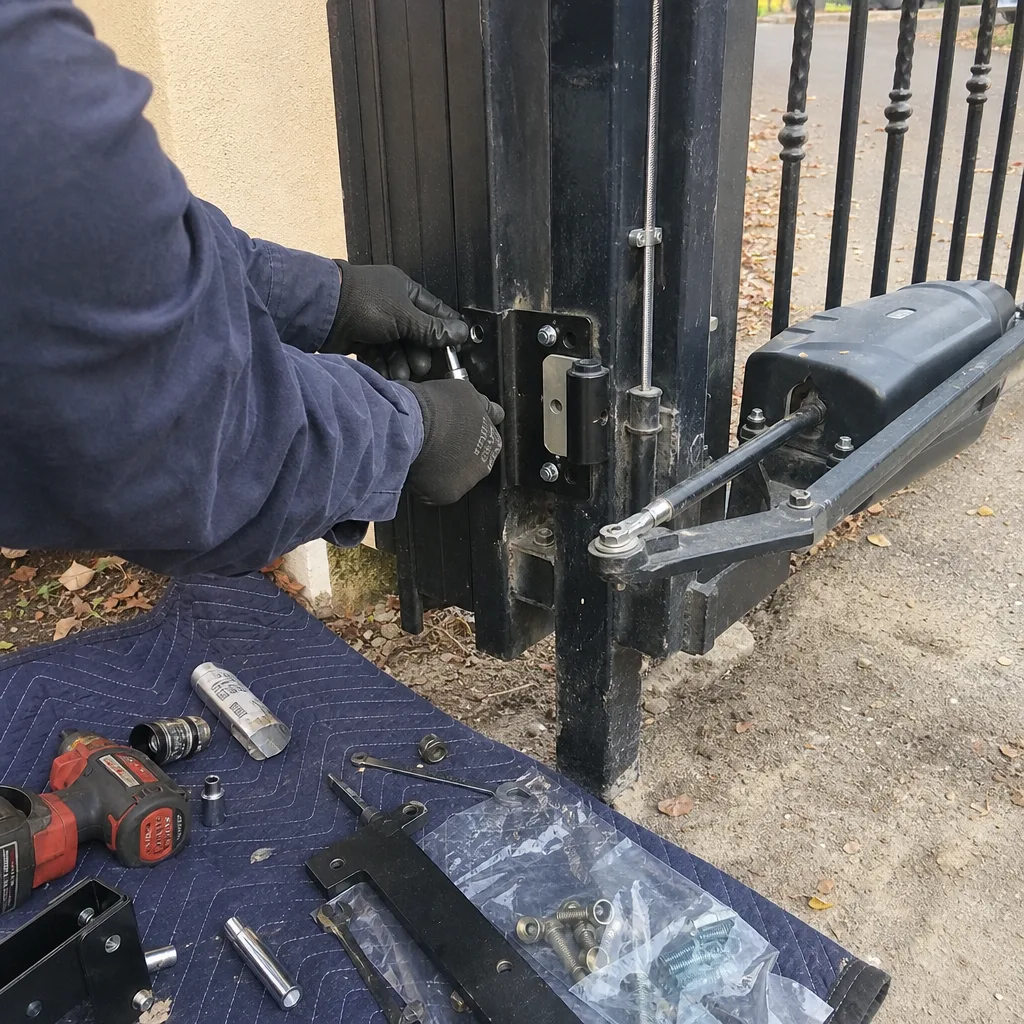
Concord sits on the edge of the Sacramento-San Joaquin Delta clay deposits. The soil here expands when wet and contracts when dry, a cycle that repeats with every winter storm and every summer drought. A gate post set in this soil moves. Not dramatically, not immediately visible, but enough to change the geometry of the gate frame.
Here’s what we measure. A swing gate post that tilts 1.5 degrees from vertical adds roughly 40 pounds of lateral load to the hinge pin. The motor, designed to move a balanced gate, now draws 25-30% more current. The thermal overload trips more frequently. The homeowner resets it, the motor fails six months later, and a technician sells a replacement. The post is never checked.
In the Concord neighborhoods we service most frequently, the pattern is seasonal. Calls spike in late October, after the first rains have swollen the clay, and again in July, when contraction has pulled posts askew. In the Dana Estates area, we’ve seen driveway gates that were plumb in March leaning visibly by September. In the Holbrook Heights neighborhood, older installations with shallow post footings are particularly susceptible.
The starting diagnosis for any gate that has “suddenly” started working harder should be the post and hinge geometry. We check this first. It takes ten minutes with a level and a tape measure. It saves the cost of an unnecessary motor replacement. And it is the reason our Vance Gate Repair Concord home page emphasizes systemic diagnosis over part swapping.
For homeowners, the warning signs are specific: the gate seems slower than last season, the motor hums longer before the gate moves, or the gate binds at one point in its travel. These are mechanical load-path symptoms, not electrical ones. Address them before the motor fails.
Swing vs. Slide Gates: What Fails First in Concord
The failure patterns differ by gate type, and the differences matter for maintenance planning and repair budgeting.
Swing gates fail first at the hinge. In Concord’s climate, the specific sequence is: hinge pin wear, then post tilt, then arm bracket stress, then motor overload. The hinge pin is a steel cylinder in a steel or brass bushing, cycling hundreds of times per month. Without lubrication, it wears oval. An oval pin lets the gate sag. The sagging gate pulls the arm bracket out of alignment. The motor strains. The cycle accelerates.
On new installations in Concord, we specify hinge pins with grease fittings and recommend annual lubrication. On existing gates, we measure pin wear with a dial indicator. Replacement is straightforward: remove the gate, press out the old pin, install the new one, reset the geometry. Most swing-gate hinge repairs run between $220 and $380, including realignment.
Slide gates fail first at the track and rollers. The track is a steel channel, often galvanized, that guides the gate via two to four wheeled rollers. Debris accumulates in the track. The rollers pick up grit and wear flat spots. A flat-spotted roller creates vibration, which loosens the track mounting bolts, which allows the track to shift, which jams the gate.
In Concord, slide gates have an additional vulnerability: the catch post, the vertical post that receives the gate in its closed position. If this post shifts in clay soil, the gate misses the catch or strikes it hard. We’ve replaced catch posts in the Concord Boulevard corridor that had been battered until the steel split.
Slide-gate track and roller repairs typically cost $280 to $520, depending on roller count and whether the track itself needs replacement. Full track replacement, including removal of the gate and realignment, runs higher but is rarely needed if caught early.
| Component | Swing Gate | Slide Gate | Typical Concord Repair Range |
|---|---|---|---|
| Primary wear point | Hinge pin / post | Track / rollers | $220-$520 |
| Secondary failure | Arm bracket | Catch post / guide | $180-$340 |
| Motor stress indicator | Slow start, binding mid-travel | Vibration, track noise | Diagnostic only |
| Preventive maintenance | Annual hinge lubrication | Quarterly track cleaning | $0-$85 |
Limit-Switch Drift: The Hidden Cause of Repeat Motor Failures
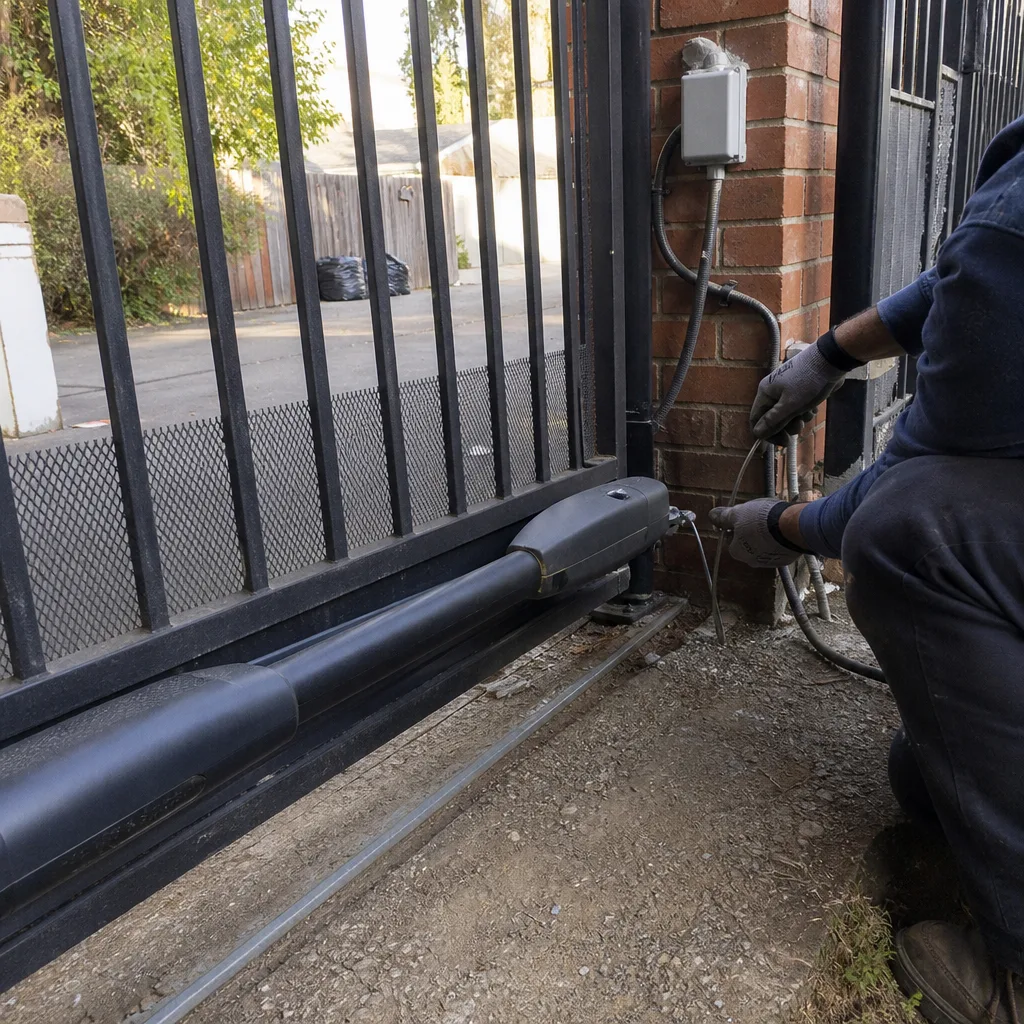
The limit switch is a small mechanical or magnetic sensor that tells the motor when to stop. On a swing gate, there are typically two: open limit and close limit. On a slide gate, the same. These switches are set at the factory or during installation to match the gate’s actual travel.
They drift. Temperature cycles, vibration, and physical impact move them fractions of an inch. Over months, the gate starts to “coast” past its intended stop point. The motor runs into mechanical resistance. The current spikes. The thermal protection trips, or the motor burns out.
We see this constantly. A homeowner in the Concord Highlands area had two motors replaced in eighteen months by two different companies. Neither technician checked the limit switches. The open-limit switch had drifted 12 degrees past travel; the gate was hitting the physical stop hard enough to flex the arm bracket. We reset the switch, photographed the new position, and the existing motor has run without issue for three years.
The symptom is specific: the gate stops with a “clunk” or shudder, or the motor continues to hum for two to three seconds after the gate appears stopped. This is not normal. A properly set limit switch stops the motor cleanly at the end of travel.
Limit-switch calibration is part of our standard diagnostic. We check it on every call, document the before and after positions, and leave the readings with the homeowner. It takes fifteen minutes. It prevents motor replacements that cost five to ten times as much.
For gate motor and opener service in Concord, this is the difference between repair and replacement. A motor that has been running against misadjusted limits for months may indeed be damaged. But a motor with healthy windings and no bearing wear simply needs the limits reset. We test before we recommend. The written scope specifies what we found and what we propose, so you know whether you’re paying for calibration or replacement.
Written Scope vs. Verbal Estimate: What the Difference Costs You
California contractors law requires a written contract for home improvement work over $500. But even below that threshold, the legal and practical differences between a written scope and a verbal estimate are substantial. For a deeper comparison, read our DIY vs Professional Gate Repair: The Concord Homeowner’s Decision Guide. They are the difference between a defined repair and an open-ended job.
A verbal estimate is a number, sometimes a range, delivered in conversation. It is not binding. It does not specify parts, labor hours, or what happens if the technician finds additional problems. In our experience reviewing competitors’ paperwork for free second opinions, verbal estimates lead to invoice disputes in roughly one-third of cases. The homeowner expected $400; the invoice is $680; the explanation is “we found more once we started.”
A written scope, under Haven Standard Clause 1, specifies:
- The exact components to be repaired or replaced, with part numbers where applicable
- The labor operations included, and those excluded
- The flat price for the defined scope, with no additional charges for the described work
- The condition that must exist for the price to change, and the process for documenting that change
- The warranty terms, including our 365-Day Done Right Promise
The written scope is handed to you before any work starts. You sign it, or you don’t. If you don’t, you pay nothing for the diagnostic visit. If you do, the price on that paper is the price on the invoice. No exceptions.
This matters particularly in Concord’s competitive gate repair market, where multiple companies may bid the same job. Bring us any written estimate from another company and we will review it at no cost. We can often identify scope gaps: missing safety-device testing, unspecified part grades, excluded permits if required. The written scope is your protection against paying twice for the same discovery.
Automation Brands and Parts: Repair, Not Replace
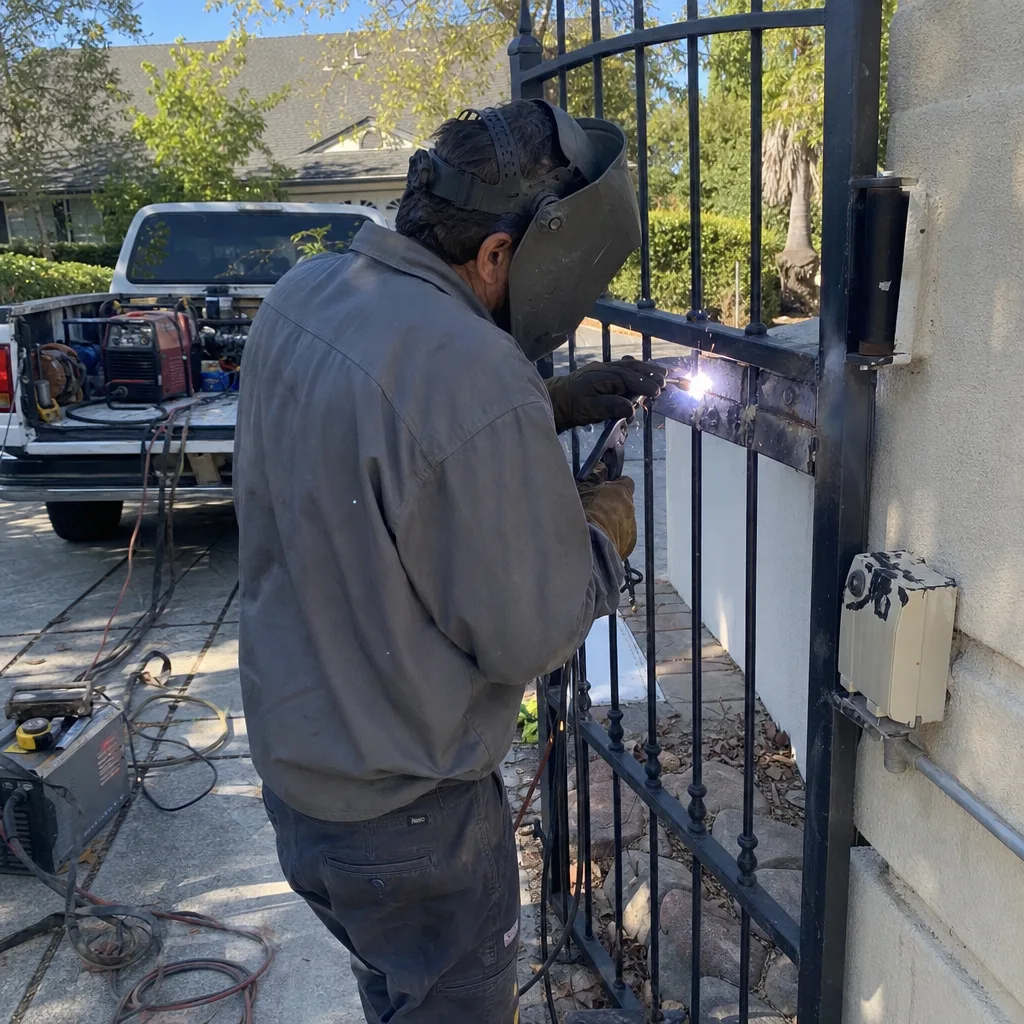
One company that can work on whatever motor is already on the property. That’s the practical advantage for Concord homeowners. Nine major automation brands are in service in this market: LiftMaster, FAAC, BFT, Linear, Viking, Ghost Controls, DoorKing, Elite, and Mighty Mule. We service all nine. We do not steer customers toward replacement to simplify our inventory.
Each brand has specific failure patterns we’ve documented since 2014:
- Linear operators: control board capacitor failure after 6-8 years, particularly in unventilated enclosures. The symptom is intermittent operation that worsens in afternoon heat. Capacitor replacement is $180-$240; full board replacement is $340-$480.
- Viking systems: gear reduction wear in high-cycle applications. The symptom is grinding noise before motor failure. Gearbox rebuild runs $280-$420; early detection prevents motor damage.
- Ghost Controls residential openers: battery backup system failure in units over four years old. The symptom is normal AC operation but no function during power outage. Battery and charging circuit test is standard in our diagnostic.
- DoorKing commercial-grade units: limit-switch drift in slide-gate operators, particularly the 9100 series. The mechanical switch design is robust but requires periodic recalibration every 2-3 years in high-cycle use.
Our parts inventory covers common failures for all nine brands. When an unusual part is needed, we specify the manufacturer part number in the written scope and source it with documented lead time. You know what you’re waiting for and why.
The alternative, too common in this trade, is the technician who carries only one brand and declares your existing operator “obsolete” or “unsupported.” We’ve reviewed estimates from Concord competitors that recommended full replacement of a seven-year-old FAAC system with a different brand, when the actual failure was a $65 transformer. The written scope, with its part numbers and specifications, prevents this.
Safety Systems: Photo Eyes, Edges, and Ground-Fault Protection
California Building Code and UL 325 standards require specific safety devices on automated gates. These are not optional upgrades. They are mandatory, and their failure can disable the entire system or create liability exposure.
Photo eyes. The infrared beam that stops the gate if something crosses the path. In Concord, we see two common failures: physical misalignment from post shift, and lens contamination from dust and irrigation overspray. A photo eye misaligned by roughly two inches will not reliably detect a pedestrian. We check alignment with the manufacturer’s target and document the beam path photographically.
Safety edges. Pressure-sensitive strips mounted on the leading edge of the gate. When contact occurs, the edge sends a stop signal to the control board. Edge failures are usually wiring breaks at the hinge flex point, or water intrusion in the edge tube. Testing requires a calibrated force gauge; we apply 15 pounds of force and verify stop response.
Ground-fault protection. Less visible but equally critical. The ground wire provides a safe path for fault current. In Concord’s clay soil, ground rods can corrode or lose contact as soil shrinks. We measure ground impedance with a fall-of-potential tester. Readings above 25 ohms indicate a problem that affects both safety and equipment protection.
Any repair scope that does not explicitly list safety-device testing is incomplete. Under Clause 4, our documentation includes safety function verification: what was tested, what the readings were, and what adjustments were made. This protects you legally and ensures the gate operates as designed.
What Gate Repair Costs in Concord
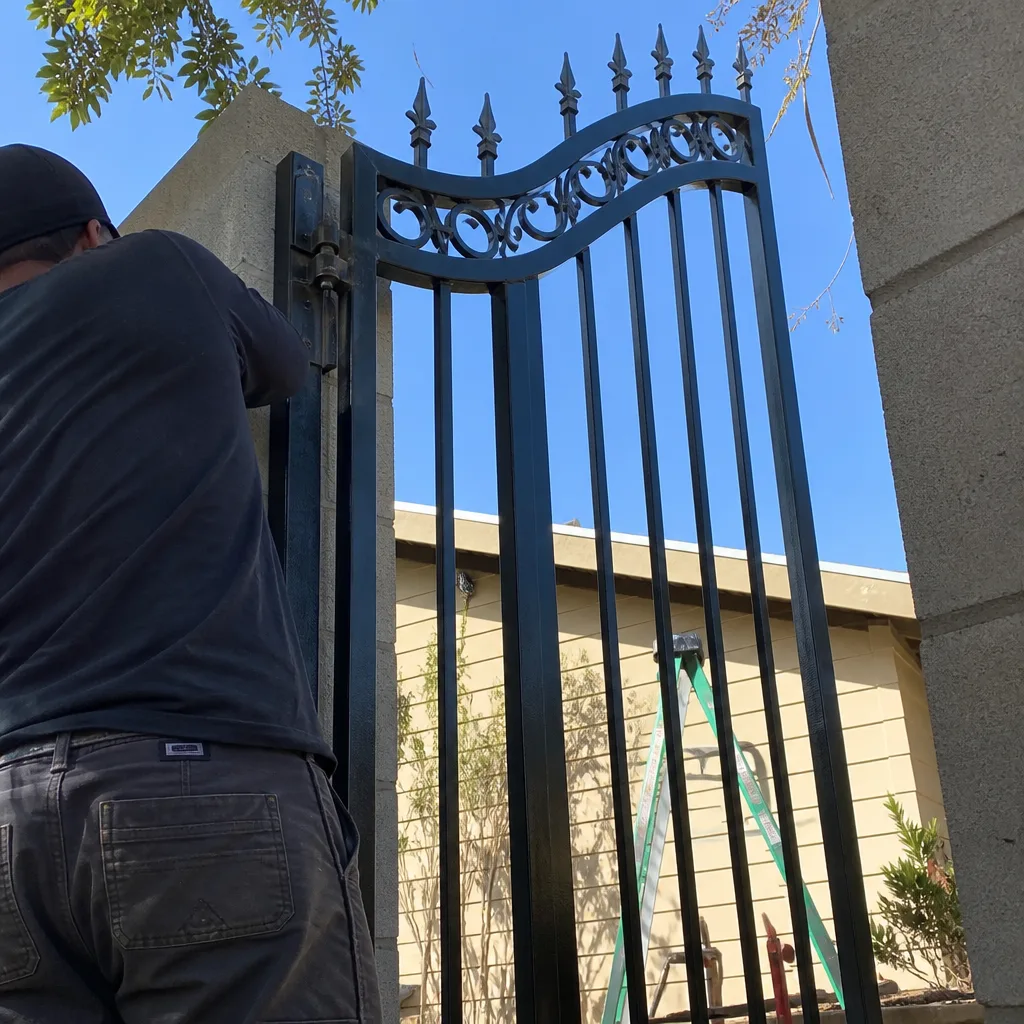
Pricing in dollars, not “call for a quote.” The ranges below reflect our actual written scopes in the Concord market over the past 24 months. Your specific price is quoted and agreed before any work starts.
| Repair Category | Typical Range | What Affects Price |
|---|---|---|
| Diagnostic and safety inspection | $85-$125 | Gate type, accessibility, after-hours call |
| Hinge pin replacement (swing gate) | $220-$380 | Pin diameter, post condition, realignment needed |
| Track/roller service (slide gate) | $280-$520 | Roller count, track length, debris removal |
| Limit-switch calibration | $180-$240 | Switch type, access, control board compatibility |
| Control board repair/replacement | $340-$680 | Brand, enclosure condition, programming complexity |
| Motor replacement (swing or slide) | $680-$1,400 | Brand, horsepower, arm/chain included |
| Safety device replacement (photo eye or edge) | $180-$340 | Wiring run length, conduit condition |
| Post reset or reinforcement | $480-$920 | Depth, concrete removal, soil condition |
These ranges include parts, labor, documentation, and the 365-Day Done Right Promise. They do not include permit fees if required, or structural concrete work beyond standard post resetting. If your scope requires either, it is specified in writing before work begins.
The price you sign is the price you pay. No invoice surprises. This is Haven Standard Clause 1, and it applies to every job we’ve done since 2014.
Common Mistakes to Avoid
- Replacing the motor without checking the hinge geometry. In Concord’s shifting clay soil, this is the most expensive mistake. The new motor burns out in 12-18 months because the underlying load problem was never addressed.
- Accepting a verbal estimate for work over $200. Without written scope, you have no recourse if the invoice differs. California law provides specific protections for written contracts that verbal agreements cannot match.
- Ignoring seasonal performance changes. A gate that slows in winter and speeds up in summer is telling you the post is moving. Address it before the motor fails.
- Skipping safety-device testing after any repair. A technician who replaces a motor but does not verify photo-eye function has left the gate non-compliant and potentially dangerous.
- Using non-gate-specific technicians for automation work. General handymen may understand motors but lack the diagnostic tools for limit-switch calibration, ground-impedance testing, or brand-specific control board programming.
- Delaying maintenance until failure. Annual hinge lubrication and track cleaning cost less than $100 in materials. They prevent repairs that cost five to twenty times as much.
- Assuming all brands are equally serviceable. Some Concord-area companies stock parts for only one or two brands. Confirm your brand is specifically covered before scheduling.
When to Call a Professional
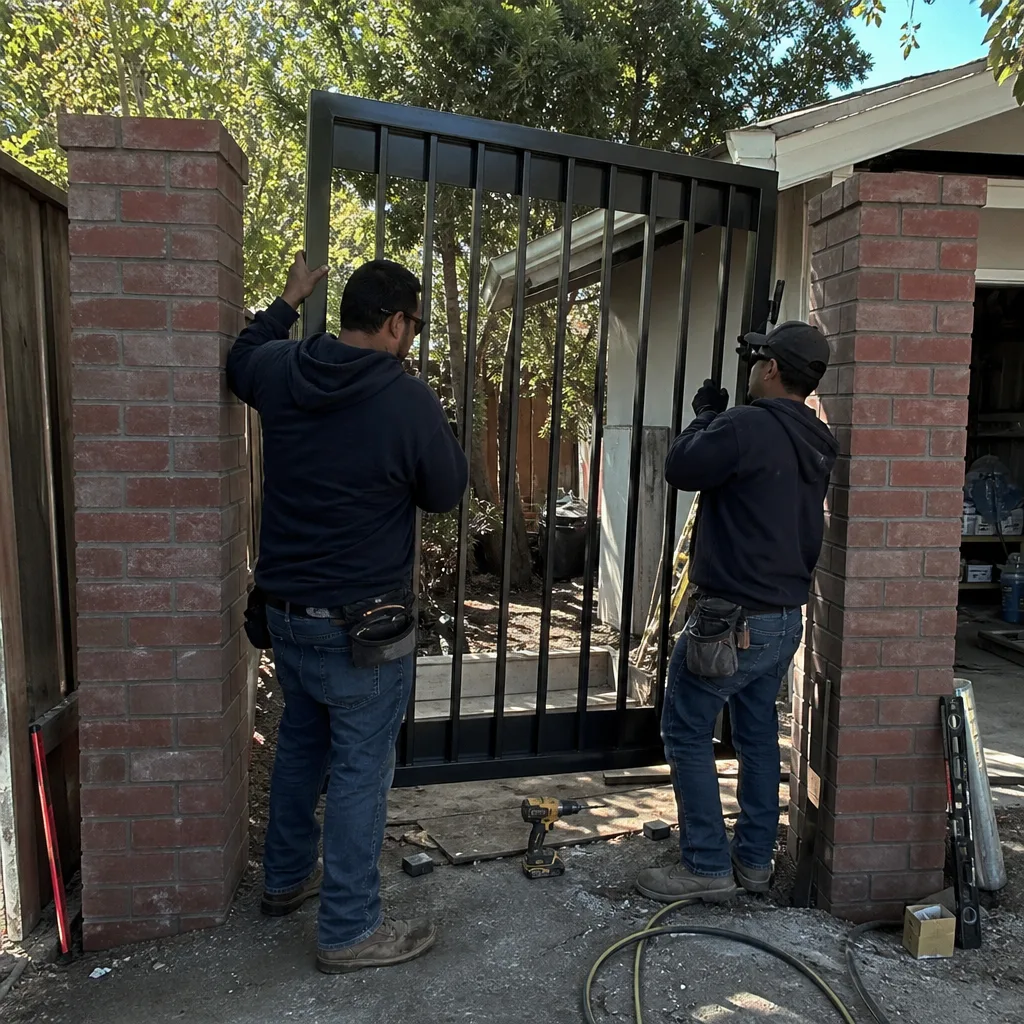
Call when the gate behaves differently than it did last season. Call when the motor hums longer before moving, when the stop is accompanied by a clunk, when the photo eye blinks red instead of steady green. Call when you’ve reset the breaker twice in one month. These are not normal variations; they are early warnings of systemic problems that worsen with use.
Do not attempt to adjust high-tension spring-assisted hinges or access live electrical enclosures. Gate automation operates at 120V AC and can deliver lethal current. Mechanical assist springs store significant energy and can cause serious injury if released improperly. These are trained-technician procedures, not homeowner maintenance.
Vance Gate Repair Concord offers free estimates in Concord. Explore more guides & resources on our blog. A live person answers the phone 24 hours a day, seven days a week. Call (510) 726-7050. We’ll review your symptoms, schedule a diagnostic at your convenience, and deliver a written scope with a flat price before any work starts. If you have a written estimate from another company, bring it. We’ll review it at no cost.
Frequently Asked Questions
Most residential gate repairs in Concord fall between $180 and $850, with simple adjustments like limit-switch calibration at the lower end and motor replacement at the higher end. Your exact price is quoted in writing before work begins. Call (510) 726-7050 for a free estimate.
We repair motors whenever the windings, bearings, and gearbox are within serviceable limits. In our experience, roughly 60% of motors diagnosed for replacement by other companies are repairable or simply need peripheral component replacement. We test and document before recommending.
Concord’s clay soil expands when wet and contracts when dry. Winter rains swell the soil around your gate posts, often shifting them enough to change hinge geometry or track alignment. Summer contraction may temporarily restore function. The solution is post stabilization, not seasonal tolerance.
We service nine major brands: LiftMaster, FAAC, BFT, Linear, Viking, Ghost Controls, DoorKing, Elite, and Mighty Mule. We do not steer customers toward replacement to match our inventory. The written scope specifies exact parts and part numbers for your existing system.
Under Clause 4 of The Haven Standard, every visit includes a photographed record of what was found, what was adjusted, and what was installed. You receive a photo log and written record of part numbers, settings, and test results before the technician leaves.
If any repair is not right, we make it right at no additional charge within one full year. No argument, no fee, no expiration within that window. This applies to all completed work and is included in every written scope.
The Bottom Line
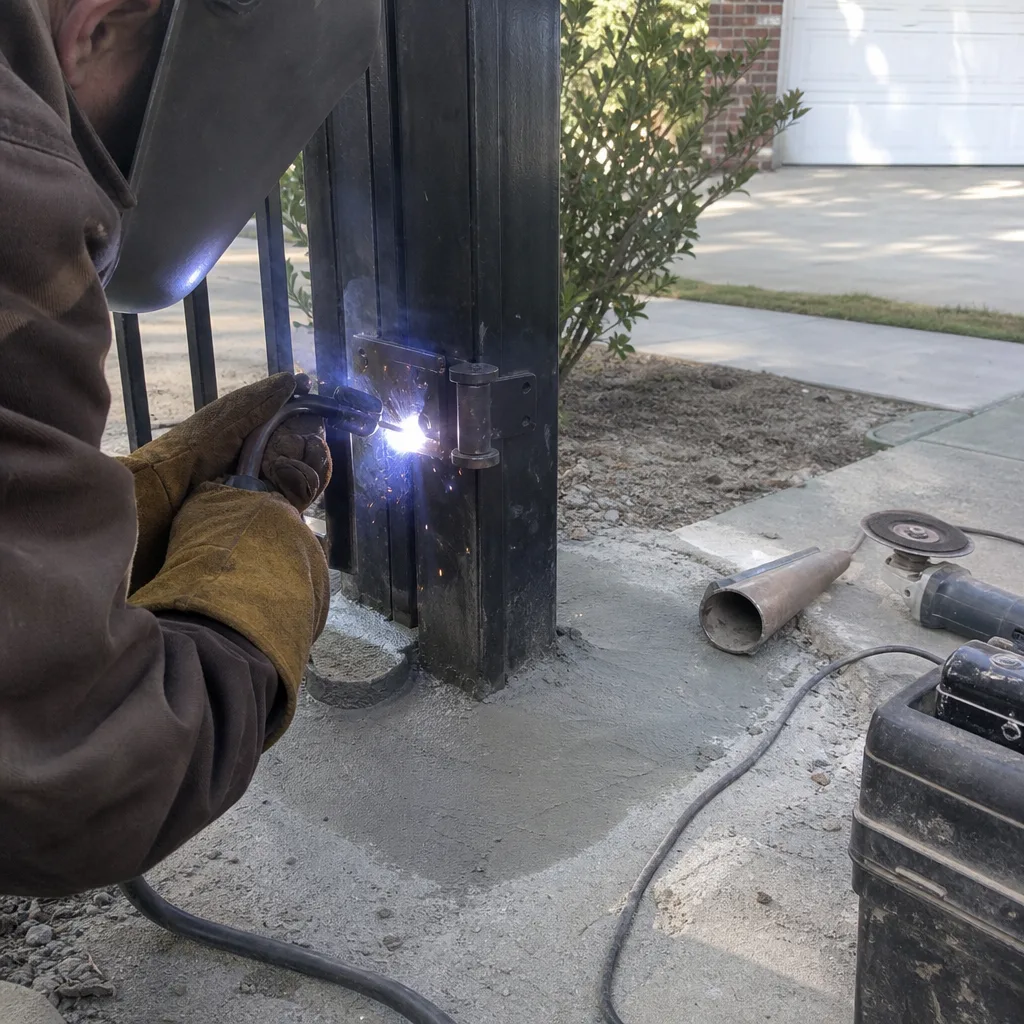
Gate repair in Concord is not about replacing the part that broke. It is about tracing the failure to its origin in one of three subsystems: mechanical load path, electrical continuity, or safety-device function. The visible symptom, the motor that stopped or the hinge that cracked, is the endpoint of a process that started months earlier. Concord’s clay soil, temperature cycles, and aging installations create specific, predictable wear patterns that a thorough diagnostic identifies before they become expensive failures. The written scope, the documented photo record, and the 365-Day Done Right Promise are your protection against paying for symptoms while the real problem persists. Get the diagnosis right, fix the system, and keep the record. That’s the standard we apply on every call.
Written by Adrian Vance, Owner at Vance Gate Repair Concord, serving Concord since 2014.